The breach of critical infrastructure by Salt Typhoon highlights a dangerous weakness in the mandatory access points used by law enforcement for digital wiretapping. This incident demonstrates that once a digital entry point is created, it becomes an irresistible target for state-sponsored hacking groups seeking to gain deep visibility into protected networks. For years, the debate over encryption and surveillance centered on the balance between privacy and public safety, but the current reality shifts the focus toward the fundamental architectural flaws inherent in such systems. When telecommunications providers are forced to build intercept capabilities into their core routers, they effectively create a permanent “front door” for anyone who can obtain the right keys or exploit a logic flaw in the authorization protocol. The sheer scale of the Salt Typhoon compromise proves that even the most well-defended corporations cannot guarantee the integrity of these interfaces against an adversary.
Reevaluating the Security of Lawful Interception Interfaces
The mechanics of the Salt Typhoon operation involved exploiting the very protocols designed to assist investigators in tracking criminal activity. By compromising the routers that manage lawful intercept requests, the attackers managed to stay hidden for months, siphoning data and monitoring the monitors. This level of access allowed them to see exactly who the government was interested in and what methods were being used for surveillance. It transformed a tool for law enforcement into a weapon for foreign intelligence, creating a feedback loop where the defenders’ own assets were turned against them. This scenario illustrates why software-based controls are often insufficient when the underlying architecture is fundamentally compromised. The industry must recognize that digital locks, no matter how complex, are subject to being picked or bypassed if the lock itself is part of a standardized, widely known framework. The reliance on these mandatory access points has created a massive systemic risk.
The vulnerability inherent in these systems is compounded by the fact that lawful interception mechanisms are often integrated deeply into the operating systems of high-performance network equipment. Because these features are required by law, they cannot be easily removed or disabled by manufacturers without violating compliance standards. This creates a permanent attack surface that persists regardless of the security posture of the end-user organization. Furthermore, the standardization of these protocols across different vendors makes it easier for an attacker to develop a single exploit that can be utilized across a variety of targets. This monoculture of vulnerability ensures that once a breach occurs in one sector, it can rapidly spread to others. To mitigate this, engineers are now exploring “functional silos” where the administrative and intercept functions are physically separated from the main data plane. However, the legacy infrastructure currently in place continues to present a significant hurdle for modernization.
Implementing Physical Isolation and Resilience Strategies
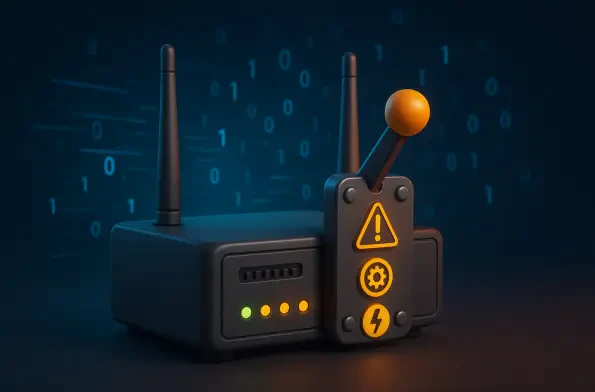
One potential solution to this persistent digital threat involves a return to physical security measures that cannot be overridden by lines of code. This is where the metaphorical “pair of scissors” comes into play, representing the idea of a physical disconnect or an air-gapped kill switch. By implementing hardware that requires physical presence to enable high-risk functions, organizations can effectively neutralize remote cyberattacks that rely on total automation. For instance, critical interception data could be routed through physical switches that are only powered on during active, verified operations. This prevents an adversary from maintaining a permanent, silent presence within the system, as the pathway for data exfiltration would be physically severed during idle periods. While this approach introduces operational friction and requires manual oversight, the security benefits of a physical barrier are becoming increasingly attractive in a world where software trust has been completely eroded.
The industry finally addressed these systemic risks by adopting hardware-based isolation that prioritized physical verification over digital convenience. Network architects replaced centralized software portals with decentralized nodes that required a physical token for access, effectively ending the era of remote-only administrative control. This transition ensured that no single vulnerability could lead to a widespread compromise of national infrastructure. Additionally, organizations began conducting regular physical audits of their hardware to verify that no unauthorized modifications had been made at the supply chain level. These steps provided a concrete path toward resilience, moving away from a reliance on flawed software backdoors toward a model based on tangible, immutable security boundaries. By integrating physical “kill switches” into the network core, the community successfully mitigated the threat of silent exfiltration. This shift transformed the landscape, ensuring that critical channels remained protected.