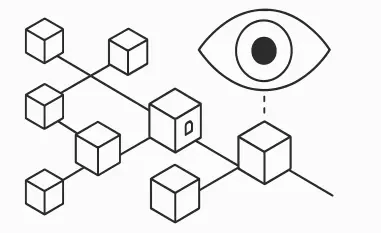
It is a profound irony of modern cybersecurity that the very diagnostic tools designed to safeguard a network are now being meticulously cloned to dismantle its entire infrastructure from within. This specific threat, known as the EtherRAT campaign, represents a sophisticated shift in adversary behavior where the target is not the casual internet user, but the high-privilege professional who holds the keys to the enterprise. By weaponizing the search engine results for essential administrative utilities, threat actors have found a way to bypass traditional perimeters, installing a resilient backdoor that utilizes the Ethereum blockchain for its command-and-control operations. The central challenge of this research lies in understanding how decentralized technologies and search engine optimization can be merged to create a malware delivery system that is nearly impossible to dismantle through conventional legal or technical takedowns.
The research focuses on the mechanics of professional trust and how it is exploited through the spoofing of administrative stacks. When a DevOps engineer or a security analyst searches for a utility like AzCopy or Sysmon, they are operating within a high-intent, high-trust context. This study addresses the specific methodologies used to inject malicious versions of these tools into the top of search engine rankings, effectively turning a routine software update into a full-scale security breach. By examining the intersection of this “professional spoofing” with decentralized infrastructure, the analysis reveals a new frontier of cyber-resilience where malware no longer relies on static domains but instead hides its heartbeat within the immutable ledgers of a public blockchain.
Exploring the Intersection of Decentralized Infrastructure and Administrative Tool Spoofing
The central focus of this investigation explores a disturbing trend where the specialized software used by IT administrators is co-opted to deliver a persistent Remote Access Trojan. Unlike generic phishing campaigns that aim for volume, this operation is surgically precise, targeting individuals with elevated permissions on corporate networks. The primary question addressed is how an attacker can maintain a long-term presence on a network while using tools and communication methods that appear legitimate to most automated defense systems. The research delves into the dual-layered delivery system that uses GitHub as a deceptive storefront, ensuring that the initial interaction between the victim and the malware is characterized by professional familiarity rather than suspicion.
Furthermore, the study examines the psychological and technical integration of these attacks. By spoofing niche tools like Kusto Explorer or Windows LAPS, the threat actor ensures that every successful infection provides immediate access to high-value environments. The challenge for modern defenders is no longer just identifying malicious code, but identifying the subtle deviations in the provenance of legitimate tools. This research highlights the danger of relying on search engine results as a proxy for software authenticity, particularly when those results are manipulated by adversaries who understand the nuances of SEO and the specific needs of the administrative community.
Background of the EtherRAT Campaign and the Rise of Professional Targeting
The importance of this research stems from the catastrophic potential of a single successful infection within an administrative tier. In the landscape of 2026, the traditional boundaries of corporate security have been blurred by cloud integration and decentralized services, making the administrator’s workstation the ultimate prize for any state-sponsored or advanced criminal actor. The EtherRAT campaign is significant because it marks a maturation of “Living off the Land” techniques, where the malware uses legitimate runtimes like Node.js and trusted platforms like GitHub to hide in plain sight. This approach minimizes the forensic footprint and forces defenders to hunt for behavioral anomalies rather than simple file signatures.
This research is particularly relevant because it documents a shift toward operational patience and resilience. By anchoring the malware’s command-and-control resolution in the Ethereum blockchain, the attackers have insulated themselves against the “sinkholing” techniques that have historically been used to neutralize botnets. As the industry moves toward more decentralized models, the lessons learned from the EtherRAT campaign provide a critical blueprint for the future of defensive strategies. Understanding why this campaign targets the specific tools it does—such as diagnostic and remote access utilities—reveals a calculated effort to compromise the very individuals who are responsible for the network’s health and security.
Research Methodology, Findings, and Implications
Methodology
The investigation into the EtherRAT campaign utilized a multi-dimensional approach to map the lifecycle of the threat, beginning with a deep dive into search engine telemetry and SEO manipulation patterns. Researchers tracked the appearance of suspicious results for over forty distinct administrative and security tools across major platforms, including Bing and DuckDuckGo. By analyzing the metadata of these search results, the team identified a pattern of aggressive SEO poisoning that prioritized malicious GitHub repositories over official vendor sites. This involved monitoring the rotation of at least 44 separate GitHub accounts that served as the initial point of contact for unsuspecting users.
Technical analysis of the malware itself was conducted using a combination of static code review and dynamic behavioral analysis within isolated sandbox environments. The researchers focused on the “facade” architecture, where an initial clean repository redirects users to a hidden payload repository. Once the malicious MSI installers were retrieved, the study employed memory forensics to observe the multi-stage execution process, specifically looking at how the Node.js runtime was fetched directly from official sources to evade detection. The final phase of the methodology involved decoding the interaction between the malware and the Ethereum blockchain, using specialized tools to monitor Remote Procedure Call requests and smart contract queries that facilitated the resolution of the command-and-control servers.
Findings
The main discovery of this research is the extreme structural resilience of the EtherRAT distribution chain, which successfully separates the search-indexed “storefront” from the actual malware delivery system. This dual-stage GitHub architecture allows the threat actors to maintain their SEO rankings even if the specific account hosting the malicious payload is identified and removed. Furthermore, the malware utilizes a sophisticated “fileless-style” loading mechanism. By using the Node.js module._compile() function, the Trojan can execute its main logic entirely in memory after decrypting it, leaving no plaintext traces of the malicious JavaScript on the physical disk. This makes it exceptionally difficult for traditional antivirus software to detect the threat during its active phase.
Perhaps the most significant technical finding involves the use of “Dead Drop Resolving” via the Ethereum blockchain. The malware does not contain a hardcoded list of command servers; instead, it queries multiple public Ethereum gateways to read the current server address from a specific smart contract. This provides the adversary with total infrastructure agility, allowing them to redirect thousands of infected machines to a new server with a single blockchain transaction. The analysis also revealed an “irony lure” tactic, where the malware specifically impersonates tools like Process Monitor or Sysmon—utilities that a defender would likely be using while investigating a potential system anomaly, thereby turning the act of defense into an opportunity for further infection.
Implications
The practical implications of these findings suggest that the traditional model of software sourcing and verification is fundamentally broken in the face of modern SEO manipulation. Organizations must move away from a culture of “search and download” for administrative utilities and instead implement centralized, cryptographically verified repositories for all internal tools. Theoretically, this research challenges the current understanding of malware takedown operations. When the control mechanism is hosted on an immutable, decentralized ledger, law enforcement and security firms lose their most effective weapon: the ability to seize or block central domains. This necessitates a shift toward network-level blocking of public blockchain gateways as a standard security posture.
Societally, the rise of professional targeting signifies an era where specialized knowledge no longer protects an individual from cyber threats but actually makes them a more attractive target. The findings imply that as decentralized technologies become more prevalent, the barrier to entry for maintaining a permanent, un-killable botnet will continue to drop. This could lead to a permanent state of “background noise” infections within enterprise networks that are only detectable through highly advanced behavioral analysis. Future developments in malware will likely continue to lean into these decentralized structures, requiring a fundamental re-evaluation of how we define and defend the digital perimeter in an increasingly fragmented technological landscape.
Reflection and Future Directions
Reflection
Reflecting on the research process, the most significant challenge was the sheer agility of the adversary. The threat actors behind the EtherRAT campaign demonstrated a high degree of operational awareness, frequently rotating their GitHub facades and re-obfuscating their Stage 3 payloads to stay ahead of automated detection. This required a constant, manual effort from the research team to correlate seemingly unrelated repositories and file hashes into a single coherent campaign. One area where the research could have been expanded is in the direct attribution of these tactics. While there are strong indicators linking this behavior to established state-sponsored groups, the nature of decentralized C2 makes it increasingly difficult to pinpoint the geographic or political origin of the attack with absolute certainty.
The study also highlighted the limitations of current endpoint detection systems. Many of the tools used in the campaign, such as the legitimate Node.js binary and standard Windows batch scripts, are so common in professional environments that they rarely trigger high-severity alerts. Overcoming this “signal-to-noise” problem was a recurring hurdle during the analysis phase. It became clear that the effectiveness of the EtherRAT campaign relied as much on the administrative environment’s complexity as it did on the malware’s actual code. This reflection underscores the need for more holistic security models that look beyond individual files and instead focus on the context of execution and the provenance of administrative actions.
Future Directions
Several questions remain unanswered, providing fertile ground for future investigation. First, the long-term impact of blockchain-based command-and-control needs to be studied across a broader range of malware families to determine if this is becoming a standardized industry practice. Researchers should investigate whether other decentralized platforms, such as IPFS or alternative blockchains, are being similarly co-opted for resilient data storage and C2 resolution. There is also a significant opportunity to explore the use of artificial intelligence in automating the detection of SEO-poisoned results, creating a more proactive defense that can flag suspicious search results before a user ever clicks a link.
Another critical area for future research is the development of “decentralized-aware” security appliances. Current firewalls and gateways are not optimized to distinguish between legitimate blockchain queries and those used for malicious C2 resolution. Designing systems that can inspect the intent of smart contract interactions in real-time could be the key to neutralizing threats like EtherRAT. Furthermore, exploring the sociological aspect of why IT professionals continue to bypass internal software controls in favor of search engine results could help in designing more effective training and organizational workflows. The evolution of this threat suggests that the battle for the administrative tier is only beginning, and the defensive response must be as innovative and decentralized as the attacks themselves.
Strategic Defensive Countermeasures and Final Perspectives on Blockchain-Aided Malware
The investigation into the EtherRAT campaign revealed a sophisticated orchestration of tools and techniques designed to subvert the trust of the very individuals responsible for organizational security. By leveraging search engine optimization to place malicious payloads at the top of legitimate search results, the attackers capitalized on the high-trust environment inherent in administrative software procurement. The multi-stage distribution process, which utilized clean GitHub repositories to funnel users toward hidden payloads, effectively masked the malicious intent from automated scanners. This strategy, combined with the use of a fileless loading mechanism and the legitimate Node.js runtime, ensured that the initial infection remained stealthy and difficult to detect through traditional means.
The most transformative element of the campaign resided in its use of the Ethereum blockchain for command-and-control resolution, a technique that provided the adversary with unprecedented infrastructure resilience. By querying decentralized smart contracts, the malware bypassed the vulnerabilities of centralized domain names, making standard takedown efforts obsolete. This decentralized approach necessitated a defensive shift toward monitoring public Ethereum RPC gateways and identifying behavioral anomalies, such as the headless execution of console host processes. The research underscored that the compromise of an administrative workstation was not merely a localized event but a strategic entry point that could lead to an entire enterprise breach.
Ultimately, the findings demonstrated that the reliance on search engine results for professional utilities posed a significant and ongoing risk to corporate environments. Effective countermeasures required a combination of network-level interdiction, such as blocking public blockchain endpoints, and a rigorous cultural shift toward verified software sourcing. The study concluded that as malware continued to evolve toward more resilient, decentralized models, the role of behavioral threat hunting would become increasingly paramount. The successful mitigation of such threats depended on a deep understanding of the intersection between administrative trust and the technological nuances of the modern, decentralized web. The investigation provided a critical perspective on the future of cyber defense, where the focus shifted from static indicators to the complex behaviors of sophisticated, persistent adversaries.