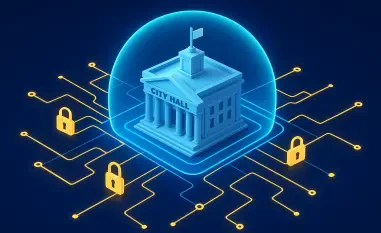
The digital records of nearly half the American population were recently discovered on a shadowy Russian cybercrime forum, exposing the fragile nature of modern identity security. This staggering cache, hosted on the illicit Nexus platform, represents one of the largest exfiltrations of personal documentation in recent history. While many data breaches involve simple text strings or passwords, this specific incident is far more invasive because it contains high-resolution digital scans of physical identification. The exposure of a driver’s license is not merely a privacy concern; it provides criminals with the primary key needed to bypass multi-factor authentication and open fraudulent financial accounts.
The irony of this situation is palpable as the data allegedly originated from a service designed specifically to prevent fraud. Nexus, an identity theft marketplace, became the primary distributor for records that were likely intended to secure corporate and government perimeters. This failure highlights a systemic vulnerability in how sensitive documents are stored after the initial verification process. When a service meant to protect identities becomes the source of a breach, the foundational trust in digital commerce begins to erode, leaving millions of individuals vulnerable to sophisticated impersonation attacks.
A Security Failure of Unprecedented Scale: When 153 Million Identities End Up on the Dark Web
The discovery of the 153 million records sent shockwaves through the cybersecurity community, marking a new low for data guardianship. Forensic analysis of the Nexus platform revealed that these documents were not just harvested through phishing, but were part of a centralized repository that had been systematically drained. The sheer volume of the data allows bad actors to perform identity theft at an industrial scale, targeting individuals with surgical precision using the very documents they once used to prove their legal status.
Furthermore, the geographical distribution of the victims shows the interconnected nature of modern data storage. While the vast majority of the files belong to residents of the United States, a significant portion of the leak affects Canadian citizens as well. This cross-border exposure demonstrates that no single jurisdiction is safe when third-party processors handle sensitive information. The move of these files to a Russian forum suggests that the data is now being treated as a high-value commodity by international criminal syndicates.
The Critical Link Between Identity Verification Firms and National Security
Third-party firms such as IDScan.net serve as the invisible gatekeepers of the global economy, processing millions of verifications every month for industries ranging from banking to hospitality. These organizations are trusted by Fortune 500 companies and government agencies to ensure that customers are who they claim to be. However, this reliance creates a massive point of failure; by centralizing the sensitive data of millions, these firms become the “holy grail” for cybercriminals looking for a single point of entry to bypass thousands of individual security systems.
The ripple effect of a breach at this level extends far beyond the companies directly involved. When a verification firm is compromised, every business that relies on its API or database is effectively blind to the legitimacy of the users entering its system. This creates a national security risk, as the integrity of the entire identity ecosystem is called into question. The breach proves that the current model of identity verification, which relies on a handful of large processors, needs a fundamental shift toward more decentralized and secure methodologies.
Dissecting the Breach: From US Travel Documents to Compromised FBI Credentials
A deep dive into the 170 million leaked records reveals a terrifying variety of sensitive documentation. Beyond the 153 million driver’s licenses, the cache includes 10 million identification cards, three million travel documents, and over 500,000 medical cards. The inclusion of travel documents is particularly concerning, as these often contain more comprehensive personal data than a standard license. Investigative journalism eventually traced the exfiltration back to server infrastructure located in Louisiana, linking the data to the systems used by IDScan.net.
Perhaps the most alarming discovery within the dataset was the presence of credentials belonging to federal agents. The FBI launched an official probe after it was confirmed that the leak included the sensitive identification documents of its own personnel. This inclusion underscores the reality that even the highest levels of law enforcement are not shielded from the vulnerabilities of the private-sector firms they use for administrative tasks. The breach demonstrates that no individual, regardless of their position or security clearance, is safe when their biometric and identity data is stored in a vulnerable central database.
Expert Perspectives on the Fallacy of Digital Permanence
Cybersecurity veteran Brian Krebs has frequently pointed out the inherent flaws in high-volume verification APIs. These systems are often designed for speed and convenience rather than robust security, leading to vulnerabilities that allow for bulk data exfiltration. The consensus among experts is that the industry’s current reliance on digital scans as immutable proof of identity is a dangerous fallacy. Once a scan of a driver’s license is leaked, its value as a verification tool should theoretically drop to zero, yet the financial system continues to accept these images as valid evidence.
The NCC Group has issued a stark warning that organizations must start operating under the assumption that all identity evidence will eventually be compromised. Instead of treating a scan of a passport or license as a permanent secret, firms must move toward a model of ephemeral verification. This involves verifying the document in real-time and then immediately deleting the sensitive image. Challenging the industry standard of long-term data retention is the only way to reduce the attractiveness of these databases to hackers who seek to exploit digital permanence for long-term gain.
Practical Strategies for Protecting Identity and Improving Data Governance
In the wake of this historic breach, organizations implemented much stricter deletion protocols and conducted comprehensive data retention audits. They recognized that holding onto sensitive ID scans for years created a liability that far outweighed any administrative benefit. By transitioning to ephemeral verification models, companies successfully reduced their risk profile and ensured that even if a system was breached, there was no massive cache of documents to be stolen. This shift represented a major move away from the “collect everything” mentality that dominated previous years.
Security professionals also advised the public to be more protective of their physical IDs and to demand that businesses explain their data retention policies before a scan is taken. Professionals encouraged consumers to ask for verification methods that did not involve the permanent storage of their documents. Governments responded by increasing the oversight of service accounts and APIs, ensuring that abnormal bulk access could be detected and stopped in real-time. These proactive measures helped stabilize the identity ecosystem, moving the focus of security toward data segregation and independent assurance rather than simple collection.