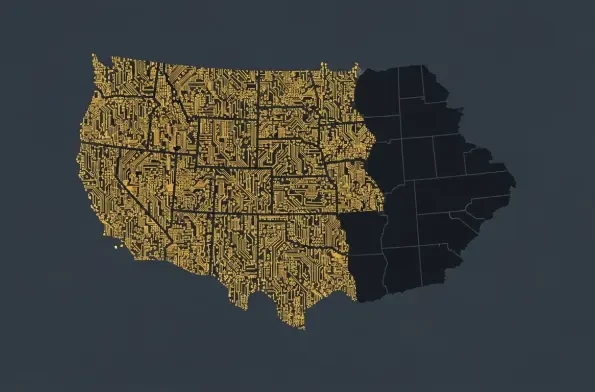
The Multi-State Information Sharing and Analysis Center (MS-ISAC) has historically functioned as the primary defensive shield for state, local, tribal, and territorial governments, operating as a vital clearinghouse for threat intelligence. Managed by the Center for Internet Security, this collaborative network allowed diverse jurisdictions to pool their resources, sharing real-time telemetry that could warn a small-town IT director in Oregon about a ransomware variant that had just surfaced in a Florida school district. For years, the federal government underwrote this collective defense, recognizing that a breach in a local water treatment facility or an emergency dispatch center could have cascading effects on regional stability. However, the stability of this arrangement was recently shattered when the Department of Homeland Security ended its subsidies, forcing the organization to pivot toward a fee-for-service model. This shift has essentially privatized a public good, creating a digital divide where cybersecurity is no longer a shared national priority but a luxury afforded only to those jurisdictions with the surplus tax revenue to pay for it.
The Financial Reality of Local Cyber Defense
Impact: Measuring the Fallout of Membership Attrition
The financial pivot has triggered an immediate and drastic contraction of the national defense network, with approximately 70% of previous members opting out of the new paid structure. This mass exodus saw the membership roster plummet from over 18,000 participating entities to just roughly 5,600, leaving a vast majority of the country’s local government infrastructure without a direct line to federal threat monitoring. The most severe losses occurred among “Tier One” jurisdictions—those small towns, counties, and special districts with annual operating budgets of $25 million or less. For these entities, even a modest annual subscription fee represents a significant budgetary hurdle that competes with essential services like road maintenance or public safety. By pricing out these smaller players, the new funding model has effectively blinded the MS-ISAC to a massive portion of the domestic digital landscape, as the telemetry once provided by these thousands of endpoints has simply evaporated.
This fragmentation of the national defense network creates a significant intelligence vacuum that benefits malicious actors who specialize in exploiting the least-protected nodes of American infrastructure. When thousands of small government entities stop reporting suspicious activity, the collective visibility of the MS-ISAC is diminished, making it harder to identify the early warning signs of broad, coordinated campaigns. Security experts note that the value of an Information Sharing and Analysis Center is directly proportional to the size and diversity of its participant pool. Without the constant stream of data from small-town school districts and rural utility providers, the center’s ability to provide proactive defense for its remaining paying members is also compromised. The transition to a fee-based model has transformed a comprehensive national security asset into a fragmented service, leaving the vast majority of local administrators to navigate an increasingly hostile digital environment with no expert guidance or shared intelligence.
Case Studies: State-Level Responses and Regional Gaps
State-level responses to this funding crisis have exposed deep disparities in how different regions prioritize digital resilience and fiscal responsibility. Washington State serves as a cautionary example, as the local government was forced to terminate its relationship with the group due to a massive budget deficit that precluded the payment of membership dues. This decision effectively stripped hundreds of municipalities within the state of their primary defense platform, leaving them to manage incident responses and threat hunting on their own. In the absence of a centralized coordinator, these local entities must now negotiate individual contracts with private security vendors, which often results in higher costs and lower-quality intelligence compared to the previous collective model. This withdrawal has created a massive blind spot in the Pacific Northwest, making the entire region more vulnerable to disruptions that could easily cross municipal borders and impact critical state services.
In stark contrast, states like New York have adopted a “whole-of-state” strategy to insulate their local governments from the loss of federal subsidies. By utilizing state-level funding to cover the membership fees for every municipality and school district within its borders, New York has maintained a unified defensive perimeter that prevents the formation of isolated vulnerabilities. This approach recognizes that the security of the state capital is inextricably linked to the security of its smallest rural villages. However, such proactive measures are only possible in states with robust financial reserves and a centralized cybersecurity mandate, leaving a patchwork of protection across the country. As some states secure their borders while others leave them wide open, the national infrastructure becomes a “Swiss cheese” model of defense. This lack of uniformity ensures that adversaries can simply pivot their focus toward jurisdictions in states that could not afford to bridge the funding gap.
Adapting to an Evolving Threat Landscape
Operations: Shifts in Staffing and the Automation Pivot
To mitigate the loss of $1 million in monthly federal subsidies, the MS-ISAC has been forced to implement significant internal cost-cutting measures that have altered its operational DNA. The organization has reduced its headcount and transitioned away from the high-touch, human-led engagement that was previously a hallmark of its support for local government administrators. In place of personalized onboarding and dedicated incident response liaisons, the center has introduced self-guided digital portals and automated reporting tools. While these technological solutions allow the organization to maintain a baseline level of service for its remaining members, they lack the nuance and advisory depth that human analysts provide. Many local IT directors, who often wear multiple hats and lack specialized cybersecurity training, find that automated alerts without contextual guidance are difficult to prioritize and act upon effectively in a crisis.
The reliance on automation also raises concerns about the long-term quality of the threat intelligence being generated and distributed across the network. Human analysts are essential for identifying the subtle patterns of “living off the land” attacks and other sophisticated techniques that frequently bypass automated detection systems. By leaning more heavily into algorithmic processing to compensate for a smaller workforce, the center may miss the highly targeted, low-signal activities that characterize the early stages of a nation-state intrusion. Furthermore, the loss of community engagement means that there are fewer opportunities for peer-to-peer learning and the informal information sharing that often occurs between trusted human counterparts. As the MS-ISAC becomes more of a cold, data-driven utility rather than a collaborative community, the professional bonds that once strengthened the national defense are beginning to fray, leaving members more isolated.
Threats: Exploitation of Infrastructure by Foreign Adversaries
The timing of this resource reduction is particularly alarming given the documented surge in activities by sophisticated foreign adversaries like China and Iran. These nation-state actors have increasingly shifted their focus toward the “soft underbelly” of American infrastructure, targeting local government networks as strategic entry points. Groups such as Volt Typhoon have been observed infiltrating municipal water systems and power grids, not necessarily for immediate disruption, but to establish a persistent presence that can be activated during a future geopolitical conflict. Local governments are ideal targets for these operations because they often manage critical life-safety systems but lack the sophisticated monitoring tools found at the federal level. By withdrawing the federal support that once helped these jurisdictions detect such stealthy intrusions, the U.S. government is inadvertently providing adversaries with more space to operate undetected.
The interconnectivity of modern infrastructure means that a successful breach of a small-town network can have massive regional or even national consequences. A compromised emergency dispatch center in a rural county can delay medical responses across an entire metropolitan area, while a breach in a local utility’s control system can trigger cascading failures in the regional power grid. Adversaries are well aware that the federal government is focused on protecting high-value targets like the Pentagon or major financial institutions, leading them to exploit the visibility gaps created by the MS-ISAC’s membership decline. As localized vulnerabilities are left unmonitored and unpatched due to a lack of resources, they become permanent beachheads for foreign intelligence services. The current situation highlights a dangerous disconnect in national strategy, where the defense of the homeland is being undermined by a refusal to fund the very entities that monitor the front lines.
Risks and the Path to Restoration
Hazards: Secondary Financial Impacts and Insurance Liability
Beyond the technical risks of increased cyberattacks, the exit of local governments from the MS-ISAC creates a set of secondary financial hazards that could cripple municipal budgets. Cyber insurance providers have increasingly standardized their underwriting processes, using membership in an Information Sharing and Analysis Center as a primary metric for determining a jurisdiction’s risk profile. Without the verified threat intelligence and the standardized incident-response protocols provided by the center, local governments are being classified as high-risk entities. This change in status often results in skyrocketing insurance premiums or, in some cases, a total loss of eligibility for coverage. For a small town, the inability to secure cyber insurance means that a single successful ransomware attack could lead to total financial insolvency, as the costs of data recovery and legal liabilities far exceed their available emergency reserves.
Furthermore, the absence of a centralized support structure makes it significantly harder for local governments to meet the rigorous compliance standards required for many federal grants and state-level funding programs. Many of these financial incentives are tied to the implementation of specific security frameworks that were historically facilitated by MS-ISAC tools and guidance. Without the center to act as a bridge between federal standards and local implementation, small jurisdictions are finding themselves locked out of the very funding they need to modernize their aging infrastructure. This creates a vicious cycle where a lack of security leads to a loss of funding, which in turn makes it impossible to improve security. Taxpayers eventually bear the burden of this inefficiency, as municipal leaders are forced to choose between paying exorbitant insurance rates or taking on the massive financial liability of a potential catastrophic digital failure.
Restoration: Legislative Solutions and the Unified Front
In response to the growing vulnerability of the nation’s decentralized digital infrastructure, a bipartisan coalition in Congress has begun pushing for a restoration of federal funding for the MS-ISAC. Legislative efforts led by Senator Mark Warner aim to mandate consistent, long-term federal support for the center, framing its operation as a non-negotiable component of national security. The proposed legislation seeks to eliminate the fee-for-service model for smaller jurisdictions, ensuring that the “Tier One” entities can rejoin the network without depleting their local budgets. Proponents of these measures argue that the cost of subsidizing the center is a fraction of the economic damage caused by a single large-scale regional disruption. By treating cybersecurity as a public utility rather than a private commodity, these initiatives aim to close the visibility gaps that foreign adversaries have been so eager to exploit over the last few months.
The success of these legislative efforts will likely determine whether the American cybersecurity strategy remains a unified front or continues to fracture into a tiered system where only wealthy jurisdictions are protected. Restoring federal oversight would allow for the reintegration of fragmented data silos, providing national security agencies with a more comprehensive view of the domestic threat landscape. It would also signal to foreign adversaries that the U.S. government remains committed to protecting its infrastructure at every level, from the smallest town hall to the largest federal agency. Moving forward from 2026, the focus must remain on building a resilient, inclusive network that recognizes the interconnected nature of modern digital life. Ensuring that every local administrator has access to the tools and intelligence they need is not just a matter of municipal management; it is a fundamental requirement for maintaining the security and stability of the American homeland.
The experiment with privatizing the Multi-State Information Sharing and Analysis Center proved that the security of local government was a core component of national stability that could not be left to the whims of municipal budgets. The massive decline in participation following the removal of federal subsidies highlighted the reality that most small jurisdictions lacked the financial flexibility to treat cybersecurity as a discretionary expense. As a result, the national defense network became fragmented, creating significant blind spots that foreign adversaries were quick to identify and exploit. Policy leaders realized that a fee-for-service model fundamentally misunderstood the nature of collective defense, where the value of the network increased with each additional participant regardless of their ability to pay. The subsequent push for legislative restoration demonstrated a renewed understanding that the federal government must remain the primary guarantor of digital safety across all levels of the American landscape.