Leading investors including NEA, Sequoia Capital, and Khosla Ventures have committed one hundred eighty-five million dollars to help Corma rectify the imbalance in the global cyber arms race. This infusion of capital elevates the frontier AI laboratory to a one-billion-dollar valuation, achieving unicorn status just a few months after its initial debut in the public eye. The urgency behind this investment stems from a realization that current offensive AI tools are evolving faster than the defenses meant to stop them. By building specialized foundation models from the ground up, Corma is moving away from generic chatbots toward a sophisticated, autonomous infrastructure. This massive financial backing serves as a vote of confidence in a strategy that treats cybersecurity not as a series of software patches, but as a dynamic battle of intelligence. As global enterprises face increasingly automated threats, the need for a dedicated defensive AI workforce has become the defining challenge for digital safety in 2026.
Rapid Scalability and Market Momentum
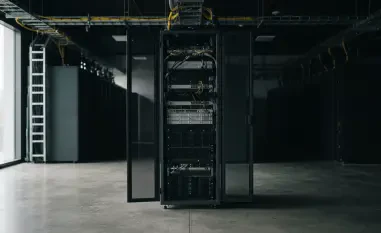
The sheer velocity of Corma’s growth highlights a significant shift in how the corporate world views artificial intelligence as a protective measure. Since emerging from its stealth phase, the company has seen an explosion of interest from Fortune 500 and Global 500 organizations, necessitating a twenty-four-fold increase in server capacity to handle incoming telemetry data. This demand is driven by the fact that traditional security operations centers are currently overwhelmed by the volume and complexity of signals that require human intervention. Unlike previous cycles of security technology that offered incremental improvements, Corma provides a scalable cognitive engine capable of interpreting massive datasets in real time. The involvement of heavyweight firms like Coatue alongside NEA suggests that the investment community sees a winner-take-all opportunity in the foundation model space for security. This rapid scaling reflects a broader industry consensus that defensive capabilities must now match the scale and speed of modern digital infrastructure.
Furthermore, the rapid transition from a seed round to a billion-dollar valuation within a single quarter indicates the perceived maturity of Corma’s technical stack. Large-scale enterprises are no longer interested in experimental pilots; they are seeking immediate, production-ready solutions that can integrate into existing cloud and on-premises environments. By securing such significant capital, the company is positioned to aggressively recruit the best researchers and engineers, further widening the gap between its specialized models and general-purpose alternatives. This financial stability allows for long-term research into defensive superintelligence, a concept once considered theoretical but now viewed as a necessity for national security and global trade. The ability to scale infrastructure so rapidly underscores the underlying architectural efficiency of their models, which are designed to optimize high-performance computing resources for cybersecurity tasks. This momentum is setting a new benchmark for how quickly AI companies must move to maintain a competitive edge.
Autonomous Defense and Tactical Intelligence
A core driver of this innovation is the structural disadvantage inherent in general-purpose AI development. While advancements in large language models have made software engineering more efficient, they have also inadvertently equipped attackers with superior tools for identifying and exploiting vulnerabilities. To an advanced coding model, a security flaw is merely another bug to be fixed or exploited, and autonomous agents can now weaponize these findings in minutes. Historically, defensive technology has been reactive, relying on signature-based detection or manual analysis that lags behind the attacker’s creativity. Corma addresses this paradox by refocusing AI reasoning away from simple code generation toward complex pattern recognition across disparate security events. By training models on defensive logic rather than general linguistics, the laboratory ensures that its systems are biased toward protection and resilience. This shift is vital because the offensive side of the equation has already reached a level of automation that renders traditional, human-led defenses effectively obsolete.
The difficulty in defensive work lies in the necessity for absolute consistency and the ability to correlate weak signals over long periods. Offensive AI only needs to succeed once to cause a breach, whereas defensive systems must be correct every single time. General-purpose models often struggle with this requirement because they are optimized for creative output rather than the rigorous, high-fidelity analysis of network flows and audit logs. Corma’s proprietary architecture is built to handle the noise of a modern enterprise environment, distinguishing between benign anomalies and sophisticated, multi-stage attacks. This focus on high-consistency decision-making allows the AI to operate without the hallucination risks that plague other systems. By addressing the cognitive requirements specific to defense, the company is bridging a gap that has existed since the inception of generative AI. This approach ensures that as attackers use intelligence to find new ways in, defenders have an equally intelligent, if not superior, layer of automated scrutiny watching over every transaction.
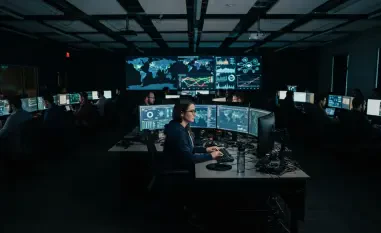
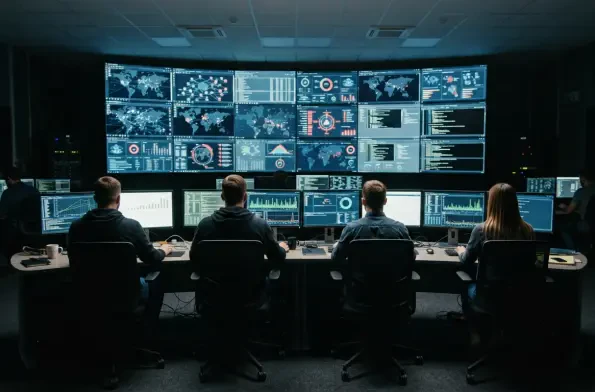
Moving beyond the limited scope of security copilots, the laboratory is deploying what it describes as an autonomous AI workforce. This system is not merely an assistant that provides suggestions to a human operator; it is a proactive entity capable of executing complex security workflows from start to finish. By integrating directly with an organization’s existing suite of security tools, the AI can perform deep forensic analysis, isolate infected systems, and remediate vulnerabilities without waiting for manual approval for every step. This autonomy is crucial in 2026, where the window between a vulnerability being discovered and its active exploitation has shrunk to nearly zero. The autonomous workforce maintains a persistent state of vigilance, processing telemetry at a scale that would require thousands of human analysts. This model allows enterprises to reorganize their security departments, shifting human experts into strategic roles that focus on policy, governance, and architecture while the AI handles the daily operations of threat detection.
The successful scaling of Corma’s intelligence layer established a new paradigm for how global enterprises approach digital resilience. By merging elite talent from Google DeepMind with veterans from Israel’s Unit 8200, the company created a synthesis of machine learning and combat-tested experience. This unique expertise allowed organizations to move beyond reactive patching toward a proactive, autonomous defensive posture. Leaders who integrated these specialized foundation models reported a significant reduction in breach impact and analyst fatigue during major crises. Ultimately, the transition to an autonomous AI workforce became the definitive solution for protecting critical infrastructure against automated threats. The laboratory’s mission proved that a dedicated intelligence layer was the only sustainable way to win the cyber arms race. These advancements ensured that the world’s most vital digital systems remained secure, providing a blueprint for the next generation of cybersecurity strategy. The industry recognized this milestone as a turning point in the battle of intelligence.