Security researchers have identified over 6,000 premium Visa cardholders in the Asia Pacific region whose travel and dining data was leaked online. This alarming discovery marks the culmination of a high-stakes digital confrontation initiated by a recently emerged hacking collective known as “n0n,” which has systematically targeted the world’s most prominent financial institutions. When a strict 48-hour ransom ultimatum expired without payment, the group proceeded to dump sensitive files onto public-facing platforms, proving that even the most robust internal bank defenses can be circumvented through external partnerships. While the core servers of these banking giants remained untouched, the breach exposed a critical weakness in how peripheral data is managed by third-party marketing firms and service providers. This incident highlights a shift in cyber warfare, where attackers no longer attempt to batter down the front gates of a bank’s infrastructure but instead infiltrate through the less-guarded side entrances of their business associates and vendors.
Vulnerabilities in External Marketing Ecosystems
At the center of this controversy is JPMorgan Chase, where the breach did not originate within the bank’s primary network but rather through external marketing agencies that handle high-value accounts. The leaked data specifically compromised the privacy of an elite demographic, namely holders of the invitation-only Chase Reserve card, a financial product typically offered only to clients managing at least $10 million in assets. Within the released files, security analysts discovered approximately 16,000 unique customer email addresses, several internal account identifiers, and over 100 corporate emails belonging to the bank’s own staff. Although the financial institution was quick to clarify that this data leak is entirely unrelated to recent technical service outages, the reputational damage remains significant. In response, the bank has begun a proactive outreach program, offering comprehensive credit monitoring services to affected individuals while launching a forensic investigation to determine the precise extent of the exposure.
The scope of the “n0n” operation extends well beyond a single institution, as global payment processors like Visa and Mastercard have also been swept into the fallout. For Visa, the exposure involved thousands of premium cardholders across the Asia Pacific region, specifically revealing personal contact details and restaurant reservations tied to exclusive travel and dining concierge programs. These programs, which often require extensive personal information to facilitate high-end bookings, proved to be an attractive target for hackers seeking high-net-worth leads. Mastercard faced a similar situation, though the leaked records for their platform appeared to consist largely of non-sensitive test data, suggesting a less invasive breach of their vendor systems. Nevertheless, these incidents collectively demonstrate that the security of a credit card goes far beyond the encrypted chip on the plastic itself; it encompasses a vast, interconnected network of third-party vendors who may not maintain the same level of rigorous cybersecurity oversight as the primary financial giants they serve.
Emergence of Artificial Intelligence in Cybercrime
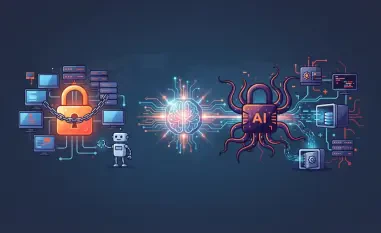
The methodology employed by the “n0n” collective signals a concerning evolution in the modern threat landscape, particularly through their integration of artificial intelligence to streamline malicious activities. By leveraging advanced AI models to generate sophisticated hacking scripts and automate the identification of system vulnerabilities, this group has managed to launch simultaneous campaigns across a wide array of industries, including retail giants such as Walmart and Samsung. This automated approach allows smaller criminal cells to punch far above their weight class, executing complex data exfiltration tasks that would have previously required much larger teams and significantly more time. This shift toward AI-driven cybercrime makes it increasingly difficult for standard defensive measures to keep pace, as the scripts can be rapidly adapted to exploit new weaknesses as soon as they are discovered. As these hackers continue to refine their technological toolkit, the boundary between minor digital nuisances and major systemic threats continues to blur, requiring a fundamental rethink of how corporate security architectures are constructed.
To mitigate the aftermath of these breaches, industry leaders emphasized the necessity of shifting focus toward the prevention of secondary fraud, particularly sophisticated phishing attempts. Since the leaked information is most valuable as a lead for social engineering, security analysts advised consumers to be extremely skeptical of any unsolicited communication claiming to be from a financial institution. High-pressure tactics and requests for sensitive credentials should have served as immediate red flags for those navigating the digital landscape. Experts recommended that individuals verify the identity of senders by using official contact numbers located on the back of their physical cards rather than clicking links embedded in emails. Moving forward, the financial sector took steps to implement more stringent auditing processes for all third-party vendors, ensuring that external partners met the same security benchmarks as the banks themselves. By tightening these peripheral loops, the industry aimed to close the gaps that allowed the “n0n” group to turn marketing data into a weapon against the world’s most affluent consumers.