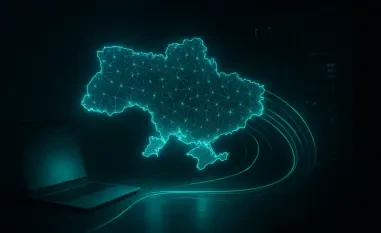
The emergence of Cavern Manticore represents a significant evolution in Iranian cyber warfare, demonstrating how state-sponsored actors leverage modular architectures to infiltrate high-security networks with surgical precision. This group, identified by security researchers as a subsidiary of the Ministry of Intelligence and Security (MOIS), has recently directed its focus toward the Israeli government, defense, and IT sectors. The group’s activities, particularly throughout the military campaign known as Operation Epic Fury, highlight a sophisticated level of tactical maturity. Their methodology suggests a close relationship with other Iranian entities like MuddyWater and the Lyceum subgroup, indicating a shared pool of resources or a common strategic doctrine within the Iranian intelligence apparatus.
To achieve initial access, the group does not rely solely on traditional phishing but instead exploits legitimate software ecosystems to bypass conventional defenses. For instance, the abuse of SysAid software updates has served as a primary vector for delivering malicious code under the guise of routine administrative activity. By utilizing remote monitoring and management tools and browser-based remote desktop utilities, the actors maintain a low profile while moving laterally through a network. This strategic reliance on trusted platforms allows them to exfiltrate sensitive data without triggering the immediate alarms associated with overtly malicious software.
Understanding Cavern Manticore and its Modular C2 Framework
The framework employed by Cavern Manticore is defined by a modular command-and-control (C2) structure that separates core persistence from specialized operational tasks. This architecture provides the group with remarkable agility, as they can update or swap out specific capabilities without needing to modify the foundational backdoor. The Iranian nexus is further confirmed by the use of infrastructure hosted by Fars Data, a known Iranian provider, and the implementation of ASP.NET handlers for command delivery. Such a configuration ensures that the primary agent remains as small and inconspicuous as possible, reducing the overall attack surface visible to security analysts.
Moreover, the technical overlaps with MuddyWater and Lyceum are not merely coincidental but reflect a standardized approach to XOR-based obfuscation and communication protocols. The group’s operational discipline is evident in their ability to manage complex campaigns across various industries while keeping their detection rates on platforms like VirusTotal remarkably low. This success stems from a decoupled approach where the core agent serves as a long-term listener, while the modules are only deployed when specific, high-value objectives need to be met.
Technical Comparison of Architectural Components
Primary Functionality and Operational Role
The Cavern agent operates as the primary persistent backdoor, functioning as the central nervous system for the group’s presence within a compromised environment. Its main objective is to establish a reliable heartbeat with the C2 server, ensuring that the attackers maintain access even after system reboots or network changes. This component is built using various .NET compilation formats, which are specifically chosen to frustrate automated analysis and traditional signature-based detection engines.
In contrast, the Cavern modules are specialized post-exploitation tools that are dynamically loaded by the agent to perform specific actions. While the agent manages the connection, the modules handle the “heavy lifting,” such as data exfiltration, credential harvesting, or network tunneling. This division of labor ensures that if a specific module is detected during a data theft operation, the primary agent remains safe and hidden, allowing the attackers to regroup and attempt a different tactic later.
Detection Evasion and Stealth Mechanisms
Stealth is the defining characteristic of the Cavern framework, achieved through the use of per-module AppDomain isolation. By loading each specialized module into its own isolated memory space, the group prevents a failure or detection of one component from exposing the entire suite of tools. This level of isolation is a sophisticated defensive evasion technique that complicates memory forensics, as the malicious code does not reside in the same space as the primary process.
Furthermore, the framework employs XOR-based obfuscation to mask its internal logic and communication strings, a technique frequently observed in Lyceum operations. Many of the group’s tools are also disguised as legitimate software or administrative scripts, which helps them evade behavioral analysis. Because the modules are often “fileless” or reside only in memory during execution, traditional file-scanning tools often fail to identify the presence of the framework until the damage is already done.
Communication Infrastructure and Tactical Execution
The communication between the compromised host and the C2 infrastructure is managed through specific ASP.NET handlers, providing a legitimate-looking channel for data exchange. Command delivery is often blended with normal web traffic, making it difficult for network security tools to distinguish between a user browsing the web and the agent receiving instructions. The infrastructure itself is strategically placed within Iranian-hosted environments like Fars Data to minimize the risk of international takedown efforts.
While the agent maintains a persistent heartbeat, the execution of modules is strictly task-oriented and on-demand. This means that the most dangerous parts of the toolkit are only present on the system for the duration of the specific task, further reducing the window for detection. By combining this modular execution with browser-based remote desktop tools, the group can perform lateral movement that mimics the behavior of a local system administrator, effectively hiding their tracks.
Operational Challenges and Defensive Considerations
Analyzing modular frameworks like Cavern presents significant technical obstacles for incident response teams because the payload is often decoupled from the persistence mechanism. When a suspicious process is identified, investigators may only find the lightweight agent, which lacks the obvious indicators of malicious intent found in larger, monolithic malware. The group’s ability to “live off the land” by abusing RMM utilities further complicates the picture, as these tools are often whitelisted in corporate environments.
The use of localized hosting providers like Fars Data also allows the group to bypass geofencing and other geography-based blocking strategies used by some organizations. Because the group demonstrates such a high degree of operational discipline, their campaigns often remain undetected for extended periods. This persistent presence allows them to conduct deep reconnaissance and wait for the most opportune moment to deploy their modules and achieve their strategic objectives.
Strategic Summary and Mitigation Recommendations
The comparative analysis of the Cavern framework demonstrated that the separation of the agent from its modules provided Cavern Manticore with a robust and resilient operational capability. The agent secured the group’s long-term persistence, while the specialized modules enabled targeted data theft and network manipulation with minimal risk of total exposure. This dual-layered approach proved highly effective against standard security perimeters in the Israeli government and defense sectors. The group’s reliance on SysAid and legitimate RMM tools highlighted a critical vulnerability in how organizations managed third-party software and administrative access.
To counter these tactics, security teams were advised to implement more rigorous monitoring for atypical .NET AppDomain creation and suspicious RMM behavior. Defense-in-depth strategies, such as strict geofencing of Iranian-hosted infrastructure and enhanced scrutiny of software update processes, were recommended to reduce the risk of initial compromise. By focusing on the behavioral patterns of the modular framework rather than just file-based signatures, organizations were better equipped to identify and neutralize the group’s presence before data exfiltration occurred.