The sky above American cities and farmland has transformed into a high-stakes arena where technological innovation is frequently caught in the crosshairs of national security policy and shifting global alliances. For years, the dominance of Da-Jiang Innovations, or DJI, in the consumer and enterprise drone markets has sparked a flurry of legislative efforts aimed at grounding these devices under the premise of protecting sensitive data. This friction has reached a boiling point as the Federal Communications Commission contemplates a total ban, prompting a desperate scramble for clarity within an industry that has grown deeply reliant on these high-precision aerial platforms. While the rhetoric from Washington often paints a picture of a digital Trojan horse, the reality on the ground is far more nuanced, involving thousands of first responders, farmers, and infrastructure inspectors who argue that removing these tools would create a dangerous technological vacuum. The debate now hinges on whether security is a measurable technical metric or a moving geopolitical goalpost.
Technical Integrity: Scrutinizing the Hardware Through Independent Audits
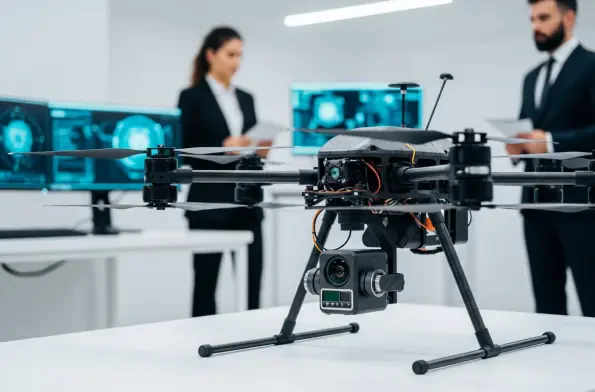
To address the persistent allegations of espionage and data leaks, DJI recently commissioned an extensive five-month security evaluation conducted by OnDefend, a reputable cybersecurity firm based in the United States. This audit was not a curated demonstration but a deep dive into the hardware and software of the consumer-oriented Air 3S and the industrial Matrice 4E, both of which were purchased from standard retail outlets to ensure the findings represented the same products used by the general public. Investigators dismantled the devices to examine internal circuitry, analyzed radio frequency emissions for any signs of hidden transmissions, and monitored firmware behavior under various operational conditions. The methodology aimed to identify any “backdoors” or undocumented communication channels that could theoretically allow a foreign entity to siphon information from American operators. By utilizing a third-party domestic firm, DJI sought to provide a transparent baseline of technical facts that could withstand the scrutiny of regulators and experts.
The technical findings from this rigorous evaluation provided a significant boost to the company’s argument that its technology is fundamentally secure and respects data sovereignty. Researchers reported that no critical or high-risk vulnerabilities were discovered during the testing period, and most importantly, no evidence was found suggesting that flight logs, images, or GPS coordinates were being exfiltrated to servers outside the United States without user consent. While the audit did uncover a small number of low-risk software bugs, these were classified as typical of any complex modern electronics platform and were scheduled for mitigation via standard firmware updates. This lack of a “smoking gun” regarding state-sponsored surveillance suggests that the technical risks may have been overstated in political discourse. Furthermore, the analysis confirmed that the supply chain for these specific models showed no signs of hardware-level tampering or malicious modifications during assembly, reinforcing the company’s commitment to hardware integrity.
Strategic Autonomy: Addressing Vulnerabilities in the Global Supply Chain
Despite the absence of concrete technical flaws, the legislative push against DJI has increasingly pivoted toward the broader concept of supply chain resilience and national autonomy. Lawmakers argue that even a secure drone represents a strategic risk if the entire ecosystem—from parts and batteries to specialized sensors—is controlled by a geopolitical adversary. This perspective shifts the focus away from what the software is doing today and toward what might happen in a future conflict where access to these tools could be severed or weaponized through sudden trade restrictions. The U.S. government is actively seeking to foster a “Blue UAS” domestic industry, but this transition has been hampered by the significant price and performance gap between American-made drones and their Chinese counterparts. For many federal and local agencies, the prospect of a total ban is not just a matter of switching brands but a logistical nightmare that involves replacing entire fleets with less capable technology at a much higher taxpayer cost.
The fallout from this regulatory uncertainty is already being felt across the American economy, as thousands of commercial operators and public safety departments face a precarious future. Public comments submitted to the FCC reveal a deep sense of anxiety among search and rescue teams, utility inspectors, and agricultural specialists who have integrated DJI’s specialized thermal imaging and multispectral sensors into their daily workflows. These stakeholders argue that a sudden prohibition would degrade their ability to respond to emergencies or manage critical infrastructure safely and efficiently. In response to this outcry, some regulators have begun exploring conditional approval frameworks or “white-listing” specific models that undergo continuous monitoring, yet the overarching policy goal remains a gradual decoupling from foreign-controlled technology. This ongoing friction illustrates the difficulty of balancing national security objectives with the practical needs of an economy that has become globally integrated. The debate is no longer just about code; it is about the definition of sovereignty.
Security Frameworks: Implementing Comprehensive Standards for Aerial Safety
The resolution of this conflict required a move toward standardized, objective testing protocols that decoupled technical performance from political affiliations. By establishing a clear set of cybersecurity benchmarks that all manufacturers had to meet, regardless of their country of origin, the industry began to find a middle ground that prioritized actual safety over theoretical risk. Stakeholders recognized that building a robust domestic supply chain was a multi-year endeavor that could not be achieved through abrupt bans alone, but rather through sustained investment in American manufacturing capabilities and research. Operators were encouraged to adopt localized data storage solutions and offline flight modes to further mitigate any lingering concerns about remote data access. Ultimately, the dialogue shifted toward a framework where trust was verified through continuous audits and transparent software architectures, allowing for the continued use of advanced technology while simultaneously accelerating the development of alternatives.
Looking forward, the focus turned to creating a resilient aerial infrastructure that protected national interests without stifling the innovation necessary for economic growth. Organizations implemented rigorous internal compliance programs to ensure that every piece of hardware was vetted against updated federal security standards before deployment. This proactive approach included the use of data encryption and air-gapped systems for sensitive missions, effectively neutralizing many of the concerns that originally drove the legislative debate. Furthermore, the push for transparency led to more open collaboration between manufacturers and government agencies, fostering an environment where security updates were deployed rapidly in response to emerging threats. By prioritizing data-driven decision-making and investing in a diversified supply chain, the industry successfully navigated a period of intense geopolitical scrutiny, ensuring that the benefits of unmanned aerial technology remained accessible to those who relied on them for critical operations every day.