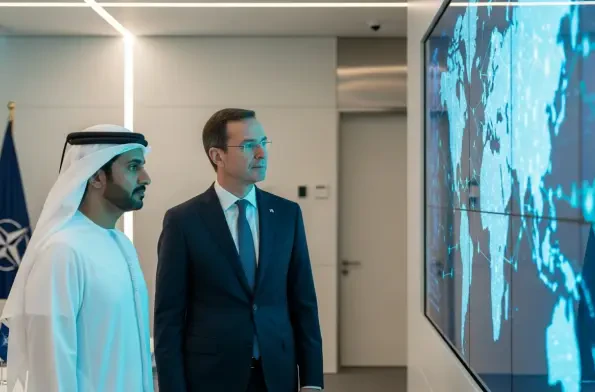
In an era where digital battlefields are as critical as physical ones and artificial intelligence can be weaponized for disinformation campaigns, the traditional concepts of national security are being fundamentally reshaped. Against this backdrop of rapidly evolving, technologically-driven threats, the 7th meeting of the Istanbul Cooperation Initiative (ICI) Policy Advisory Group convened in Kuwait, marking a pivotal moment in the strategic partnership between the host nation and the North Atlantic Treaty Organization (NATO). High-level discussions at the NATO-ICI Regional Center brought together partner nations, regional experts, and NATO officials, all united by a shared resolve to fortify regional security. The summit placed a pronounced emphasis on confronting the sophisticated challenges posed by AI and cybersecurity, signaling a proactive, unified effort to navigate an increasingly complex and interconnected global security landscape through enhanced cooperation and shared responsibility.
A Partnership Rooted in Shared Commitment
Kuwait’s Leadership and Diplomatic Vision
Kuwait firmly solidified its role as a central pillar of regional stability and international cooperation by hosting the high-level meeting for the third time. In his inaugural address, Kuwait’s Deputy Foreign Minister, Sheikh Jarrah Jaber Al-Ahmad Al-Sabah, articulated that the gathering was a direct manifestation of his nation’s “unwavering dedication to dialogue and cooperative security.” He underscored the profound significance of the NATO-ICI Regional Center, which stands as the first and only such institution established outside of NATO territory, calling it a powerful testament to the depth and resilience of the Kuwait-NATO partnership. This commitment was further demonstrated by a significant organizational shift; for the first time, the meeting was hosted by Kuwait’s Ministry of Foreign Affairs. This move signaled a deliberate strategic intent to broaden the center’s diplomatic functions beyond its traditional training and educational mandate, positioning it to more effectively advance shared security and political objectives with both regional allies and NATO partners.
This strategic enhancement of the center’s role reflects Kuwait’s broader vision to serve as a key diplomatic facilitator in the Gulf region. By leading such crucial security dialogues, Kuwait is not only reinforcing its own national security but also actively contributing to a more stable and predictable regional order. The decision to elevate the meeting’s stewardship to the Ministry of Foreign Affairs was a clear message that Kuwait views its partnership with NATO through a comprehensive lens, one that integrates military, political, and diplomatic dimensions. This integrated approach is seen as essential for addressing the multifaceted threats of the modern world. It allows for a more nuanced and holistic strategy, enabling the partners to leverage diplomatic channels in concert with security cooperation to de-escalate tensions, build confidence among regional actors, and collaboratively design frameworks for long-term peace and stability, thereby advancing mutual interests far more effectively than through security measures alone.
Navigating a Complex Security Landscape
A dominant theme throughout the discourse was the urgent and critical need for security frameworks to adapt to a rapidly evolving environment where technology, geopolitics, and defense are inextricably linked. Deputy Foreign Minister Sheikh Jarrah explicitly stated that the meeting’s sharp focus on artificial intelligence and cybersecurity reflects this new and challenging reality. The agenda was meticulously designed to foster a comprehensive dialogue, tackling a wide spectrum of vital topics that included a frank assessment of the political and security climate in the region, an exploration of shared security perspectives, and the development of innovative, collaborative strategies to counter insidious cross-border threats. He characterized these interconnected issues as indicative of the “complexity of the shared security environment,” which in turn necessitates the creation of “flexible and adaptive cooperation mechanisms” capable of responding to threats in real time with precision and unity of effort.
This consensus underscored the enduring value of the Istanbul Cooperation Initiative as a foundational platform for substantive dialogue and coordinated action. The entire framework, as articulated by the Deputy Minister, is built upon the core principles of mutual respect and the firm conviction that lasting security can only be achieved through transparency, open communication, and collective effort. The discussions were not merely theoretical but were aimed at producing practical outcomes and fostering a deeper institutional partnership. The overarching goal was to move beyond traditional, reactive security postures and toward a proactive, forward-looking model of cooperation. This model emphasizes shared intelligence, joint training exercises, and the co-development of defensive technologies, ensuring that all partner nations are equipped to collectively identify, deter, and respond to the hybrid threats that define the contemporary security arena, from cyber-espionage to AI-powered influence operations.
Navigating Global Challenges Together
NATO’s Strategic Perspective on Regional Security
From the NATO perspective, Javier Colomina, the Secretary General’s Special Representative for the Southern Neighborhood, reaffirmed the immense strategic importance of the alliance’s partnership with its Gulf partners. He lauded Kuwait for its foundational and unwavering role in advancing NATO-Gulf relations and commended the host nation for its robust and consistent support of the cooperative track. Colomina highlighted how the NATO-ICI Regional Center in Kuwait has evolved from a novel concept into one of the alliance’s most crucial and active hubs for regional training, education, and political dialogue. He situated the discussions within the broader context of “profound security challenges that no country or region can confront alone,” citing the war in Ukraine and persistent instability across the Middle East as urgent drivers for more integrated collective security efforts. This viewpoint established a key trend in the dialogue: the explicit recognition of the interconnectedness of global security challenges, where events in one region have direct and immediate repercussions in another.
Colomina pointedly illustrated this interdependence by stating that security in the Gulf and the Euro-Atlantic region is inseparable. He referenced the use of Iranian-made drones in the Ukraine conflict as a stark example of how regional conflicts and technological proliferation can have far-reaching global consequences. Furthermore, he noted the wider impacts of geopolitical competition on global food and energy supplies, emphasizing that disruptions in the Middle East directly affect economic stability and security in Europe and beyond. This perspective moves away from a siloed view of regional security, instead promoting a holistic understanding that what happens in the Gulf matters to NATO, and vice-versa. This recognition serves as the strategic bedrock for a deeper, more institutionalized partnership, one that is built not just on shared values but on the pragmatic reality that in a globalized world, security is a shared responsibility with indivisible outcomes for all.
A Unified Roadmap for Future Collaboration
The meeting culminated in a unified understanding and a clear, actionable roadmap for the future of Kuwait-NATO collaboration. A strong consensus emerged that the very nature of security threats has fundamentally and irrevocably changed, demanding a proactive, multi-domain, and cooperative approach rather than a reactive, state-centric one. The discussions were structured to concretely address a prioritized list of shared challenges that span both traditional and emerging threats. These included enhancing border and maritime security, bolstering counterterrorism capabilities, developing resilience against hybrid threats, and, most critically, building joint capacities to defend against malicious uses of emerging technologies like artificial intelligence and sophisticated cyber weaponry. The gathering successfully reaffirmed the Istanbul Cooperation Initiative, which has been the primary vehicle for this partnership for over two decades, as the essential framework for navigating these modern complexities.
Ultimately, the event in Kuwait was a definitive statement of a maturing strategic alliance that has evolved to meet the demands of a new era. It set the stage for the next phase of collaboration, one that is built on a sophisticated recognition of the indivisibility of regional and global security. The dialogue moved beyond simple declarations of intent and laid the groundwork for tangible cooperative projects, joint exercises, and information-sharing protocols designed to build a more resilient collective defense. The key takeaway was a shared commitment to not only react to crises but to proactively shape a more stable and peaceful future through sustained political dialogue, practical cooperation, and a unified stance against those who would seek to disrupt the international order. The partnership emerged from these talks stronger and more focused, prepared to collectively build a secure future.