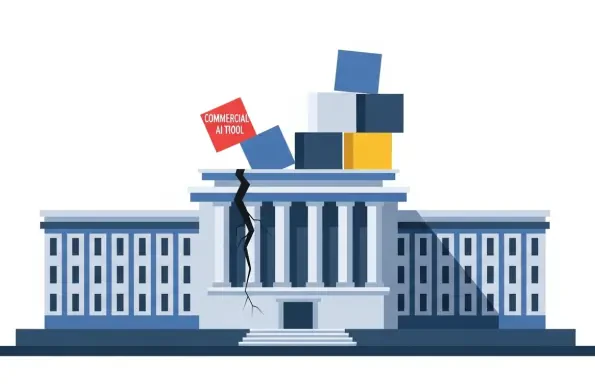
A single, seemingly careless action by one of the nation’s top cybersecurity officials—allegedly uploading sensitive documents to a commercial AI chatbot—has sent shockwaves through the federal government. This incident transcends a simple breach of protocol; it serves as a powerful and alarming case study, exposing a fundamental conflict at the heart of the government’s modernization efforts. The urgent push to integrate cutting-edge artificial intelligence for efficiency and a competitive edge is colliding with the steadfast, non-negotiable need to safeguard national security. This event forces a critical reevaluation of federal AI strategy, questioning whether the race for innovation has outpaced the development of essential safeguards, creating systemic vulnerabilities that could be exploited by adversaries.
The Watchdog’s Misstep: A Symptom of a Deeper Malaise
Exposing the Core Vulnerability
The profound irony of the situation cannot be overstated: the acting chief of the Cybersecurity and Infrastructure Security Agency (CISA), an organization responsible for defending the nation’s digital infrastructure, is at the center of a data compromise involving a publicly available AI tool. This revelation suggests the problem is not one of individual negligence but of a systemic cultural and procedural failure. If the leader of a premier cybersecurity agency can make such a lapse in judgment, it indicates a pervasive disconnect between policy and practice that likely extends throughout the federal workforce. The incident has become a catalyst, forcing a difficult but necessary conversation about whether current security protocols and training are adequate for the age of generative AI. It highlights a critical blind spot where even those entrusted with enforcing cybersecurity standards may not fully comprehend the unique risks posed by these powerful new technologies, transforming what might have been seen as an isolated error into a red flag for national security.
The immediate fallout has been a cascade of urgent reviews of AI usage policies across numerous federal departments, underscoring the widespread nature of the vulnerability. The CISA incident is not an anomaly but a symptom of a government-wide struggle to adapt. It reveals a flawed approach to new technology adoption, one that has inadvertently created new attack vectors for hostile foreign actors. The core issue is that the convenience and perceived efficiency of commercial AI tools are highly attractive to government employees, yet the security implications are often underestimated or ignored in the absence of clear directives. This lapse demonstrates that without a unified, coherent, and strictly enforced framework for AI use, federal agencies are operating in a high-risk environment where the next major security breach may be just one well-intentioned but misguided query away. The event serves as a stark reminder that in the realm of national security, technological advancement without corresponding security evolution is not progress, but peril.
The Unseen Dangers of Commercial AI
At the heart of this security dilemma are the technical mechanics that make commercial AI platforms inherently risky for sensitive information. When a user inputs text into a service like ChatGPT, that data is transmitted across the public internet to the company’s servers for processing. Unlike software that runs on a local machine, this process removes the data from the user’s direct control. Furthermore, many commercial AI models use this input data not just to generate a response but also for analysis and to train future iterations of the AI. This means sensitive government information could become permanently embedded within the model’s complex neural network. The critical point is the persistence of this data; complete and verifiable deletion of specific information becomes virtually impossible once it has been used for training, meaning traces of classified or sensitive material could remain within the system indefinitely, accessible under certain conditions.
This creates several distinct and significant risk vectors that federal agencies must confront. First, the centralized servers of AI providers are high-value targets for sophisticated cyberattacks by state-sponsored hackers seeking to acquire government intelligence. Second, user data held by a commercial entity can be subject to legal subpoenas, potentially forcing the disclosure of sensitive information through legal channels. Third, there is the risk of “model leakage,” where the AI might inadvertently expose information from one user’s query in its response to an unrelated user. The distinction between consumer-grade AI tools and their more secure enterprise-level counterparts is crucial; the former lacks the robust data isolation, residency guarantees, and stringent privacy controls mandated by government security standards. The private sector learned this lesson from incidents like the 2023 Samsung case, where engineers uploaded proprietary code. For the federal government, however, the stakes are exponentially higher, involving national security rather than just corporate intellectual property.
A Governance Void: When Policy Fails to Keep Pace with Technology
The Regulatory Patchwork
The CISA breach starkly highlights the inadequacy of the existing federal policy landscape to govern the use of AI effectively. Foundational regulations such as the Federal Information Security Management Act (FISMA) were architected for a previous technological era, focusing on securing defined network perimeters and systems. These frameworks are ill-equipped to address the unique challenges posed by modern AI systems, which are dynamic, constantly learning from user inputs, and often hosted by third-party commercial vendors. While entities like the Office of Management and Budget have issued guidance on AI governance, these directives frequently lag behind the blistering pace of technological advancement. They often lack the specificity and enforcement mechanisms needed to translate high-level principles into practical, on-the-ground rules for federal employees, leaving significant room for interpretation and error.
This regulatory vacuum has fostered a dangerous “patchwork” of inconsistent and often contradictory policies across different federal agencies. In the absence of a clear, comprehensive, and binding legislative framework from Congress, federal employees are left to navigate a confusing maze of executive orders and internal memos. This forces them to make ad-hoc decisions about what AI tools are safe to use for their work, a responsibility they are often not equipped to handle. The result is a significant increase in the risk of security lapses, as well-meaning staff may unknowingly use unauthorized or insecure platforms in their efforts to be more productive. This lack of a unified, government-wide standard for AI usage not only creates vulnerabilities but also hinders the government’s ability to adopt AI securely and strategically, creating a fragmented approach where risk management is inconsistent at best.
The Human Element in a Digital Age
Perhaps the most troubling aspect illuminated by this incident is the powerful role of human behavior, even among the most highly trained experts. The allure of powerful AI tools that promise dramatic gains in efficiency and productivity can override years of security training. This phenomenon is often attributed to “security fatigue”—the cognitive and emotional exhaustion that arises from the constant need to evaluate digital risks in a complex environment. In high-pressure government roles where performance and efficiency are paramount, the temptation to take a shortcut by using a convenient but unauthorized tool can become overwhelming. The CISA incident serves as a potent reminder that policies and technical controls alone are insufficient if the human element is not adequately addressed. It forces a necessary and urgent shift in how the federal government views insider risk.
Historically, cybersecurity training and awareness campaigns have centered primarily on defending against external threats like phishing attacks, malware, and social engineering attempts. However, the proliferation of generative AI necessitates a new and equally strong emphasis on mitigating unintentional insider risk. The threat is no longer just from malicious actors but also from dedicated, well-intentioned staff who inadvertently create major vulnerabilities while trying to do their jobs better. Future training must move beyond generic warnings and provide concrete, scenario-based education on the specific dangers of feeding sensitive data into AI models. This requires a continuous and adaptive approach that evolves alongside the technology, helping employees understand not just the rules, but the profound national security consequences of their digital habits in an AI-driven world.
Navigating the AI Frontier: Balancing Innovation and Imperative Security
Learning from the Private Sector
In contrast to the government’s often reactive and fragmented approach, the private sector has been more proactive in developing and implementing strategies to manage AI-related risks. Many corporations have adopted multi-layered governance models that serve as a potential blueprint for federal agencies. This approach combines robust technical controls, such as sophisticated Data Loss Prevention (DLP) tools that can automatically detect and block employees from uploading sensitive or proprietary information to external AI platforms, with comprehensive policy frameworks that leave no room for ambiguity. These policies are then reinforced through continuous employee education programs designed to build a culture of security awareness specifically tailored to the nuances of artificial intelligence, ensuring that every team member understands their role in protecting critical data.
Another highly effective strategy gaining traction in the corporate world is the adoption of a “Zero Trust” approach to AI usage. This more restrictive but far more secure model operates on the principle that no application or user is trusted by default. In practice, this means every potential use case for an external AI tool must undergo a formal approval process and is governed by strict data classification systems. Employees are given explicit guidance on precisely what types of information can and cannot be shared with external platforms, eliminating guesswork and reducing the likelihood of accidental data exposure. Furthermore, many companies are either investing in enterprise-grade versions of commercial AI platforms, which offer enhanced security features and data privacy guarantees, or are developing their own internal, proprietary AI systems to ensure that sensitive data never leaves their controlled environment. These industry best practices offer a clear path forward for federal agencies seeking to harness AI’s power without compromising security.
The Strategic Crossroads
The security breach at CISA arrived at a critical juncture for the United States’ national AI strategy, forcing a difficult reckoning. The federal government had been actively promoting widespread AI adoption to enhance operational efficiency, streamline services, and, most importantly, maintain a technological advantage over global adversaries like China. However, this incident exposed a fundamental conflict within that strategy: the push for rapid innovation was at odds with established security protocols. AI’s inherent “data hunger”—its reliance on vast datasets to learn and function effectively—creates immense pressure to relax data-handling controls in ways that can have severe and lasting consequences for national security. The government was left to confront a series of fundamental strategic questions about its technological future.
In the wake of this “watchdog stumbling,” federal agencies had to grapple with whether to invest heavily in sovereign AI capabilities—secure, government-owned and operated systems—to reduce their dangerous reliance on commercial platforms. The incident underscored the urgent need to establish clear, consistent, and enforceable mechanisms for AI usage policies across all branches of government. Ultimately, the challenge proved to be as much about culture and human behavior as it was about technology. The government’s response to this defining moment tested its ability to navigate the complex and perilous landscape of the 21st century. It was a critical test that helped determine whether the power of AI could be harnessed responsibly or if such breaches would become a common and dangerous feature of an accelerating technological age.