In the vast, silent expanse of low Earth orbit, thousands of satellites speed along at nearly 17,500 miles per hour, forming the invisible backbone of modern global infrastructure. This increasingly crowded domain is now a frontier of strategic competition, compelling nations to develop novel ways to protect their critical assets from a growing array of threats. Australia has decisively entered this high-stakes arena, funding a cutting-edge artificial intelligence system designed to act as a vigilant, autonomous guardian for its orbital interests and those of its allies. This A$2.9 million investment in the Space Threat Analysis and Response System (STARS) marks a pivotal shift toward proactive, machine-speed defence in space.
The Dawn of an Autonomous Guardian
Australia’s Department of Defence has initiated a significant leap in its space security posture by awarding a contract to the Sydney-based firm Space Machines Company (SMC). Facilitated through the Advanced Strategic Capabilities Accelerator (ASCA), the funding will support a 24-month project to develop a functional prototype of STARS. This system is envisioned as a sophisticated AI platform dedicated to the autonomous, near real-time monitoring and protection of satellites. Its core mission is to detect, analyze, and formulate responses to a wide spectrum of in-orbit threats, moving beyond passive observation to active, intelligent defence. This endeavor represents a critical investment in sovereign capability, ensuring Australia can independently safeguard its vital space infrastructure against emerging challenges.
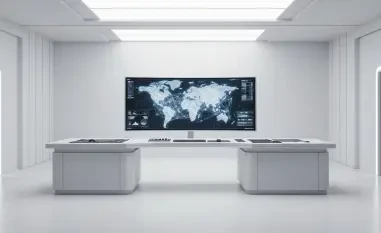
The technical challenge that STARS is designed to overcome is immense, as low Earth orbit has become a complex and unpredictable environment. The system will ingest and synthesize massive volumes of data from a diverse network of sources, including ground-based space domain awareness sensors and commercial surveillance providers. By fusing this information, STARS will create a dynamic, high-fidelity picture of the orbital domain, allowing it to identify and predict hazards with unprecedented accuracy. These threats range from dangerous close approaches between satellites and unauthorized rendezvous operations to potential signal interference. The system’s continuous analysis provides an essential layer of security for the national and allied assets that are indispensable for communication, navigation, and intelligence.
A Leap Beyond Human Reaction Time
The fundamental advantage of the STARS platform lies in its ability to operate at “machine speed,” a necessity in an environment where reaction times are measured in seconds. Rajat Kulshrestha, CEO of Space Machines Company, has underscored that the sheer velocity and complexity of orbital dynamics make traditional manual analysis processes dangerously slow. An AI-driven system can evaluate threat characteristics, assess the level of risk to specific Australian and allied space assets, and generate a prioritized list of potential response options almost instantaneously. This rapid decision-making cycle transforms the paradigm of space defence, replacing hours of human deliberation with automated, actionable intelligence that can preempt or mitigate a threat before it materializes into a crisis.
STARS is engineered not merely as an isolated detection tool but as the intelligent core of a comprehensive, integrated defence ecosystem. The completed prototype is slated for integration into SMC’s broader Solstice OS platform, an AI-powered command-and-control system for managing entire spacecraft fleets. This seamless link between threat intelligence and physical response capability will enable the coordinated deployment of the company’s Optimus Viper Rapid Response Vehicles. These agile, 200-kilogram orbital servicing spacecraft are designed to function as “space first responders,” capable of executing missions to inspect, monitor, or actively protect a targeted satellite. This end-to-end capability, from detection to on-orbit action, provides a powerful and flexible deterrent.
A Strategic Move in a New Global Arena
Australia’s investment in this advanced system is a direct response to the escalating congestion and militarization of space. The proliferation of thousands of satellites, including massive commercial constellations, has dramatically elevated the risk of accidental collisions and created a far more complex environment to monitor effectively. Concurrently, rising geopolitical tensions, particularly in the Indo-Pacific region, have ignited a race among nations to develop sovereign capabilities for space situational awareness and defence. The demonstrated anti-satellite technologies by several countries have underscored the acute vulnerability of orbital infrastructure, which is now considered a critical domain of national security alongside land, sea, air, and cyberspace.
The development of STARS aligns perfectly with Australia’s National Defence Strategy, which prioritizes the cultivation of sovereign industrial capabilities and the enhancement of decision advantage across all operational domains. By entrusting this critical project to a domestic company, the government is not only seeking to secure its assets but also to bolster its defence industrial base in high-priority sectors like autonomous systems and battlespace awareness. Furthermore, the system is being designed with coalition operations in mind, explicitly including safeguards for partner-nation systems within frameworks like AUKUS and the Quad. This forward-looking approach positions Australia to become a key contributor to allied space security.
A New Era of Orbital Security
The contract for the STARS project signified a strategic and forward-looking investment in Australia’s national security and technological sovereignty. The initiative demonstrated a clear shift from a passive space monitoring posture to one capable of proactive, autonomous threat assessment and response. By championing a domestic company for this critical development, the government concurrently reinforced its sovereign defence industrial base. The project underlined a global consensus that effective space defence in the modern era requires the leveraging of artificial intelligence to process information and enable decisions at speeds that far surpass human capability. The successful integration of STARS into an operational fleet would ultimately provide Australia and its allies with a novel and powerful tool to protect critical orbital infrastructure.