The targeted sabotage of nearly 30 distributed power generation sites across Poland in late 2025 served as a jarring confirmation of a long-held fear within the energy sector: the systems designed to make power grids greener and more resilient are also making them more vulnerable. While this sophisticated operation did not cause a widespread blackout, its success in breaching critical operational technology (OT) and permanently damaging equipment marked a dangerous escalation. This incident provides a definitive answer to a looming question, demonstrating that distributed energy resources are not just a future target for cyber adversaries—they are squarely in the crosshairs now.
The Widening Attack Surface of Modern Energy
The architecture of the modern power grid is undergoing a radical transformation. The traditional model, built around a few large, centralized power plants, is steadily giving way to a decentralized network composed of thousands of Distributed Energy Resources (DERs). These smaller-scale power generation and storage systems include solar panels on commercial rooftops, local wind farms, and combined heat and power (CHP) facilities that serve specific communities or industrial parks. This shift promises greater efficiency and resilience against physical disruptions.
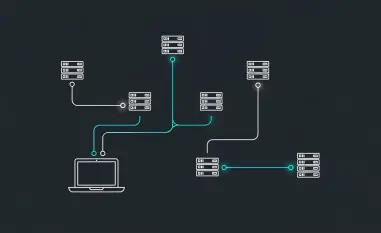
However, this decentralization comes at a steep cybersecurity cost. Each DER is a node on the network, managed and monitored through internet-connected devices and control systems. This connectivity, while essential for optimizing energy flow, exponentially increases the number of potential entry points for malicious actors. Unlike a monolithic power plant with a heavily fortified digital perimeter, the distributed grid presents a sprawling and porous attack surface, where a single compromised device can become a gateway to wider disruption.
Deconstructing the Poland Grid Incident
The attack on Poland’s grid last December was a masterclass in exploiting these new vulnerabilities. According to an in-depth analysis by the cybersecurity firm Dragos, the assailants did not target a central utility. Instead, they focused with surgical precision on the communication and control systems linking grid operators to the DER assets. Their primary targets were the Remote Terminal Units (RTUs), the crucial hardware that allows for the remote monitoring and management of renewable energy sites.
By exploiting exposed network devices and unpatched software vulnerabilities, the attackers gained access to these critical systems. Once inside, their actions went far beyond simple disruption. They systematically wiped Windows-based systems to erase their tracks and hinder recovery, reset system configurations to sow chaos, and, most alarmingly, attempted to permanently “brick” essential monitoring equipment. This deliberate destruction of hardware moved the incident from a temporary outage to a calculated act of industrial sabotage.
A Coordinated and Two-Tiered Assault
The operation revealed a sophisticated division of labor between two distinct but interconnected hacking units, both with ties to the state-sponsored group known as Sandworm. The initial infiltration and intelligence gathering were handled by a team identified as KAMACITE. This group’s mission is to gain initial access, establish long-term persistence within a target’s network, and conduct deep reconnaissance of the OT environment. Their methods are patient and stealthy, leveraging spear-phishing campaigns, stolen credentials, and vulnerabilities in public-facing services to burrow into a system undetected.
Once KAMACITE has mapped the terrain and secured a foothold, the operation is handed off to ELECTRUM, the disruption specialists. This second team is responsible for the kinetic phase of the attack, bridging the IT and OT environments to cause physical consequences. ELECTRUM deploys custom malware and ICS-specific tools to manipulate industrial control systems, moving from digital intrusion to tangible damage. The Polish incident, though assessed as opportunistic, showcased this model’s deadly efficiency, allowing the adversary to weaponize pre-existing access for maximum impact.
From Reactive Defense to Proactive Resilience
The attack on Poland’s DERs served as a critical wake-up call, underscoring the inadequacy of traditional cybersecurity measures in the face of OT-focused threats. Fortifying the modern grid requires a fundamental shift in strategy from reactive defense to proactive resilience. This begins with hardening the front lines by securing all network-facing devices, diligently applying patches for known vulnerabilities, and enforcing strict segmentation between corporate IT networks and sensitive OT environments to limit lateral movement by attackers.
Beyond these foundational steps, energy providers must develop enhanced visibility into their operational networks. This involves implementing robust monitoring solutions capable of detecting the subtle, anomalous activities characteristic of a KAMACITE-style reconnaissance campaign. Furthermore, organizations need OT-specific incident response plans that account for attacks aiming to cause physical destruction, not just data theft. Understanding the adversary’s playbook, such as the two-tiered model used in Poland, is crucial for developing strategic threat intelligence that can anticipate and counter future campaigns before they reach their destructive phase.
The deliberate and destructive nature of the Poland grid attack has fundamentally altered the threat landscape for the global energy sector. It demonstrated that adversaries not only possess the capability to disrupt distributed energy systems but also the strategic intent to cause lasting physical damage. As the world continues its transition toward a decentralized and interconnected energy future, building a resilient and secure grid has become one of the most pressing challenges of our time. The lessons learned from this incident highlighted the urgent need for a unified defense that integrates proactive security measures, deep operational visibility, and sophisticated threat intelligence.