For years, the smart lock industry dangled the promise of a truly keyless future, one where your very presence would be enough to grant you access to your home. While the introduction of features like PIN codes and remote app control successfully untethered users from physical keys, the much-anticipated hands-free auto-unlock experience consistently fell short of expectations. This core functionality, meant to be the pinnacle of convenience, was plagued by inconsistency and unreliability. The frustration of a door unlocking unexpectedly or, worse, failing to unlock when needed, created a significant trust deficit. This left many to conclude that for a device where security is the primary function, unpredictable convenience was a compromise they were unwilling to make, relegating a potentially revolutionary technology to the status of a frustrating novelty.
The Technological Shift to Spatial Awareness
Solving the Precision Problem
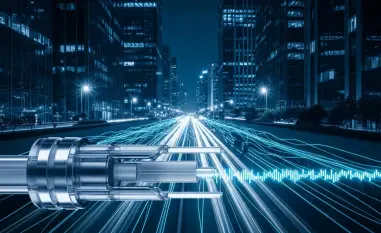
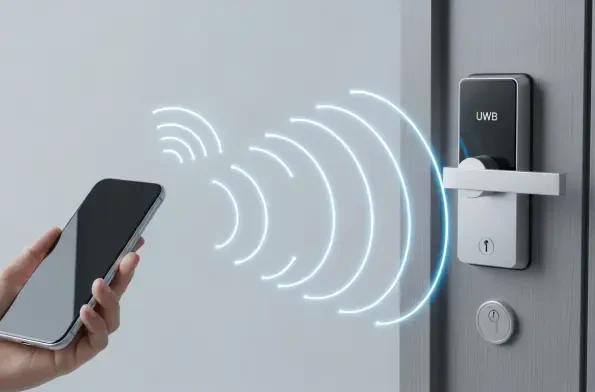
The fundamental limitation of earlier smart locks was their inability to truly understand their surroundings, relying on the imprecise metric of Bluetooth signal strength to approximate a user’s location. This method proved incapable of distinguishing between a person approaching the door with clear intent to enter and someone simply lingering nearby, either inside or out. Ultra-Wideband (UWB) technology addresses this core deficiency by introducing a level of spatial awareness that was previously unattainable. Instead of inferring proximity, UWB measures it directly using techniques like Time of Flight (ToF) and Angle of Arrival (AoA). By calculating the precise travel time and direction of short radio pulses between the lock and a user’s device, it achieves centimeter-level accuracy, allowing the system to build a detailed, real-time picture of a user’s trajectory, speed, and orientation relative to the doorway.
This transition from approximation to precise measurement enables a lock to exhibit deterministic behavior, meaning it acts predictably and consistently based on high-fidelity data. A UWB-equipped system does not just register that a user is “near”; it can track their exact path, confirming they are approaching from the outside on a direct course for entry. This ability to understand context and intent finally eliminates the guesswork that led to so many false positives and negatives in previous generations. Furthermore, the inherent nature of UWB’s time-based measurements provides a robust security advantage, making it naturally resistant to relay attacks, a common vulnerability where a signal from a key fob is captured and rebroadcast to trick a system into unlocking. This built-in security layer is crucial for establishing the trust necessary for a device that guards the most personal of spaces.
From Connectivity to True Intelligence
This leap forward represents a critical evolution in the smart home, moving beyond devices that are merely connected to those that are genuinely intelligent. A first-generation smart lock was connected because it could respond to a remote command from a smartphone app, but its awareness ended there. In contrast, a UWB-powered lock possesses a form of sensory perception, gathering and interpreting rich spatial data to understand the context of a situation. It actively perceives its environment, transforming the vague concept of presence into concrete, actionable intelligence about a user’s location, direction, and intent. This shift is analogous to the difference between a simple light switch and a motion-activated lighting system that knows not only that someone is in a room but also where they are and in which direction they are moving.
For the end user, this newfound intelligence delivers on the original, unfulfilled promise of an entirely seamless and invisible entry experience. The daily ritual of fumbling for keys or a phone while juggling groceries, children, or pets becomes a thing of the past. The door simply recognizes an authorized user’s specific approach and unlocks a moment before they arrive, creating an effortless transition from the outside world to the sanctuary of home. This level of unwavering reliability transforms hands-free access from a temperamental, experimental feature into an essential convenience that feels as fundamental and dependable as any other home utility. It becomes an integrated part of the home’s infrastructure, working silently and flawlessly in the background of daily life.
Redefining the Smart Home Experience
Building a Foundation for the Future
The shift toward predictable, UWB-powered access control has profound implications for the professional smart home industry. For installers and integrators, the unreliability of early auto-unlock systems created significant business challenges, leading to frequent support calls, customer dissatisfaction, and potential liability issues. A device that failed to perform its core security function consistently was a difficult product to endorse. The deterministic performance of UWB technology fundamentally changes this dynamic, transforming the smart lock from a high-risk, high-support gadget into a reliable, scalable solution that professionals can install with confidence. This newfound dependability reduces post-installation troubleshooting, strengthens client trust, and allows integrators to build more sophisticated and robust smart home systems around a secure and predictable access point.
However, the true power of this technological advancement is only unlocked through industry-wide collaboration and standardization. For a UWB lock to become a central component of the modern smart home, it must communicate seamlessly within a complex, multi-vendor ecosystem. This is where interoperability protocols like Matter and Thread play a critical enabling role. These standards create a common language for smart home devices, ensuring that a lock from one manufacturer can interact securely and reliably with smartphones, hubs, and other sensors from companies like Apple, Google, and Amazon. By breaking down the proprietary “walled gardens” that have fragmented the industry, these protocols future-proof installations and simplify system design, allowing the smart lock to transcend its role as a standalone product and become a fully integrated piece of the home’s foundational infrastructure.
The New Cornerstone of Home Automation
The convergence of UWB’s spatial precision with the universal language of standards like Matter marks the moment the smart lock graduates from a simple connected device to a pivotal anchor for home-wide intelligence. No longer just a gatekeeper, the lock becomes a primary source of trusted contextual data. The events of “arrival” and “departure” are no longer simple triggers based on imprecise geofencing; they become verified, high-confidence system events. This allows for the creation of sophisticated and truly context-aware automations that can be orchestrated with certainty. For example, the system can know not just that a family member has arrived, but that a specific individual has crossed the threshold, triggering personalized lighting scenes, adjusting the thermostat to their preference, and disarming the security system—all without any manual input.
This transition from theoretical potential to market reality is already underway, exemplified by products like the Aqara Smart Lock U400. Such devices serve as tangible proof that the integration of UWB accuracy, system-level digital keys like Apple Home Key, and open communication standards is no longer a future concept. This new generation of hardware is not merely an iterative improvement; it signals where the entire residential access market is headed. The lock is reimagined as a sensor-rich endpoint that intelligently bridges the indoor and outdoor environments, becoming the cornerstone of a home’s spatial intelligence by providing the reliable, foundational data needed to build the next generation of truly responsive, intuitive, and secure living spaces.
A New Era for Residential Access
The journey of the smart lock began with a simple yet powerful promise of keyless convenience, a vision that was only partially realized by early generations dependent on manual inputs. The industry’s pursuit of a truly hands-free experience was consistently hampered by the technological limitations of Bluetooth, which bred user frustration and eroded trust in a critical security device. The adoption of UWB marked the start of a new era, providing the centimeter-level precision necessary for a lock to finally understand a user’s intent. This shift to deterministic behavior had profound implications, delivering the long-awaited dream of an effortless entry experience for consumers. For industry professionals, it transformed a high-risk product into a reliable, scalable solution. When combined with interoperability standards, these next-generation locks integrate deeply into the home ecosystem, becoming pivotal anchors for context-aware automations. Ultimately, the front door, once a weak link in home automation, is now poised to become the cornerstone of a new generation of intelligent living spaces.