The massive surge in cybersecurity budgets dedicated to artificial intelligence has created a paradoxical environment where state-of-the-art tools are plentiful yet measurable defensive improvements remain frustratingly elusive for most enterprise teams. Modern Security Operations Centers (SOCs) find themselves at a critical juncture where the initial hype of automated defense is being replaced by a rigorous demand for tangible returns on investment. While the technology itself is advancing at a breakneck pace, the operational frameworks supporting it often remain anchored in legacy mindsets. This divergence has led to a landscape where many organizations possess powerful AI capabilities but lack the architectural strategy to deploy them effectively against increasingly sophisticated digital threats.
The current atmosphere is one of transition, moving away from fragmented, experimental deployments toward a more cohesive and integrated system of intelligence. Security leaders are realizing that simply adding more “smart” features to their existing stack does not necessarily lead to a more secure enterprise. Instead, the focus is shifting to the underlying architecture—specifically, how different AI components interact to form a unified defensive layer. This exploration into the second wave of security AI reveals that the bridge between underperformance and excellence is built on data quality, environmental context, and a fundamental rethink of the human-role in automated workflows.
Measuring the Momentum: Adoption Trends and Real-World Integration
Data-Driven Insights into the Rapid Expansion of AI Agents
Recent industry benchmarks, such as those found in the SOC-CMM Maturity Report, indicate that the velocity of AI adoption in security operations has reached a fever pitch. Statistics reveal that AI co-pilots have experienced a staggering 145 percent year-over-year growth, while more autonomous AI agents have seen an increase of 118 percent. These figures suggest that the era of experimentation is over; AI is now a permanent fixture in the modern defensive arsenal. However, this rapid expansion has exposed a significant “value gap” that threatens the long-term sustainability of these projects. Only a small fraction of organizations, roughly 10 percent, report receiving high value from these tools, while a vast majority struggle with outcomes that are deemed minimal or even non-existent.
This discrepancy points to a growing maturity gap where the physical deployment of technology is moving far faster than the institutional ability to manage it. Organizations are often rushing to implement the latest AI features without updating their underlying processes or ensuring their personnel have the necessary training to oversee autonomous systems. Consequently, the technology remains underutilized, often serving as nothing more than a glorified search function or a basic summarization tool. The challenge for the coming months involves closing this gap by aligning technological capabilities with operational workflows, ensuring that every automated action contributes to a larger, strategic goal rather than existing as an isolated event.
Practical Applications and the Emergence of the Agentic Fabric
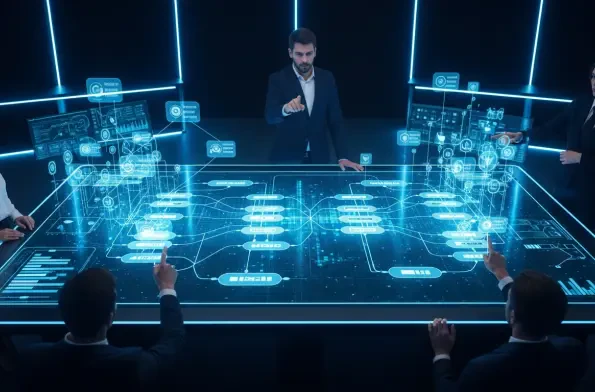
As organizations attempt to move beyond the limitations of first-generation AI, a new model known as the “agentic fabric” is beginning to take shape. Unlike previous iterations where AI acted as a standalone assistant, this new architecture creates a connective tissue across the entire security stack. For example, high-performing platforms are now demonstrating how an end-to-end agentic model can link threat intelligence directly to detection and remediation. When an agent identifies a potential threat in the intelligence phase, that insight is not just logged; it is automatically used to calibrate detection parameters and inform the automated remediation protocols that follow. This creates a continuous, self-optimizing loop that significantly reduces the time between initial discovery and final resolution.
In practice, this move toward a “shaper” or “builder” strategy allows security teams to move away from generic, off-the-shelf models that lack specific context. By customizing their AI agents to understand the unique nuances of their own digital environment, these organizations are seeing much higher levels of satisfaction and performance. These advanced applications move beyond simple conversational interfaces to act as autonomous orchestrators capable of making complex decisions based on a deep understanding of the enterprise’s critical assets and historical incident patterns. This shift represents the true potential of the second wave of AI, where the system itself becomes an active participant in the defense of the organization rather than a passive tool for human analysts.
Expert Perspectives on the Value Gap and Architectural Maturity
Overcoming the Silo Problem and Assistant Fatigue
Industry veterans and architectural experts frequently cite the “silo problem” as the primary reason for the lackluster performance of early AI initiatives. When AI capabilities are bolted onto individual, disconnected tools like a SIEM or an EDR, they create a fragmented experience for the analyst. This often results in what is termed “assistant fatigue,” where security personnel find themselves navigating multiple different AI interfaces, none of which share context or communicate with one another. This fragmentation forces the human analyst to act as the primary integration point, manually stitching together insights from different agents to form a complete picture of an ongoing incident. This manual overhead often negates the speed and efficiency gains that AI was intended to provide in the first place.
Moreover, experts argue that for AI to provide true value, it must be grounded in the specific institutional knowledge of the organization it serves. A generic AI model might understand the basics of a phishing attack, but it lacks the context to know whether a specific communication is normal for a particular executive or if a certain network connection is a critical business requirement. Without this environmental grounding, the AI remains a “black box” that produces generic responses and high volumes of noise. To mature, AI agents must be trained or fine-tuned to recognize the specific assets, historical judgments, and unique risk profiles of the enterprise. Only then can they provide the actionable intelligence required to stay ahead of modern adversaries who are already using AI to tailor their attacks to specific victims.
Building Trust Through Transparency and Grounding
The path toward higher maturity levels in security operations involves a fundamental shift in how trust is established between human operators and AI agents. Experts emphasize that trust cannot be assumed; it must be earned through consistent performance and transparent reasoning. This is why the concept of “defensible reasoning traces” has become so critical in recent architectural discussions. Analysts need to see exactly how an AI reached a specific conclusion or why it recommended a particular course of action. When the logic behind an automated decision is hidden, human operators are less likely to trust the system, leading to a situation where they feel the need to double-check every output, thereby recreating the manual bottlenecks they were trying to avoid.
Institutional grounding serves as the foundation for this transparency. By integrating AI agents with the organization’s existing policies, asset registers, and historical incident data, the system can provide recommendations that are not only fast but also highly relevant. This grounding ensures that the AI’s “reasoning” is based on the same data that a human expert would use, making the outputs more predictable and easier to validate. As organizations move toward this more grounded approach, they are finding that they can grant their AI agents more autonomy with greater confidence. This transition is essential for scaling security operations to meet the demands of a threat landscape where the volume and speed of attacks are both increasing exponentially.
Future Outlook: The Evolution from Assistants to Autonomous Orchestrators
The Shift Toward Human-on-the-Loop Oversight
The evolution of security operations is clearly pointing toward a future where the traditional “human-in-the-loop” model is replaced by “human-on-the-loop” oversight. In the former model, the human analyst is required to participate in every step of the process, from triage to remediation, which creates a natural speed limit for the entire SOC. In the emerging model, AI agents handle the bulk of the manual and repetitive tasks autonomously, while the human operator acts as a high-level governor. This shift allows the security team to focus on strategic decision-making, policy creation, and complex threat hunting rather than being bogged down by the mundane details of daily alert management. It essentially elevates the role of the security professional from a technician to a supervisor of intelligent systems.
This transition is supported by the development of a unified agentic fabric that treats the entire security lifecycle as a compounding system of intelligence. In this environment, every action taken by an agent—whether it is successful or not—becomes a data point that informs future decisions. Over time, the system develops a deep understanding of the most effective ways to defend the specific organization. This compounding effect is the key to achieving machine-speed response times. While the AI manages the tactical execution of defense, the human oversight ensures that these actions remain aligned with the organization’s risk tolerance and regulatory requirements. This balance of autonomous execution and human governance is the hallmark of a truly modern, resilient security architecture.
Navigating Adversarial AI and Governance Challenges
While the promise of autonomous orchestration is significant, it also introduces a new set of challenges, particularly as adversaries begin to use the same technology to launch their attacks. We are already seeing evidence of AI-developed zero-day exploits and highly automated vulnerability discovery tools that can probe an organization’s defenses at incredible speeds. In such a landscape, a fragmented or manual defense will inevitably fail. The only way to counter machine-speed attacks is with machine-speed defenses. However, this raises critical questions about governance and accountability. If an autonomous agent makes a mistake that leads to a business disruption, the organization must have a clear framework for understanding what went wrong and how to prevent it from happening again.
Consequently, the focus on governance is becoming as important as the technology itself. Organizations are now developing sophisticated guardrails to limit the autonomy of their AI agents, ensuring that they can only take high-impact actions within predefined boundaries. These guardrails are not static; they are dynamic policies that can be adjusted based on the current threat level and the confidence scores of the AI’s reasoning. This approach allows for a “fail-safe” architecture where the system can act quickly to mitigate clear threats while escalating more ambiguous situations to human experts. As we move forward, the ability to manage this balance between autonomy and control will become a defining characteristic of successful security teams, separating those who are overwhelmed by AI from those who use it to gain a decisive advantage.
Navigating the Second Wave of AI in Security
The transition from fragmented AI features to a cohesive agentic architecture represented a fundamental evolution in how the modern SOC functioned. Security leaders who recognized the limitations of the initial “taker” model moved decisively to implement systems that prioritized environmental grounding and lifecycle-wide integration. These organizations moved beyond the superficial adoption of chatbots and focused instead on building an agentic fabric that connected every aspect of their defensive operations. By doing so, they managed to bridge the value gap that had plagued earlier initiatives, turning underperforming tools into a resilient, compounding system of intelligence that operated with a high degree of transparency and institutional context.
Actionable steps for the immediate future involved a rigorous audit of existing AI deployments to identify silos and areas where “assistant fatigue” was hindering productivity. Leaders determined that the most effective way forward was to demand higher levels of transparency from their vendors, specifically regarding the defensible reasoning traces that allowed analysts to trust automated decisions. They also prioritized the ingestion of proprietary institutional knowledge into their AI models, ensuring that the technology was fine-tuned to the specific needs of their unique business environment. This grounded approach provided the necessary confidence to transition from manual “human-in-the-loop” processes to more efficient “human-on-the-loop” governance models.
Ultimately, the effectiveness of a security operation was no longer judged by the sheer number of AI tools in its inventory but by the seamless collaboration between its various agents. The transition to the second wave of agentic AI was not merely a technological upgrade; it was a strategic necessity in an era where adversarial capabilities were evolving at an unprecedented pace. Organizations that successfully navigated this shift were able to establish a proactive defensive posture that anticipated threats rather than simply reacting to them. They created a future where human expertise and machine intelligence worked in a symbiotic relationship, providing a level of protection that was far greater than the sum of its individual parts. This architectural foundation became the standard for enterprise defense, ensuring that the SOC remained capable of defending the organization against both known and emerging threats.