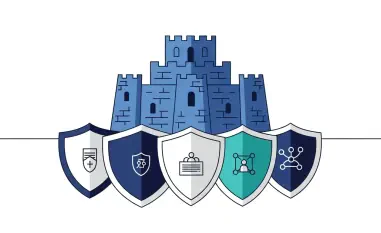
The implicit trust millions of people place in password managers as digital fortresses has been fundamentally challenged by a recent academic study that uncovered significant, exploitable flaws in their core security architecture. This research reveals a concerning disconnect between the advertised promises of invulnerable encryption and the practical realities of software design, showing how even top-tier services could theoretically be compromised by a malicious insider or a compromised server. The findings serve as a critical examination of the very foundation upon which users build their entire digital security.
The Promise vs. Reality of Zero-Knowledge Encryption
At the heart of modern password managers lies the promise of “zero-knowledge encryption” (ZKE), a security model designed to ensure that the service provider can never access or decrypt a user’s stored data. This principle is a cornerstone of user trust, as it guarantees that even if the company’s servers are breached, the encrypted password vaults remain unreadable. Users are told that only they, with their master password, hold the key to their digital kingdom, making the provider a blind custodian of their information.
However, this research posed a critical question that strikes at the core of this model: Can these ZKE implementations withstand a sophisticated attack originating from a compromised or malicious server? The study operated on the premise that if a provider or a powerful attacker gained control of the backend infrastructure, they could potentially manipulate the service’s own code to undermine its cryptographic protections. This shifts the focus from external threats to a more insidious internal one, testing whether the zero-knowledge promise is a robust architectural reality or merely a theoretical guarantee.
Widespread Trust in a Vulnerable Ecosystem
The implications of such vulnerabilities are amplified by the immense and growing reliance on these services. Cloud-based password managers like Bitwarden, Dashlane, and LastPass are not niche tools; they are mainstream applications entrusted with the digital secrets of over 60 million individual users and nearly 125,000 businesses worldwide. These platforms have become indispensable for managing the complex web of credentials required for modern online life, from personal banking to corporate network access.
Given this widespread adoption, the security of these platforms is of paramount importance. A systemic flaw does not just risk a single password; it threatens to unravel a user’s entire digital identity, exposing financial information, private communications, and sensitive corporate data. Consequently, scrutinizing the security claims of these providers is not merely an academic exercise but a crucial act of consumer and corporate due diligence, ensuring the tools designed for protection do not become a single point of catastrophic failure.
Research Methodology, Findings, and Implications
Methodology
To rigorously test the security of these platforms, the study employed a “malicious server” threat model. This approach assumes an attacker has achieved complete control over the password manager’s server infrastructure, a worst-case scenario that allows them to intercept and modify any data exchanged between the user’s client application and the cloud. This model is particularly effective at testing the integrity of ZKE systems, as it simulates a situation where the service provider itself becomes the adversary.
The researchers conducted a systematic analysis of core service features that are often sources of complexity and, therefore, potential weakness. They closely examined functionalities such as account recovery, data sharing between users, and the underlying cryptographic protocols. By dissecting how these features were implemented, they identified common design flaws and anti-patterns that could be exploited by their malicious server to circumvent the intended security protections.
Findings
The investigation uncovered a total of 25 distinct attacks across the major services analyzed. These vulnerabilities were not minor bugs but significant architectural weaknesses that could lead to severe security breaches, including the complete recovery of a user’s stored passwords. The distribution of these flaws was widespread, with the study identifying 12 in Bitwarden, seven in LastPass, and six in Dashlane, demonstrating a systemic issue rather than an isolated problem.
These attacks were categorized into four main types, each targeting a different aspect of the password managers’ design. The first involved the exploitation of key escrow mechanisms in account recovery features, allowing the server to undermine a vault’s confidentiality. A second category focused on flawed item-level encryption, where poorly authenticated metadata could be manipulated. A third set of vulnerabilities stemmed from insecure data sharing features, while the fourth highlighted how backwards compatibility with legacy code could be abused to force clients into using weaker, outdated cryptographic methods.
Implications
The research underscores a significant gap between the theoretical security promises of zero-knowledge encryption and the complex, feature-rich reality of modern software. While ZKE is a sound cryptographic principle, its implementation across millions of lines of code, coupled with user-friendly features like account recovery and sharing, introduces numerous opportunities for error and exploitation. These findings reveal that a strong cryptographic foundation can be undermined by subtle design flaws elsewhere in the system.
The practical impact of these discoveries is twofold. For vendors, it serves as an urgent call to re-evaluate their architectures, harden their systems against insider threats, and improve the cryptographic integrity of their data structures. For the millions of users who depend on these services, the study introduces a new dimension of risk. While there is no evidence these specific vulnerabilities have been exploited in the wild, their existence confirms that even the most trusted security tools are not infallible and require continuous, independent scrutiny.
Reflection and Future Directions
Reflection
The responses from the affected vendors have varied, reflecting different philosophies on security and architecture. Dashlane acted swiftly, patching a critical flaw related to backwards compatibility in late 2025 by removing support for legacy code. In contrast, LastPass and Bitwarden have acknowledged the findings and are planning to implement longer-term hardening measures to address the identified weaknesses. Meanwhile, 1Password has asserted that the issues identified in its platform are known architectural limitations, which it argues are mitigated by other security controls like its use of the Secure Remote Password protocol.
This situation highlights a persistent challenge in the security industry: the difficult trade-off between advanced security and user-friendly functionality. Features like convenient account recovery and seamless data sharing are highly demanded by users but inherently create larger attack surfaces. Balancing these demands with the need for a truly zero-knowledge architecture is a complex engineering problem, and this research has shown that in many cases, security has been compromised in favor of usability.
Future Directions
Looking ahead, the study suggests an urgent need for vendors to adopt stronger security practices. This includes implementing robust cryptographic integrity guarantees for all vault data and metadata, which would prevent the types of tampering and data-swapping attacks demonstrated by the researchers. Furthermore, companies must develop clear strategies for phasing out legacy code to eliminate the threat of downgrade attacks that weaken the security of the entire system.
The findings also point to a broader need for industry-wide improvements. Future research should focus on developing standardized security auditing frameworks specifically designed for ZKE applications. Such frameworks would provide a consistent and rigorous methodology for evaluating whether a service’s implementation truly lives up to its security promises. This would help both vendors and consumers make more informed decisions and foster a more secure and trustworthy ecosystem.
A Critical Wake-Up Call for the Password Management Industry
The study exposed that the theoretical invulnerability promised by leading password managers was undermined by practical design flaws. Although the attacks required a compromised server and have not been seen in the wild, they revealed that the core architectures of these critical security tools were more fragile than previously understood. This research was a powerful demonstration of the necessity of independent security analysis in a world that increasingly relies on third-party services to protect its most sensitive information. It serves as a catalyst, compelling the industry to move beyond marketing promises toward more robust, transparent, and verifiable security practices that can withstand the threats of tomorrow.