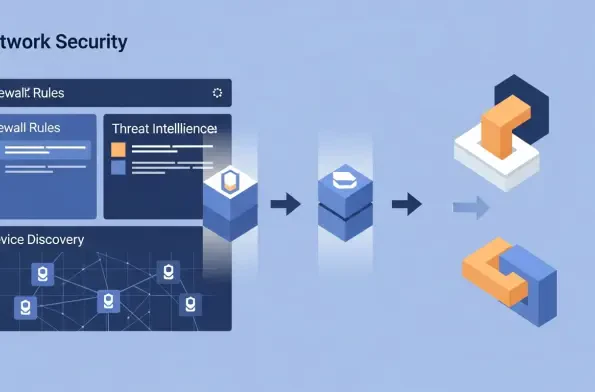
The latest major release of the open-source firewall platform, OPNsense 26.1, codenamed “Witty Woodpecker,” marks a significant evolution in network security management by introducing a powerful API-driven architecture and a suite of new tools designed for modern IT environments. This update fundamentally enhances the platform’s capacity for automation, providing administrators with programmatic control over critical firewall functions that were previously manual. By extending its API to cover key areas like Network Address Translation (NAT) and modernizing core components, the release addresses the increasing demand for scalable, efficient, and integrated security solutions. The strategic shift towards a more programmable infrastructure allows for seamless integration with external orchestration systems, DevOps workflows, and custom management scripts, transforming OPNsense from a standalone firewall into a dynamic component of a larger, automated security fabric. This release is not merely an incremental update but a foundational change that equips network professionals to handle the complexities of today’s distributed and fast-paced digital landscapes with greater precision and control.
A New Era of Automation and Visibility
This version introduces significant enhancements that streamline management and provide deeper insights into network activity, focusing on both user experience and programmatic control.
Modernizing Firewall Management
The user experience in OPNsense 26.1 has been substantially refined to accelerate real-time analysis and simplify policy management, directly addressing common administrative pain points. A completely updated live firewall log now offers faster, more responsive feedback on network traffic, enabling security teams to diagnose issues and monitor activity with greater efficiency. This real-time visibility is complemented by a redesigned Firewall Rules interface, which streamlines the process of creating, modifying, and understanding security policies. Beyond the graphical interface, the release makes a monumental leap in automation capabilities by extending its API coverage. Crucially, the API now includes endpoints for managing Source NAT tagging and Destination NAT, also known as port forwarding. This expansion is pivotal for organizations leveraging infrastructure-as-code and automated deployment pipelines, as it allows for the programmatic configuration of complex network routing and access rules, reducing the potential for human error and dramatically speeding up provisioning in dynamic cloud and virtualized environments.
Enhanced Threat Intelligence and Discovery
A primary focus of the “Witty Woodpecker” release is the integration of advanced threat intelligence and automated network asset discovery, providing administrators with proactive security tools. Through an optional new plugin, the platform now natively supports Q-Feeds, a curated threat intelligence service that delivers real-world indicators of compromise (IoCs). This integration allows for the direct application of malicious IP and domain blocklists to firewall policies, enabling a dynamic defense posture that adapts to emerging threats without manual intervention. Complementing this external intelligence is the new built-in Host Discovery service. This feature automatically scans the network to identify and inventory all connected devices, creating a comprehensive and continuously updated map of network assets. By providing a clear overview of every device, from servers to IoT endpoints, Host Discovery eliminates the blind spots that often complicate security management and compliance efforts, ensuring that all network participants are accounted for and can be properly secured.
Core System and Service Upgrades
Fundamental improvements to the platform’s underlying architecture and key networking services ensure greater stability, performance, and future-readiness.
Fortifying the Security Engine
The Intrusion Detection and Prevention System (IDPS) received a significant architectural overhaul, moving to a more flexible and modern declarative structure. This change simplifies configuration management and enhances the system’s resilience and scalability. A key functional addition to the IDPS is a new inline inspection mode, which offers more robust, real-time threat prevention by analyzing traffic as it passes through the firewall rather than relying on mirrored traffic. This inline capability allows the system to actively block malicious packets before they can reach their intended targets. Simultaneously, core networking services have been upgraded. The Unbound DNS service now supports the use of multiple blocklist sources, giving administrators greater granularity in filtering unwanted or malicious domains. The Kea DHCP server was also improved with better handling of prefix delegation, a critical feature for managing IPv6 address allocation in complex network topologies. These core enhancements ensure the platform’s security engine remains at the forefront of threat mitigation technology.
A Look at Foundational Modernization
The release reflected a deep commitment to modernizing the platform’s foundational architecture for improved long-term stability and extensibility. Key components responsible for Router Advertisement and general interface configuration were migrated to a Model-View-Controller (MVC) and API-driven model, which separates the logic from the presentation layer. This architectural shift not only streamlines development and reduces code complexity but also ensures that future enhancements can be implemented more efficiently and with greater consistency. Furthermore, the platform’s default handling of IPv6 was updated to align with contemporary networking standards, reinforcing OPNsense’s suitability for next-generation network deployments. These behind-the-scenes changes, while not immediately visible to every user, were instrumental in ensuring the platform’s core remains robust, secure, and prepared to adapt to the evolving demands of network technology. The cumulative effect of these updates was a more cohesive and powerful security platform.