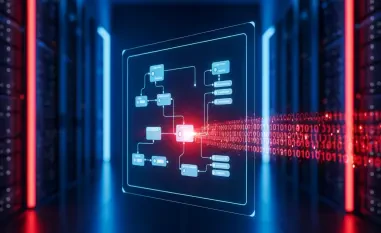
The rapid integration of sophisticated automation into the core of enterprise operations has fundamentally changed how businesses manage their digital infrastructure and sensitive data streams. Modern organizations now rely on low-code and no-code platforms to bridge the gap between disparate software services, creating a cohesive digital nervous system. This shift allows teams to deploy complex logic without extensive manual coding, significantly accelerating the pace of innovation.
As these tools move from the periphery to the center of the corporate stack, the choice between self-hosted and cloud-based environments becomes a pivotal security consideration. Self-hosted instances offer greater control and privacy, yet they place the burden of server maintenance and patch management directly on the internal IT staff. Meanwhile, cloud environments provide ease of use but require a high degree of trust in the provider’s ability to secure the underlying infrastructure from external threats.
These interconnected ecosystems, such as n8n, act as central repositories for an organization’s most sensitive assets, including API keys, database credentials, and proprietary business logic. Managing this data requires robust encryption and strict access controls, as any breach in the automation layer could potentially expose every connected service within the enterprise. Consequently, workflow orchestration has become both a primary driver of efficiency and a significant point of vulnerability.
Evolution and Valuation of the Global Automation Ecosystem
Key Drivers Shaping the Low-Code Development Revolution
The ongoing surge in demand for rapid application development is fueling a democratization of coding that empowers non-technical staff to build functional tools. By lowering the barrier to entry, companies can address specific operational bottlenecks without waiting for centralized IT resources. This decentralized approach fosters a culture of agility, allowing departments to iterate on their own processes in real time to meet changing market conditions.
The integration of artificial intelligence and machine learning within automation nodes is further enhancing this productivity boom. AI-driven nodes can now perform complex data analysis, natural language processing, and predictive modeling directly within a standard workflow. This capability transforms simple data transfers into intelligent decision-making processes, though it also introduces new complexities regarding how AI models interact with secure data environments.
Measuring Growth Potential in the Enterprise Automation Market
Industry indicators suggest a continued expansion of the automation software market as more sectors embrace modular workflow tools. From 2026 to 2028, the industry is expected to see a significant uptick in adoption among small and medium-sized enterprises that previously lacked the technical overhead to implement such systems. This growth is driven by the realization that automation is no longer a luxury but a fundamental requirement for maintaining a competitive edge in a data-driven global economy.
Long-term outlooks for the sector remain positive, provided that platforms can maintain a high standard of security and reliability. High-severity security disclosures serve as critical tests for platform adoption rates, as they force providers to demonstrate their commitment to transparency and rapid remediation. For many organizations, the speed and effectiveness of a vendor’s response to a vulnerability are just as important as the features of the software itself.
Navigating Critical Security Obstacles in Automation Platforms
The technical mechanics of the recently discovered flaws in n8n revolve around complex sandbox escapes and double-evaluation bugs. Specifically, CVE-2026-27577 highlights a failure in the expression compiler where certain cases were missed by the rewriter, allowing code to run in an untransformed state. This creates a pathway for an authenticated user to achieve remote code execution (RCE) by bypassing the intended security boundaries of the execution environment.
A more severe threat emerges when these vulnerabilities are chained together, such as combining the sandbox escape with CVE-2026-27493. This bug exists in the public-facing Form nodes, which are designed to accept input from unauthenticated external users. By injecting malicious payloads into these input fields, an attacker can trigger the double-evaluation flaw to execute shell commands. This effectively removes the requirement for valid credentials, making the system vulnerable to any actor on the open internet.
The risk to the “Crown Jewels” of an organization is substantial, as an attacker with system access can extract the master encryption key. This key is used to protect every stored credential within the n8n database, ranging from AWS secret keys to sensitive third-party OAuth tokens. Once this key is compromised, the attacker gains the ability to decrypt and use these credentials at will, potentially leading to a cascading breach across the entire corporate network.
Compliance Standards and the Shifting Regulatory Landscape for Data Security
Vulnerabilities that allow for remote code execution have immediate and severe implications for regulatory compliance frameworks like SOC2, GDPR, and HIPAA. These standards require organizations to maintain strict control over data access and to implement effective measures against unauthorized intrusion. A failure to patch known RCE flaws can result in significant legal liabilities, heavy fines, and a loss of certification, which can be devastating for service-oriented businesses.
Strengthening the software supply chain has become a priority for both developers and regulators, emphasizing the need for rapid patch deployment. Vulnerability disclosure programs play a vital role here, as they provide a structured way for security researchers to report issues before they are exploited by malicious actors. Platforms that prioritize these programs demonstrate a higher level of maturity and a proactive stance toward protecting their user base.
The Future of Secure Orchestration in an Increasingly Connected World
The concept of Security by Design is becoming a standard requirement for low-code environments rather than an optional feature. This approach involves building security controls directly into the architecture of the platform, such as using isolated execution environments for running untrusted code. By ensuring that each workflow node operates within a restricted container, developers can limit the blast radius of any potential exploit, preventing a single node failure from compromising the entire host.
We are seeing a move toward external runner modes where the execution of code is physically separated from the main application server. This architecture ensures that even if a script manages to break out of its immediate sandbox, it remains trapped within a secondary, hardened perimeter. Such innovations are necessary as cyber threats become more sophisticated, requiring platform providers to stay one step ahead of potential attackers through continuous architectural refinement.
Strengthening Organizational Resilience Through Proactive Patch Management
The recent disclosure involving n8n served as a stark reminder of the inherent risks in automated systems. While the developers acted quickly to release updates, the incident highlighted the necessity of maintaining a vigilant posture toward software dependencies. Organizations realized that the convenience of low-code tools must be balanced with a rigorous approach to security maintenance and environmental hardening.
Immediate remediation required users to update to the latest versions while also reviewing their internal permission structures. Many teams chose to restrict workflow creation to a smaller group of audited users and disabled certain high-risk nodes like the Form and Merge triggers where possible. These strategic adjustments, combined with the use of restricted OS privileges, significantly reduced the attack surface for those unable to patch instantly.
The automation industry moved toward a model where security investment is viewed as a foundational pillar of product development. Forward-thinking companies began integrating more automated scanning and real-time monitoring into their orchestration layers to catch anomalies before they escalated into full breaches. This proactive stance ensured that the trajectory of the automation market remained upward, bolstered by a newfound emphasis on resilience and transparency.