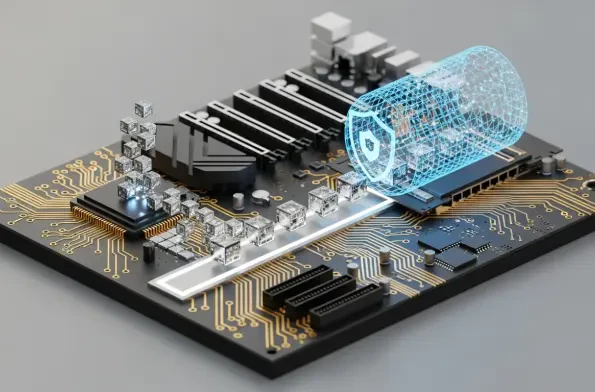
The forthcoming Linux 6.19 kernel is set to introduce a landmark security enhancement that addresses a long-standing and often overlooked vulnerability at the very heart of modern computing: the unencrypted flow of data across internal hardware buses. For decades, the high-speed PCI Express (PCIe) pathways connecting a system’s processor to its most critical peripherals—such as graphics cards, network adapters, and storage controllers—have transmitted data in plaintext. This architectural reality created a significant security gap, exposing sensitive information to potential eavesdropping or malicious tampering, particularly within shared hardware environments like multi-tenant cloud servers. The integration of foundational support for PCIe link encryption in Linux 6.19 represents a monumental step forward, extending the principles of confidential computing beyond protecting data at rest in storage or in use within the CPU. Now, the focus expands to safeguarding data in transit as it moves between components, effectively hardening the entire system from a new class of sophisticated, physical-level attacks and pushing the open-source world toward a more holistic security posture. This development promises to redefine the chain of trust within a computer, ensuring that data remains integral and confidential from the moment it leaves the processor until it is consumed by a peripheral device.
A New Frontier in System Hardening
The core of this kernel update directly confronts the inherent risk of plaintext PCIe communications by integrating the necessary infrastructure to enable encrypted links using industry-standard protocols, most notably Integrity and Data Encryption (IDE) as defined in the PCIe 6.0 specification. By establishing a secure channel between the CPU and I/O devices, the system can ensure that even if an attacker gains physical access to the hardware, the data traversing the bus remains unintelligible. This capability is especially crucial for Trusted Execution Environments (TEEs), where the goal is to create a completely isolated and secure enclave for processing sensitive information. Without PCIe encryption, a compromised or malicious hypervisor could theoretically intercept data as it moves to or from a trusted virtual machine, undermining the entire confidential computing model. The new infrastructure in Linux 6.19 closes this critical loophole, enabling a true end-to-end chain of trust where data remains protected throughout its entire lifecycle within the system, a vital requirement for industries handling highly sensitive workloads in cloud and virtualized environments.
Beyond merely shielding data from prying eyes, the new kernel framework introduces a robust mechanism for device authentication, preventing a more insidious form of hardware attack. Leveraging the Security Protocol and Data Model (SPDM), the system can cryptographically verify the identity of a PCIe device before any secure link is established. This process is essential for thwarting sophisticated “man-in-the-middle” attacks where a malicious or counterfeit peripheral attempts to impersonate a legitimate one to intercept, modify, or inject data. In an era of complex global supply chains, the ability to ensure that a network card or storage controller is a genuine, untampered device is paramount. This authentication layer provides a foundational level of trust that complements the data encryption, ensuring not only that the communication is private but also that it is happening with the intended, legitimate component. This two-pronged approach of encryption and authentication provides a comprehensive defense against a range of physical and supply-chain threats that were previously difficult to mitigate at the software level.
The Industry Collaboration Powering Innovation
This transformative security feature is not the product of an isolated effort but rather the culmination of a concerted, industry-wide collaboration. The groundwork was laid by the PCI Special Interest Group (PCI-SIG), the standards body that defined the encryption and authentication mechanisms in the PCIe 5.0 and 6.0 specifications. Building upon this standardized foundation, major hardware manufacturers, namely AMD and Intel, have been instrumental in contributing the necessary code to the Linux kernel to bring these capabilities to life. AMD’s contribution includes initial support for its Secure Encrypted Virtualization – Trusted I/O (SEV-TIO) technology. As a critical extension of the company’s established SEV ecosystem, which focuses on encrypting virtual machine memory, SEV-TIO extends these protections to I/O operations. This allows a virtual machine running on an AMD EPYC processor with SEV-SNP (Secure Nested Paging) to communicate securely with an encrypted peripheral without exposing any data to the underlying hypervisor or other tenants on the same physical machine, delivering a new level of isolation for virtualized workloads.
Similarly, Intel has been a key contributor, providing kernel code to enable IDE on its platforms, which will work in tandem with its Trust Domain Extensions (TDX) technology to create secure enclaves. A particularly significant aspect of Intel’s implementation is its support for selective encryption, a feature that provides system administrators with granular control over the security posture. Instead of applying a one-size-fits-all encryption policy across every peripheral, administrators can configure which specific devices or even which individual virtual functions require an encrypted link. This capability allows for a crucial balance between security and performance, as the computational overhead of encryption can be reserved for only the most sensitive data pathways. For example, a link to a high-security cryptographic accelerator could be fully encrypted, while a connection to a less critical peripheral might remain unencrypted to maximize throughput. This pragmatic approach recognizes that not all I/O is created equal and provides the flexibility needed for real-world data center deployments.
Implementation Realities and Ecosystem Synergies
While transformative, the widespread adoption of PCIe link encryption is subject to significant practical constraints, with the most critical hurdle being its dependency on compatible hardware. These powerful security features will remain dormant unless the system is equipped with modern processors that support the underlying technologies, such as AMD EPYC CPUs with SEV-SNP or upcoming Intel platforms featuring TDX. This means a simple kernel upgrade will not be sufficient; organizations will likely need to undertake a full hardware refresh that includes the motherboard, CPU, and peripheral devices, along with corresponding BIOS and firmware updates to manage encryption keys. This dependency raises valid concerns about potential hardware fragmentation and compatibility issues with the vast ecosystem of legacy PCIe devices that do not support encryption. As a result, the transition to a fully encrypted internal bus will be a gradual one, driven by the natural lifecycle of hardware replacement in enterprise and data center environments over the next several years.
Fortunately, the new encryption capabilities do not exist in a technological silo; they are designed to synergize with other recent and concurrent advancements within the Linux kernel to create a layered defense model. For instance, the update allows for the dynamic management of encrypted PCIe links through eBPF hooks. This empowers administrators to implement and enforce runtime security policies without requiring system reboots, enabling a more agile and responsive security posture. This feature complements existing security measures, such as the BPF program signing introduced in the Linux 6.18 LTS release, which ensures that the kernel extensions themselves are trustworthy. The impact of PCIe encryption is further amplified by parallel updates in other kernel subsystems. Intel’s graphics driver updates in version 6.19 align with these security features to enable secure, virtualized GPU passthrough (VFIO), a critical capability for AI and machine learning workloads that process sensitive datasets. This holistic integration demonstrates a strategic, system-wide approach to security rather than a piecemeal one.
Pioneering the Future of Confidential Computing
The integration of PCIe link encryption and device authentication into the Linux 6.19 kernel marked a strategic and fundamental enhancement in system security. It directly confronted a critical vulnerability in modern hardware architecture, providing a powerful new set of tools for building a more secure, resilient, and trustworthy digital infrastructure. For cloud providers, this development enabled them to extend their confidential computing offerings beyond just the CPU and memory to include I/O operations, giving customers a more comprehensive security guarantee for their most sensitive workloads. In the realm of artificial intelligence, where GPUs and other accelerators process increasingly valuable datasets and proprietary models, encrypting the PCIe link became an essential defense against data leakage. The feature also proved vital for edge computing, where device authentication via SPDM provided a crucial defense against supply-chain attacks. For enterprises in highly regulated industries, the ability to encrypt data across internal hardware buses evolved into a standard requirement for meeting stringent compliance mandates, solidifying its place as a cornerstone of modern enterprise security.