The long-standing tension between stringent cybersecurity measures and the demand for fast-paced, collaborative workflows has defined a critical challenge for modern enterprises. The integration of Privileged Access Management (PAM) into collaborative platforms represents a significant advancement in the cybersecurity sector. This review will explore the evolution of this approach through Keeper Security’s new Slack integration, its key features, security architecture, and the impact it has on organizational workflows. The purpose of this review is to provide a thorough understanding of the technology, its current capabilities, and its potential future development in making security seamless and user-friendly.
The Convergence of PAM and Collaboration Platforms
The rapid adoption of collaborative tools has created a dilemma for security teams tasked with enforcing strict access controls without impeding operational agility. Integrating sophisticated security tools directly into platforms like Slack addresses the core industry challenge of balancing robust protection with efficiency. This approach moves security from a peripheral, often cumbersome, process into the natural flow of work for IT and DevOps teams.
This convergence is particularly relevant in the context of zero-trust security, which operates on the principle of “never trust, always verify.” By embedding access requests and approvals into everyday communication channels, organizations can enforce zero-trust policies more effectively. This ensures that security is not an afterthought but an intrinsic part of the operational fabric, helping to mitigate threats that arise from unauthorized or excessive user privileges.
Core Features and Security Architecture
Seamless In-Workflow Access Management
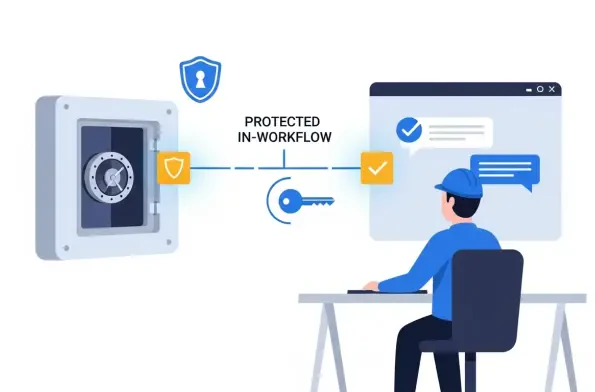
The integration’s primary value lies in its ability to manage access to sensitive resources directly from within Slack. IT and DevOps personnel can request, approve, or revoke access to credentials, shared folders, and service accounts without context-switching to a separate application. This streamlined process dramatically accelerates workflows that depend on privileged access, such as server maintenance or application deployment.
By centralizing these requests within a governed channel, the integration effectively eliminates the dangerous and all-too-common practice of sharing secrets through insecure means like email or direct messages. This shift not only enhances security by containing sensitive information but also improves team productivity by removing friction from the access management lifecycle.
Zero-Knowledge Cryptographic Control
A critical element of the integration’s design is its adherence to a zero-knowledge security model, which is maintained through a strict separation of duties. While Slack provides the user-facing interface for communication and approvals, all cryptographic functions, data handling, and policy enforcement occur exclusively within the Keeper environment. Slack never has access to unencrypted data or the keys used to protect it, ensuring the integrity of the security model.
This security posture is further strengthened by the use of customer-hosted components for the integration. By requiring organizations to host the Slack App and Keeper Commander on their own infrastructure, Keeper ensures that customers retain complete control and sovereignty over their data. This architecture prevents any third-party, including Keeper itself, from accessing the sensitive information being managed.
Just-in-Time Access and Audit Trails
The integration champions the principle of least privilege through the implementation of Just-in-Time (JIT) access. This model eradicates the security risks associated with standing privileges by granting users temporary, on-demand access to resources only for the duration it is needed. Once a task is complete, access is automatically revoked, significantly reducing the attack surface.
Furthermore, every request, approval, and access event generates a detailed and immutable entry in a comprehensive audit trail. This log provides security and compliance teams with complete visibility into who accessed what, when, and why. Such detailed records are indispensable for meeting regulatory requirements and for conducting thorough forensic investigations in the event of a security incident.
Strategic Implications for Modern Security
This integration is a clear indicator of a wider industry movement toward embedding security directly into the tools employees use daily. This “security as a part of the workflow” trend acknowledges that security measures are most effective when they are frictionless and intuitive. By meeting users where they are, organizations can foster a stronger security culture and increase the adoption of critical controls.
This development also reflects a behavioral shift in the cybersecurity market. Enterprises are increasingly prioritizing solutions that enhance the user experience without compromising on security. Tools that reduce operational friction are more likely to be used correctly and consistently, leading to better overall security outcomes than complex systems that employees are tempted to circumvent.
Practical Applications and Use Cases
The real-world applications of this technology span numerous industries where secure, audited access is paramount. In the technology sector, a developer troubleshooting a production issue can request temporary database credentials through a Slack channel, receive swift approval, and have their access logged automatically. This process is both faster and more secure than traditional methods.
In finance and healthcare, where regulatory compliance is a major concern, the integration provides a fully auditable trail for granting access to sensitive customer or patient data. Another compelling use case involves third-party contractors, who can be granted secure, one-time access to specific systems for the duration of a project, with privileges that expire automatically, minimizing risk.
Potential Challenges and Considerations
Despite its benefits, the technology may present certain adoption challenges. For some organizations, particularly those with limited IT resources, the requirement for a self-hosted setup could pose a technical hurdle. The initial configuration of the customer-hosted components demands a degree of technical expertise to ensure a secure and stable deployment.
Moreover, a market-level obstacle is the need for comprehensive user training. To maximize the integration’s effectiveness and prevent misconfigurations, employees must be educated on the new workflows and the security principles behind them. Without proper adoption and understanding, the tool’s potential to improve security posture could be diminished. These limitations can be mitigated through clear documentation, robust customer support, and a phased rollout strategy.
The Future of Embedded Access Governance
The Keeper Slack integration signals a clear direction for the future of access management, where governance becomes a pervasive capability woven into various operational systems. Keeper’s stated vision is to extend this model beyond Slack, creating a unified platform for managing access across a broader ecosystem of enterprise tools. This suggests a future where similar integrations could appear for other DevOps and IT management platforms.
Looking ahead, potential developments could include the use of AI to provide intelligent approval suggestions based on user roles, request context, and historical patterns. Deeper integrations with other CI/CD pipeline tools could further automate and secure the software development lifecycle. The long-term impact on the PAM market will likely be a greater emphasis on solutions that are not only secure but also seamlessly integrated and user-centric.
Final Assessment and Key Takeaways
The Keeper Slack integration successfully operationalizes zero-trust security by embedding critical access management functions into a platform central to modern workflows. It presents a powerful solution for organizations invested in the Keeper and Slack ecosystems, effectively balancing the need for high-grade, zero-knowledge security with the user convenience required for high-velocity teams. The technology’s architecture thoughtfully preserves data sovereignty while streamlining critical IT and DevOps processes. This integration stands as a compelling example of how security tools are evolving to become more intuitive, accessible, and ultimately, more effective in the contemporary enterprise environment.