With a distinguished career spent on the front lines of cyber defense for multinational corporations, Malik Haidar has a unique perspective on the evolving landscape of security. His work, which sits at the intersection of analytics, intelligence, and business strategy, provides him with deep insights into how modern threats are reshaping our approach to safety. Today, we explore his thoughts on a critical and often overlooked arethe physical security of higher education campuses, a world grappling with the need for openness while facing new and complex risks. Our conversation will delve into how cloud-based technologies are revolutionizing campus safety, addressing everything from the daily frustrations of lost key cards to the urgent demands of an emergency lockdown. We’ll also touch upon the practical challenges of implementation, including budget constraints and data privacy, and look ahead at what the future holds for campus security.
Campuses strive to maintain open, free-flowing environments, yet many face rising crime from external sources. How can mobile access control help administrators manage this delicate balance without creating a fortress-like atmosphere? Please share some practical examples of how this works on a daily basis.
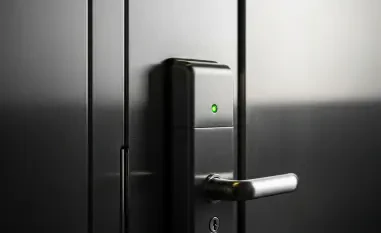
That’s the central dilemma for campus administrators today. They’re trying to preserve that vibrant, welcoming feel that is so essential to college life, but the reality is that crime is on the rise, with a reported 13% increase just last year. A significant portion of this comes from external individuals who exploit that very openness. The beauty of a mobile, cloud-based system is that it allows for an invisible layer of security. Instead of installing imposing gates and checkpoints, you empower the community with credentials they already carry: their smartphones. On a daily basis, this means a student’s phone provides seamless, hands-free entry to their own dormitory but denies access to others. A visiting professor can be granted temporary access only to the specific lecture halls and offices they need for the day, which expires automatically. This approach allows administrators to secure countless points—from admin offices and research labs to server rooms—without students or faculty feeling like they’re in a lockdown environment. It’s about creating smart, responsive perimeters rather than hard, physical walls.
Physical key cards and fobs often create logistical headaches for campus staff—they get lost, shared, or stolen. Could you walk us through the step-by-step process of using a mobile system to both onboard a new student and immediately revoke access for a departing employee?
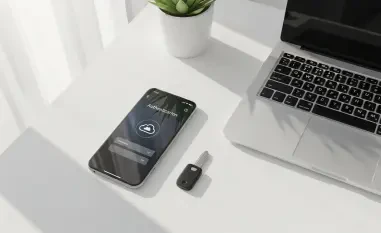
This is where the operational elegance of mobile systems really shines, turning a cumbersome, multi-step process into something that happens in seconds. For a new student, the process is entirely digital. An administrator, from their central dashboard, simply adds the student to the system and assigns them the appropriate role-based permissions—access to their specific dorm, the library, the gym, and general academic buildings. The student receives a secure link or notification on their phone, authenticates through an app, and their digital credential is live. There’s no waiting in line, no physical card to pick up, and no risk of it being lost before they even use it. Now, for a departing employee, the process is even more critical and immediate. The moment HR flags their departure, an administrator can pull up their profile from anywhere—they don’t even need to be on campus—and with a single click, revoke all access privileges instantly. The digital key on their phone is immediately voided. This eliminates that huge security gap where a disgruntled former employee might still have a physical fob, and it saves the immense time and cost of chasing down old credentials.
In an emergency situation, every second is critical. How does a cloud-based mobile system enable administrators to remotely lock down a single building, or even an entire campus, in real-time? What does that process look like from the security team’s perspective during an incident?
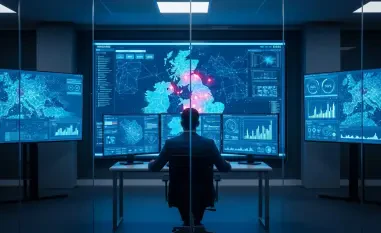
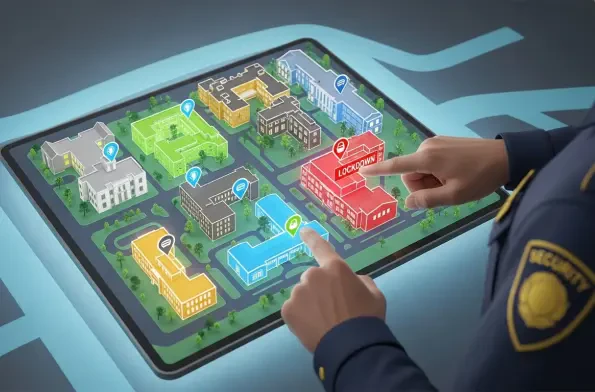
In a crisis, the ability to act instantaneously from a remote location is a complete game-changer. Imagine a security incident is reported in the science building. From the central security office, or even from a tablet in a patrol car, the security chief can pull up a map of the campus. They can select that single building and trigger a universal lockdown command. Within seconds, every electronic lock on every exterior door, lab, and classroom in that facility is secured, preventing entry. Or, if the situation requires a campus-wide response, they can initiate a global lockdown with the same ease, securing the entire grounds in a moment’s notice. From the team’s perspective, this replaces a frantic, manual process of running from door to door with a calm, centralized, and immediate action. They can simultaneously open specific doors to facilitate an evacuation route for first responders. It’s a powerful tool that transforms chaos into a controlled, strategic response, all managed through a secure, cloud-based dashboard.
Many universities operate with legacy hardware and tight budgets. How can modern mobile access be deployed without requiring a complete and costly overhaul of existing electronic locks and gates? What specific features make a wireless, cloud-managed approach a more affordable long-term solution?
The assumption that “modern” means a full “rip-and-replace” is a major misconception and a barrier for many institutions. The most innovative mobile access systems, like the solutions from Kindoo for example, are designed specifically to be backward-compatible. They can integrate with the vast majority of electronic locks, gates, and turnstiles that a campus already has in place. This means you can leverage your existing hardware investments while upgrading the “brain” of the system to a cloud-based platform. Furthermore, the move to wireless technology drastically cuts costs. You can secure doors in older buildings or remote facilities with battery-powered, surface-mounted locks that don’t need to be hardwired to the internet or a local power source. This completely eliminates the exorbitant expense of running cables through walls. Over the long term, the savings are immense. You’re not just saving on the initial installation; you’re eliminating the ongoing costs of physical credentials, rekeying locks, and dedicated IT support for on-site servers. The total cost of ownership becomes much, much lower.
Controlling who enters sensitive areas like research labs is paramount. How does integrating mobile credentials with scheduling software ensure only authorized personnel can enter at specific times? Can you describe how this dynamic, role-based access provides a clear audit trail for compliance and investigations?
This is where granular control becomes incredibly powerful, especially for protecting high-value assets or sensitive research. By integrating the mobile access platform with the university’s HR and scheduling software, access becomes dynamic and intelligent. For instance, a research assistant is scheduled to work in a specific lab from 2 PM to 5 PM on Tuesday. Their mobile credential will only unlock that lab’s door during that exact window. If they try to enter at 6 PM or on Wednesday, access is denied. This isn’t just about security; it’s about operational integrity. Every single access event—successful or denied—is logged in real-time. This creates an unchangeable digital audit trail. If an incident occurs or a compliance audit is required, administrators can instantly pull a report showing precisely who entered that lab and when. This level of accountability is nearly impossible to achieve with physical keys and provides clear, actionable data for any investigation, ensuring policies are enforced automatically.
As data privacy regulations become stricter, collecting personal information is a major concern for institutions. How can a mobile access platform provide robust security and detailed logs without requiring the collection of sensitive biometric data, like facial images?
This is a critical point, and frankly, a place where many institutions can get into serious trouble with regulations like the Biometric Information Privacy Act. The best approach is to provide top-tier security without overreaching on data collection. A well-designed mobile access platform doesn’t need your face or your fingerprint to be secure. It leverages the inherent security of the smartphone itself, using built-in encryption and secure authentication protocols. The system only needs minimal personal data to associate a credential with a user, like a name and an email or student ID. All data transmission is encrypted, protecting both the university’s network and the individual’s privacy. You get a robust, detailed log of access events without ever storing or transmitting sensitive biometric information, which is a massive liability. It’s about being smart with the technology to enhance security without compromising the fundamental right to privacy, which is a trust-building exercise with your students and staff.
What is your forecast for campus security technology over the next five years?
I believe we’re at a tipping point where the traditional, hardware-heavy approach to access control will become obsolete for most campus applications. The future is undeniably mobile, cloud-based, and integrated. Over the next five years, we’ll see a rapid move away from systems that are expensive to install and sustain. Instead, universities will adopt flexible, scalable platforms that combine ease of deployment with powerful, robust security features. The focus will shift from just locking doors to creating intelligent environments where access is dynamic, tied to roles and schedules, and managed from a single, centralized dashboard. The technology is no longer a barrier; high-performance, cost-effective solutions are now available, paving the way for any higher education institution to finally overcome the long-standing challenges of campus security and better protect its community.