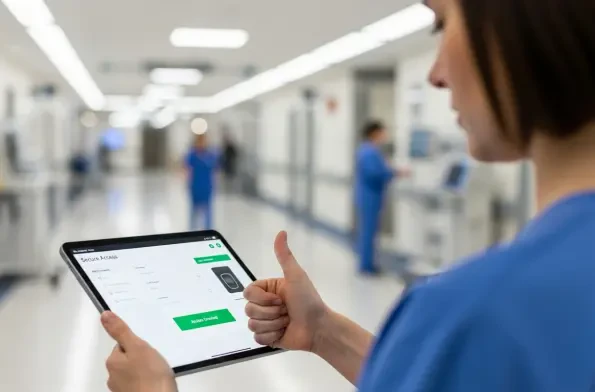
In the intricate digital ecosystem of modern healthcare, where every login, data transfer, and device connection represents a potential vulnerability, the concept of trust has evolved from a professional ethic into a critical technological imperative. With the average cost of a healthcare data breach now measured in the millions of dollars, the stakes for protecting sensitive patient information have never been higher. Behind the seamless experience of a doctor accessing electronic health records (EHRs) from a tablet or a patient viewing lab results through an online portal lies a sophisticated framework responsible for safeguarding every digital interaction. This framework, Identity and Access Management (IAM), functions as the central nervous system of healthcare cybersecurity, meticulously verifying identities, enforcing access policies, and maintaining a vigilant watch over the flow of data. A robust IAM strategy is no longer an optional IT project but an essential pillar of patient safety, regulatory compliance, and operational continuity, ensuring that care delivery remains both efficient and secure in an era of constant digital transformation.
1. The Increasing Significance of Healthcare IAM
The digital transformation of healthcare has accelerated at an unprecedented pace, bringing with it a host of new efficiencies and care models, but also a significantly expanded attack surface for cyber threats. Hospitals and health systems are now prime targets, with patient data being a highly valuable commodity on the dark web. Consequently, the financial and reputational damage from a single breach can be catastrophic. This heightened risk environment has elevated the importance of IAM from a background IT function to a strategic priority for healthcare leadership. Furthermore, the nature of healthcare work has fundamentally changed. Clinicians are no longer tethered to desktop computers within the hospital walls; they access patient information from mobile devices, home offices, and affiliated clinics. This demand for secure, ubiquitous access requires an identity framework that can validate users and devices regardless of their location, without compromising on security. This new reality makes a comprehensive IAM strategy not just a defensive measure but a critical enabler of modern, flexible healthcare delivery.
Compounding the security challenges is a complex and ever-evolving regulatory landscape that governs the handling of protected health information (PHI). Laws such as the Health Insurance Portability and Accountability Act (HIPAA) and the General Data Protection Regulation (GDPR) impose stringent requirements for controlling and auditing access to patient data, with severe penalties for non-compliance. An effective IAM system provides the necessary tools to enforce these rules systematically, creating detailed audit trails that demonstrate who accessed what information, when, and why. At the same time, security measures cannot come at the expense of patient care. In a clinical setting, seconds matter, and cumbersome login procedures or access denials can disrupt treatment workflows and potentially impact patient outcomes. Therefore, modern healthcare IAM must strike a delicate balance between robust security and frictionless usability. This challenge is further magnified by the explosion of connected medical devices, from infusion pumps to advanced imaging systems, each of which represents an identity that must be managed and secured within the network.
2. Fundamental Elements of a Healthcare IAM System
A comprehensive healthcare IAM framework is built upon several interconnected components that work in concert to create a secure and efficient digital environment. The foundation of this framework is Identity Lifecycle Management, which automates the entire journey of a user’s access rights within the organization. From the moment a new clinician is hired, the system automatically provisions their account with the appropriate permissions based on their role. When that individual moves to a different department or takes on new responsibilities, their access rights are updated accordingly. Crucially, when they leave the organization, their access is immediately and completely revoked. This automation eliminates the human error and delays associated with manual processes, closing a common loophole that attackers often exploit through dormant, forgotten accounts. Complementing this is a strong focus on Identity Verification and Fraud Prevention. Modern systems employ sophisticated methods beyond simple passwords, such as biometric scans or smart cards, to confirm a user’s identity. They also leverage AI-driven monitoring to detect anomalous login patterns or suspicious activities in real time, ensuring that every user is precisely who they claim to be before granting access to sensitive systems.
Once a user’s identity is verified, the principles of Authentication and Authorization come into play. Authentication is the process of proving identity, often strengthened through multi-factor methods, while authorization determines what that authenticated user is permitted to do. This is governed by the principle of least privilege, ensuring that a nurse can view lab results but not access hospital financial records, or a physician can update patient charts but not alter network security settings. To make this secure process user-friendly, Single Sign-On (SSO) is implemented. SSO allows clinical staff to log in once with a single set of secure credentials to gain access to all the applications and systems they are authorized to use, such as EHRs, telemedicine platforms, and lab software. This not only saves valuable time but also reduces password fatigue, which often leads to insecure practices. For the most powerful system accounts, Privileged Access Management (PAM) provides an additional layer of security. PAM solutions secure administrative credentials in encrypted vaults, record every action taken during a privileged session, and often limit the duration of high-level access, providing a robust defense against both insider threats and external attacks that compromise superuser accounts.
3. Primary Obstacles in Healthcare IAM Implementation
Despite its clear benefits, implementing a successful IAM program in a healthcare setting is fraught with unique and significant challenges. One of the most common hurdles is the complex and fragmented nature of hospital IT environments. Many healthcare organizations operate on a patchwork of systems, including decades-old legacy EHRs running alongside modern, cloud-based applications. These disparate systems were often not designed to communicate with one another, making it incredibly difficult to apply a unified access policy across the entire enterprise. The process of integrating them requires careful planning and a phased approach, often starting with the systems that handle the most sensitive data. A related challenge is balancing security with usability. Clinicians operate in a high-pressure, time-sensitive environment. If a security measure, such as a multi-step login process, is perceived as an obstacle to patient care, staff may resort to unsafe workarounds like sharing passwords or leaving workstations unlocked. Therefore, IAM solutions must be designed with the clinical workflow in mind, leveraging technologies like SSO and biometrics to make security as invisible as possible while maintaining its integrity.
Another critical challenge involves managing access during emergencies. A rigid IAM system that requires standard approvals can dangerously delay treatment when a patient’s life is at risk. Healthcare organizations must implement “break-glass” protocols that allow authorized clinicians to gain immediate, temporary access to necessary records in an emergency. However, these systems must also log every action taken during this override for subsequent review to ensure accountability and prevent misuse. Beyond these technical and procedural issues, human factors present a constant risk. Insider threats, whether from malicious intent or, more commonly, simple human error, remain a leading cause of data breaches. Employees may reuse weak passwords, fall for phishing scams, or inadvertently share credentials. Continuous and practical training is essential to mitigate these risks. Finally, budgetary constraints and the constant pace of change pose ongoing difficulties. IAM solutions represent a significant investment, and security departments must often compete for limited funds. Moreover, as hospitals grow, merge, or acquire new facilities, their IAM systems must be scalable enough to integrate new users, devices, and applications without a complete overhaul, adding another layer of complexity to an already demanding task.
4. Recommended Approaches for a Secure IAM Program
Building an effective and sustainable IAM program in healthcare requires a strategic approach that combines modern technology with sound operational practices and a strong security culture. The foundational mindset for this approach is Zero Trust, a security model built on the principle of “never trust, always verify.” In a Zero Trust architecture, no user or device is automatically considered trustworthy, regardless of whether it is inside or outside the network perimeter. Every single access request is rigorously authenticated and authorized before being granted. This is particularly vital in the dynamic healthcare environment, where clinicians roam between departments, consultants require temporary access, and third-party vendors connect remotely to service medical devices. This model ensures that every connection must continually prove its legitimacy. To implement this, organizations should universally adopt Multi-Factor Authentication (MFA), which adds a critical layer of protection beyond passwords, such as a biometric scan or a one-time code sent to a mobile device. When MFA is paired with Single Sign-On (SSO), it creates a powerful combination of security and convenience, allowing staff to access all their necessary tools through a single, highly secure login event each day.
Beyond the technological framework, the success of an IAM program hinges on its integration with real-world clinical workflows. Before deploying any new access controls, IT and security teams should observe how doctors, nurses, and other staff actually use technology throughout their day. The goal is to design an IAM system that supports and streamlines these patterns, rather than disrupting them. Automation is a key enabler of this goal. Manually managing thousands of user accounts in a large hospital is inefficient and prone to error. Automating routine tasks like account provisioning for new hires, modifying permissions when roles change, and de-provisioning access upon departure reduces delays, strengthens security, and ensures a clean, consistent audit trail for compliance purposes. This continuous monitoring should also extend to user behavior. Modern IAM tools can analyze activity patterns to identify anomalies, such as a user logging in from two different countries simultaneously or an unusual spike in data downloads, which can be early indicators of a compromised account. Catching these inconsistencies early can prevent a minor issue from escalating into a major breach.
5. The Future Trajectory of Identity Management
The evolution of Identity and Access Management in healthcare is moving toward a future defined by smarter, more seamless, and user-centric security. The next wave of IAM innovation will focus less on adding more layers of defense and more on embedding intelligent, adaptive controls directly into the fabric of digital health. One of the most significant shifts will be the adoption of decentralized identities. In this model, patients will gain greater control over their own health information, holding their data in a personal digital wallet and granting temporary, verifiable access to providers as needed. Technologies like blockchain could underpin this framework, creating an immutable and transparent record of every access event and giving healthcare leaders unprecedented visibility without adding administrative burden. Concurrently, the cumbersome password will gradually be replaced by passwordless authentication. Biometrics, such as fingerprint or facial recognition, combined with secure personal devices, will become the standard for verifying identity, eliminating a major source of user frustration and security risk.
Artificial intelligence will also play an increasingly central role, transforming IAM from a reactive to a predictive discipline. AI-powered systems will continuously learn the normal behavior of every user and device on the network, enabling them to identify subtle deviations that could signal a potential threat long before a breach occurs. This proactive risk detection will allow security teams to intervene before any damage is done. As the Internet of Medical Things (IoMT) continues to expand, the identity of connected devices will be managed with the same rigor as human users. Every smart scanner, wearable sensor, and diagnostic tool will be assigned its own unique, secure digital identity, which must be verified before it can connect to the network or transmit patient data. While these changes will not be implemented overnight, the groundwork is already being laid. The healthcare organizations that begin to embrace these future-focused concepts now will be best positioned to build and maintain the trust of their patients and clinicians in the increasingly connected decade ahead.
6. A New Foundation of Digital Trust Was Forged
The journey to modernize identity and access management ultimately transformed more than just security protocols; it reshaped the fundamental relationship between the healthcare organization, its staff, and the patients they served. The implementation of a cohesive IAM framework was not viewed as a mere technological project but as a strategic initiative to build a resilient foundation of digital trust. By centralizing control over identities and automating access policies, the organization moved beyond a reactive stance on cybersecurity to a proactive posture of enabling secure, efficient care. This shift ensured that as clinical workflows became more reliant on digital tools and patient data became more accessible across platforms, the integrity and confidentiality of that information were never compromised. Clinicians experienced a system that supported their work rather than hindering it, and patients gained confidence that their most sensitive information was being handled with the utmost responsibility. The result was a digital environment where technology became a true partner in care delivery, one that was secure by design and human-centric in its application.