The landscape of retail asset management is shifting rapidly as digital tools become central to every transaction. From the bustling storefront to the high-stakes environment of distribution centers, maintaining control over critical equipment is no longer just a logistical necessity—it is a financial imperative. Brian Davidson, the Business Development Director for Retail and Distribution at Traka, brings over fifteen years of experience to this challenge. Having risen through the ranks from technical installations to strategic leadership, he possesses a rare, 360-degree view of how hardware performance impacts the bottom line.
In this discussion, we explore the evolving role of intelligent asset management. We delve into how automated locker systems are solving the age-old problem of “device hoarding,” how integrated fault logging is replacing informal repair requests, and why standalone security systems are becoming a vital component of a modern cybersecurity strategy.
You have spent over a decade moving from technical installations to strategic leadership. How has your hands-on experience with equipment shaped your view of the retail sector, and what specific operational hurdles do you prioritize when designing asset management strategies for high-volume distribution centers?
Starting in 2010 by physically building cabinets and performing installations gave me an unfiltered look at how equipment actually survives—or fails—in a fast-paced environment. I’ve had my hands on every part of the business except sales until later in my career, which taught me that if a solution isn’t intuitive for the end-user, it won’t be used correctly. In high-volume distribution centers, the biggest hurdle is the “velocity of transition,” or how quickly an associate can grab a working tool and get to work. I prioritize reducing the “walk time” and technical friction that occurs when a worker discovers a battery is dead or a scanner is missing. When you understand the hardware from the inside out, you design strategies that focus on durability and immediate availability rather than just high-level data.
Employees often hoard shared devices to avoid faulty equipment, which drives up overhead costs. How do intelligent locker systems enforce accountability across different shifts, and what specific metrics can managers use to ensure that every device is properly rotated and returned to its charging station?
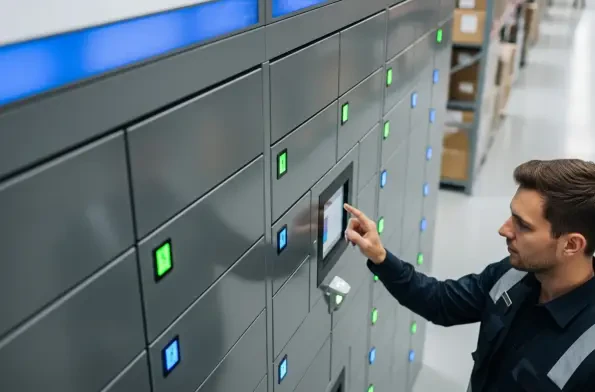
People are creatures of habit, and in a retail environment, they often fear being stuck with a broken tool, so they hide their favorite device in a personal locker, even when they go on vacation. This effectively steals that asset from the company’s rotation, forcing the business to buy more “buffer” stock than it actually needs. Intelligent locker systems stop this by requiring personal authentication—like a badge or PIN—to access a device, creating a digital paper trail for every single second that item is out. Managers can look at specific metrics, such as the “return-to-charge” ratio, which ensures a device is only considered “returned” if it is physically plugged into power. By seeing exactly who had which device and for how long, you eliminate the anonymity that usually allows hoarding and equipment neglect to thrive.
External theft of handheld scanners can result in massive financial losses and a complete halt to e-commerce fulfillment. Beyond providing a physical barrier, how do automated systems help retailers secure these assets during curbside operations, and what impact does this oversight have on protecting the overall customer experience?
We’ve seen cases where retailers trying to grow their e-commerce business were targeted by thieves who realized there was $50,000 worth of scanners sitting right outside the door during curbside pickups. When these devices are stolen, the loss isn’t just the hardware; it’s the thousands of dollars in groceries and orders that can no longer be fulfilled because the staff is flying blind. Automated systems provide a hard stop to this by enforcing strict check-out protocols where only authorized personnel can move these high-value assets to the “curb zone.” By securing these devices, we ensure the digital link between the customer’s online order and the physical product remains intact. If the scanners aren’t there, the customer experience fails immediately because the “arrived and checked-in” process breaks down, leading to long wait times and lost loyalty.
Interdepartmental friction often arises when teams “borrow” batteries or components from one another, rendering gear unusable. How does integrated fault logging replace the traditional, informal process of leaving broken equipment on a manager’s desk, and what are the practical steps for these systems to automatically trigger maintenance tickets?
It’s a common story: an in-store team has more staff but fewer batteries than the e-commerce team, so they “borrow” what they need, leaving the e-commerce scanners dead and useless. Historically, a broken device was just left on a manager’s desk with a vague note, or worse, put back into a drawer where the next person would discover the fault minutes into their shift. Integrated fault logging changes this by allowing the user to record a specific issue directly at the locker during the return process. Once a fault is logged, the system can be configured to automatically lock that compartment so no one else picks up a broken tool. Furthermore, through software integration, the system can instantly generate a maintenance ticket in the company’s IT platform, removing the human “middleman” and ensuring the repair happens in days rather than weeks.
Managing battery health is critical for maintaining a streamlined operation. Could you explain how First In First Out (FIFO) logic extends the lifespan of hardware, and how can integrating asset management with mobile device platforms remove the need for manual logins when an associate retrieves a device?
Our First In First Out (FIFO) logic is designed to ensure that the device that has been in the system—and on the charger—the longest is the one dispensed next. This prevents a small group of “favorite” devices from being overused and depleted while others sit idle, effectively balancing the wear and tear across the entire fleet. We can even share battery charge states through Mobile Device Management (MDM) platforms to ensure only fully charged units are released. To take it a step further, we can integrate the authentication process: when an associate swipes their badge at the locker to get “Device 10,” that device automatically logs them in. This removes a tedious manual step for the worker, meaning they are ready to start scanning inventory the moment the locker door pops open.
Cybersecurity concerns often make businesses wary of cloud-dependent hardware. What are the operational advantages of using standalone management systems that do not require a constant network connection, and how does this setup serve as a reliable backup plan if a retailer faces a major cyber-attack?
In an era of increasing cyber threats, being 100% dependent on the cloud is a significant operational risk. Our locker systems are designed to operate as standalone units, meaning they do not require a constant network connection to function or to grant access to authorized users. If a retailer suffers a major cyber-attack that knocks their primary network offline, the asset management system continues to work, allowing staff to get the keys and scanners they need to keep the physical side of the business moving. Having this “offline” capability serves as a critical operational backup plan. It ensures that even if the digital storefront is compromised, the warehouse and back-of-house logistics don’t have to grind to a halt because of a lost connection to a central server.
What is your forecast for asset management in the retail and distribution sectors?
The future of asset management lies in the total convergence of in-store operations and back-end supply chain logistics, where every device is treated as a mission-critical node. I forecast a shift toward “invisible” accountability, where AI-driven lockers don’t just store equipment but actively predict when a device is likely to fail based on usage patterns before the worker even notices a problem. We will see retailers moving away from viewing hardware as a sunk cost and toward a model where every scanner, battery, and key is tracked with the same precision as the inventory itself. Ultimately, the winners in the retail space will be those who use these integrated systems to eliminate “dead time” on the clock, ensuring that technology serves the employee rather than the employee spending their shift managing the technology.