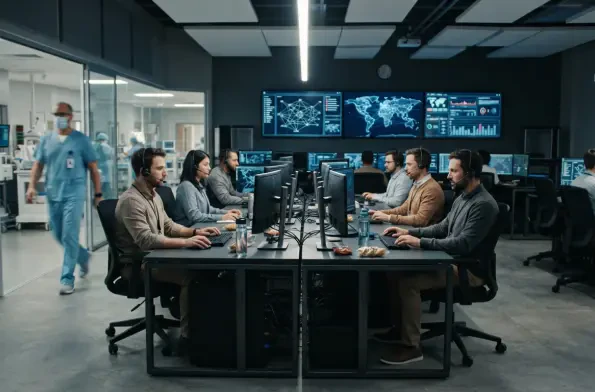
Traditional security models with a hard exterior and soft interior prove dangerous when an attacker successfully breaches the initial corporate firewall. In the high-stakes environment of 2026 healthcare, where the Istituto Nazionale Tumori (INT) and similar oncology hubs operate at the intersection of complex clinical care and rapid scientific research, this vulnerability is no longer acceptable. The digital infrastructure of a modern hospital exists in a state of constant tension; it requires open channels for data sharing among global researchers while demanding absolute, uninterrupted uptime for life-critical medical systems. When a breach occurs, the lack of internal barriers can lead to lateral movement, allowing a single compromised workstation to jeopardize everything from chemotherapy scheduling to sensitive genetic data. To address this, digital transformation strategies have shifted toward a Zero Trust architecture, prioritizing the containment of threats rather than relying solely on the hope of total prevention. This granular approach ensures that even if an intruder gains access, the institution can isolate the problem without forcing a total operational shutdown.
Navigating the Conflict Between Care and Discovery
The central challenge for healthcare administrators lies in the inherent friction between clinical safety and research agility. Physicians require high-availability systems where immediate access to diagnostic tools and patient records is a prerequisite for safety. Any significant system downtime in an oncology department can lead to delayed treatments or errors in medication administration, making digital stability a clinical necessity. On the other hand, scientific researchers thrive on agility, frequently needing to deploy new computational tools, access cloud-based analytics, and share massive datasets with international universities. In the past, these competing interests often led to security compromises, but current strategies acknowledge that neither department can be ignored. Instead of choosing one over the other, institutions now focus on protecting the irretrievable assets of the facility, which primarily include the time and physical safety of the patient during their treatment journey.
To manage these distinct requirements, institutions implement rigorous environment separation that allows innovation to proceed without endangering life-support systems. By utilizing pseudonymization and strict resource partitioning, the hospital can create two coexisting but digitally isolated worlds. The clinical side remains locked down with the highest security protocols, while the research side is granted the flexibility needed for international collaboration. This structural isolation acts as a vital safeguard, ensuring that if an experimental research platform is targeted by an exploit, the malicious activity cannot cross over into the critical networks that manage life-saving therapies. This strategy allows for the rapid pace of oncology research to continue unabated, while the clinical environment remains a “fortress within a fortress,” dedicated to patient care and operational continuity.
Isolating Threats Through Granular Network Control
Microsegmentation has become the cornerstone of modern healthcare security by replacing the obsolete concept of a single protected perimeter. In 2026, the strategy involves applying Zero Trust principles to the internal network, operating under the assumption that no device should be implicitly trusted regardless of its location. Whether it is a nurse’s mobile tablet, a laboratory server, or an MRI machine, every component is restricted to communicating only with the specific resources necessary for its function. This shift from a broad network trust model to a granular identity-based model ensures that every data packet is verified and every connection is authorized. By enforcing these internal boundaries, IT departments can prevent an attacker from using a low-priority entry point, such as a smart thermostat or a guest Wi-Fi connection, to gain access to the more sensitive systems that house patient records or treatment planning software.
The primary benefit of this granular control is the dramatic reduction of the “blast radius” during a cyber incident. If a single workstation is compromised by ransomware, microsegmentation prevents that malware from migrating laterally through the network to encrypt the pharmacy database or the pathology lab’s imaging systems. This allows for a surgical response to security threats; instead of shutting down the entire hospital network to contain a breach, security teams can isolate the specific infected segment while the rest of the facility continues to function. This “isolate the problem, not the hospital” philosophy is essential for maintaining safety, as it ensures that a security breach does not inadvertently trigger a medical crisis. The ability to maintain clinical services during an active mitigation process is the ultimate measure of a resilient healthcare infrastructure.
Maintaining Operational Continuity Beyond Digital Systems
In the current era of paperless oncology, the traditional fallback of returning to handwritten medical records is no longer a viable or safe option for managing complex treatment regimens. Modern hospitals have replaced the outdated concept of paper backups with designed and tested operational continuity systems that prioritize patient safety above all else. These protocols involve high levels of redundancy and specific downtime procedures that guide clinical staff through a crisis. For instance, if a digital chemotherapy plan becomes inaccessible due to a localized system outage, hospital protocols prohibit clinicians from proceeding based on memory. Instead, the staff activates alternative authorized verification sources and follows pre-established manual cross-check procedures. This ensures that the delivery of specialized care remains accurate and safe even when the primary technological interfaces are temporarily unavailable or under maintenance.
The integration of microsegmentation into these continuity plans allows IT staff to distinguish between localized technical failures and large-scale cyberattacks with high precision. This clarity is vital for decision-making during a crisis, as it prevents the unnecessary activation of drastic emergency measures when a simple hardware swap might suffice. Conversely, if a cyberattack is confirmed, the segmented nature of the network allows the hospital to keep non-affected departments operational, such as maintaining emergency room functions while the outpatient billing department is taken offline for remediation. By focusing on resilience rather than just defense, healthcare providers guarantee that the clinical workflow remains predictable. This structural stability provides clinicians with the confidence that their tools will remain available, ensuring that the patient’s treatment timeline is not disrupted by external digital threats.
Securing Collaborative Networks and External Partnerships
Modern medical institutions often serve as hubs for specialized networks, such as the Rare Cancer Network, collaborating with smaller hospitals that might not possess the same level of cybersecurity resources. This interconnectedness creates a significant risk profile, as a breach at a smaller partner facility could potentially travel through shared data links into the main institute’s core systems. To mitigate this risk, healthcare leaders have adopted a “connection does not imply trust” rule for all external interactions. By using segregated collaboration platforms and multi-factor authentication combined with time-limited access, the central institution ensures that partners only interact with the specific data sets required for their collaboration. This prevents an external entity from gaining a persistent or broad foothold within the main hospital’s digital environment.
When a partner facility exhibits lower security standards or experiences a breach, the central institute uses its microsegmentation capabilities to reduce that partner’s digital perimeter rather than severing the connection entirely. This is a crucial distinction in healthcare, where cutting off a partner could halt life-saving medical consultations or data sharing for rare disease research. Instead of a binary “on or off” approach, the hospital can dynamically restrict the partner’s access to only the most essential, non-critical systems. This allows for the continued exchange of medical expertise while shielding the core infrastructure from potential vulnerabilities. This nuanced management of external risk ensures that the hospital can lead large-scale research initiatives without exposing its own patients to the varying security maturities of its collaborative ecosystem.
Managing Security Risks in High-Speed Research Environments
The phenomenon of “Shadow IT”—the use of unauthorized hardware or software—remains a persistent challenge in research environments where speed and specialized tools are often prioritized over formal IT protocols. Researchers may attempt to bypass security hurdles to deploy new algorithms or utilize unique storage solutions that have not been vetted by the central security team. Rather than attempting to strictly ban these behaviors, which often only drives them further underground and away from monitoring tools, modern IT departments have moved toward a “Yes, but securely” stance. This involves providing researchers with frictionless, high-speed, and secure environments that are as easy to use as the unauthorized alternatives. By reducing the administrative burden of compliance, institutions encourage researchers to remain within the protected digital ecosystem.
Infrastructure resilience serves as the final safety net for the inevitable instances where unmanaged systems do appear on the network. Microsegmentation ensures that even if an unauthorized and vulnerable server is connected to the research network, it lacks the necessary lateral movement paths to communicate with the clinical side of the hospital. This means an exploit on an unmanaged research tool cannot be used as a stepping stone to reach the electronic health records or medical devices. This strategy effectively decouples the risk profiles of the research and clinical departments, allowing the hospital to support the rapid pace of clinical trials and data analysis. It creates a flexible environment where innovation can happen at the speed of thought without compromising the foundational safety of the patients being treated on the same campus.
Building Resilience Through Regulatory Standards and Strategy
The evolution of cybersecurity in healthcare has been heavily influenced by the transition from simple perimeter defense to comprehensive risk management, as seen in the adoption of the NIS2 Directive. This regulatory shift forced institutions to move beyond a checklist-based security approach and instead focus on supply chain integrity and operational resilience. Successful organizations realized that assuming a breach would eventually occur was the only logical way to protect patient safety. They integrated microsegmentation as a primary defense mechanism, allowing them to meet high security standards while maintaining the flexibility required for modern medicine. By treating security as a foundational layer rather than an afterthought, these institutions established a new benchmark for how healthcare can remain functional and trustworthy in an increasingly complex and hostile digital landscape.
Practical implementations of these strategies showed that the most effective way to protect medical devices was through compensatory controls. For example, many older medical machines remained difficult to patch due to strict certification requirements under the Medical Device Regulation (MDR). Healthcare leaders addressed this by walling off these unpatchable devices within their own microsegments, effectively neutralizing them as potential entry points for attackers. This proactive approach allowed hospitals to continue using specialized equipment while maintaining a high security posture. Ultimately, the focus on granular containment and the elimination of lateral movement provided the necessary framework to ensure that the delivery of life-saving treatments remained the absolute priority. These actions transformed cybersecurity from a technical hurdle into a critical enabler of safe, continuous, and innovative patient care.