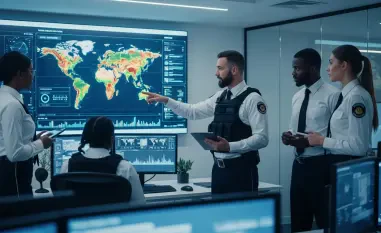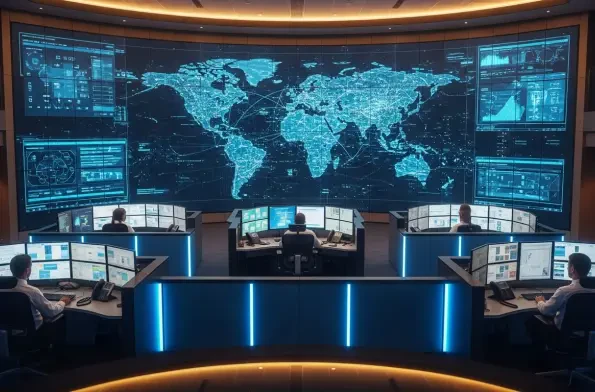
The sheer volume of data streaming from billions of interconnected devices has reached a point where human intuition alone can no longer guarantee organizational stability or public safety. Modern operations centers have moved far beyond the antiquated image of rooms filled with static monitors; they have become the central nervous systems of the global economy. By integrating sophisticated artificial intelligence with human oversight, these facilities now process millions of data points every second to prevent disasters before they manifest. Whether managing a national power grid, a global logistics network, or a city’s emergency services, the command and control center serves as the ultimate arbiter of efficiency and resilience.
The Strategic Heart of Modern Organizational Management
In the current industrial landscape, a command and control center represents the pinnacle of centralized intelligence, acting as a unified platform where disparate information streams converge into actionable insights. These facilities are no longer exclusive to the defense sector; they have become essential infrastructure for any entity managing high-stakes, real-time environments. By creating a single pane of glass for all operational variables, organizations can eliminate the silos that traditionally lead to communication breakdowns and delayed responses. This centralized approach ensures that every stakeholder, from the technician on the ground to the executive in the boardroom, operates from a single version of the truth.
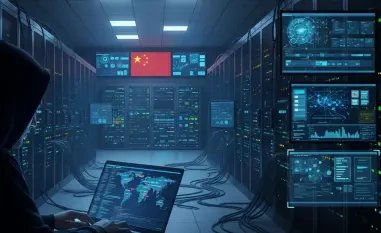
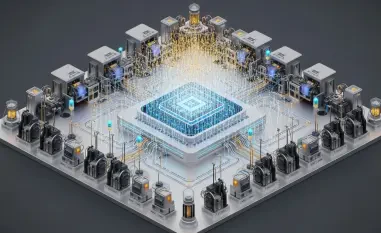
The modern industry encompasses a wide array of specialized hubs, including Network Operations Centers for telecommunications and Security Operations Centers for digital defense. These environments are heavily influenced by the integration of Internet of Things sensors and high-definition visual telemetry, which provide a granular view of every asset in a network. Market players are increasingly focusing on interoperability, ensuring that hardware from various manufacturers can communicate seamlessly within a single ecosystem. Furthermore, stringent regulations regarding data privacy and critical infrastructure protection have turned these centers into the primary enforcement points for legal and safety compliance.
Technological Evolution and Market Growth Dynamics
Digital Transformation and the Shift Toward Predictive Intelligence
The most significant trend currently reshaping the industry is the transition from reactive monitoring to predictive intelligence. In the past, operators waited for an alarm to sound before taking action; however, contemporary systems use machine learning algorithms to identify subtle anomalies that precede a failure. For instance, a slight vibration in a water pump or a minor deviation in network latency can now trigger a preemptive maintenance alert. This shift toward proactive management is reducing downtime by nearly thirty percent in industrial settings, fundamentally changing the cost-benefit analysis of investing in high-end control room technology.
Consumer and citizen behaviors are also driving this technological surge, as the demand for “always-on” services leaves no room for operational lapses. As urban populations grow, the need for smart city integration has become a primary market driver, with municipal governments investing in centers that can synchronize traffic lights, public transit, and emergency responses in real-time. This evolution is supported by the rollout of advanced edge computing, which allows for data to be processed closer to the source, reducing the latency that once hindered rapid decision-making in high-speed environments like autonomous transport or energy distribution.
Global Market Expansion and Performance Benchmarks
Recent market data indicates a robust expansion phase, with the global command and control center market projected to grow at a compound annual rate of over seven percent through 2030. Performance benchmarks are increasingly tied to the speed of data synthesis and the reduction of mean time to resolution for critical incidents. Organizations that have fully modernized their facilities report a significant improvement in resource allocation, as the ability to visualize the entire operational landscape allows for leaner staffing without compromising safety. This efficiency is a primary motivator for the private sector, where the return on investment is measured in both risk mitigation and operational throughput.
Looking ahead, the market is poised to see a surge in cloud-based and hybrid command structures. While physical centers remain vital for mission-critical security, the ability to mirror those operations in a virtual environment provides a level of redundancy previously thought impossible. Forecasts suggest that by the end of the decade, the integration of augmented reality into the control room will become a standard performance indicator. This will allow operators to virtually “step into” a remote site to troubleshoot issues, further bridging the gap between the command center and the field and driving the next wave of capital investment.
Navigating Operational Hurdles and Technical Complexities
Despite the rapid advancement of display and processing technologies, the industry faces significant hurdles in the form of data overload and cognitive fatigue. Operators are often inundated with thousands of alerts, many of which are false positives or low-priority signals. To combat this, organizations are adopting “management by exception” strategies, where the system only alerts a human when a situation requires specific, high-level judgment. This approach helps maintain operator focus on critical tasks, though it requires a high level of trust in the underlying automated filtering systems.
Technical complexities also arise when attempting to integrate legacy hardware with modern digital platforms. Many critical infrastructure systems rely on equipment that is decades old, creating a “digital divide” that can lead to security vulnerabilities. Solutions involve the deployment of sophisticated middleware and gateway devices that can translate older protocols into modern formats. Moreover, the shortage of skilled personnel who understand both the technical aspects of data science and the practical realities of field operations remains a persistent challenge that requires dedicated internal training programs and closer partnerships with academic institutions.
The Regulatory Framework and Security Compliance Standards
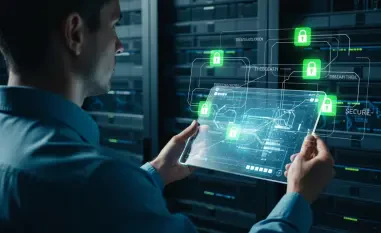
The regulatory landscape governing command and control centers has become increasingly rigorous, particularly concerning the protection of sensitive data and the resilience of critical systems. Laws such as those governing national cyber defense now mandate specific levels of encryption and physical security for any facility that manages public utilities or telecommunications. Compliance is no longer a secondary concern; it is a foundational requirement that dictates the architectural design of the center, the vetting of personnel, and the selection of software vendors.
In addition to government regulations, industry-specific standards are pushing for higher levels of transparency and auditability. For example, in the event of a major incident, a command center must be able to provide a complete digital trail of every data point received and every decision made. This “black box” functionality is essential for post-incident analysis and for demonstrating due diligence to insurance providers and oversight committees. Consequently, cybersecurity measures have become deeply embedded in the operational workflow, with continuous monitoring of the center’s own internal network to prevent it from becoming a target for state-sponsored or criminal actors.
The Future Landscape of Integrated Command Centers
As we look toward the coming years, the integration of generative intelligence and autonomous systems will likely redefine the role of the human operator. We are moving toward an era where the command center acts as an orchestrator of autonomous fleets, whether they be delivery drones, self-driving transit systems, or robotic maintenance crews. The consumer preference for seamless, invisible technology will drive organizations to hide the complexity of these operations behind highly intuitive, natural-language interfaces. This will allow commanders to issue complex instructions as easily as having a conversation, with the system handling the intricate backend coordination.
Emerging technologies like quantum computing also loom on the horizon, promising to solve optimization problems that are currently too complex for traditional hardware. This could revolutionize areas like logistics and energy management, where the difference between a good decision and an optimal one can save millions of dollars. However, this future landscape will also require a global consensus on the ethics of automated decision-making, particularly in scenarios where human lives are at stake. The balance between innovation and regulation will remain a central theme as these centers become even more intertwined with the fabric of daily life.
Synthesis of Operational Excellence and Strategic Investment
The evolution of command and control centers has demonstrated that the traditional boundaries between technology, strategy, and execution have effectively vanished. These hubs proved to be the decisive factor in an organization’s ability to withstand unforeseen disruptions while maintaining a competitive edge in an increasingly volatile global market. The findings suggested that the most successful entities were those that viewed the command center not as a cost center, but as a strategic engine for continuous improvement. The shift from manual oversight to automated, data-driven coordination provided a level of situational awareness that was previously unattainable, setting a new standard for operational excellence.
For leaders looking to secure their organizational future, the focus should now turn toward the deep integration of artificial intelligence with ergonomic human-centric design. Investment in scalable, software-defined infrastructure will allow for the rapid adoption of new tools without the need for frequent physical overhauls. Furthermore, fostering a culture of data literacy among operators will ensure that the sophisticated tools at their disposal are utilized to their full potential. As the global landscape becomes more complex, the ability to centralize command and decentralize execution will remain the hallmark of a resilient and forward-thinking organization.