Market data indicates that global humanoid shipments grew by nearly 300 percent in the first half of 2026 as machines enter the industrial workforce. This exponential rise marks a shift where the concept of machine identity is undergoing a radical transformation as autonomous agents migrate from purely digital environments into our physical workspaces. For decades, cybersecurity professionals managed non-human identities—such as API keys and service accounts—as abstract strings of code confined to the cloud. However, the rapid deployment of humanoid robots and mobile automated systems has blurred the line between the virtual and the material. These embodied AI agents now occupy the same hallways and assembly lines as human employees, necessitating a security paradigm that accounts for their physical presence. As these machines transition from experimental labs to commercial environments like warehouses and manufacturing plants, the scale of the challenge becomes clear. Recent data highlights a massive surge in humanoid robot shipments, with major corporations like BMW and Amazon already piloting autonomous units to handle logistics and assembly.
Bridging the Governance Gap Between Pixels and Pavements
Navigating the Divide Between Cyber and Physical Security
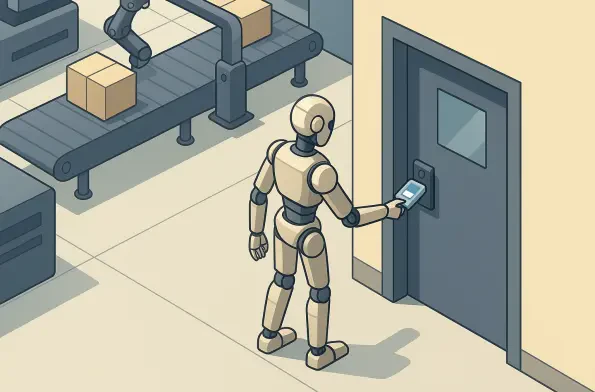
Historically, enterprise security has operated in two distinct silos: physical access control for humans and identity governance for software. Physical security traditionally relies on plastic badges, biometric enrollment, and visual verification for people, while cybersecurity manages permissions within digital networks and APIs. This bifurcated approach worked when machines were stationary servers and humans were the only things walking through the lobby. However, the introduction of mobile robots creates a direct conflict between these disciplines, as they are non-human entities that require physical access to restricted areas. Most organizations currently lack a unified framework to determine how these physical agents should be authenticated at a locked door or an elevator. The core problem is that a robot might have the digital permission to fetch a file from a server, but no protocol exists to govern its physical right to enter the room where that server is located. Bridging this gap requires a fundamental rethinking of how credentials are issued to entities that do not have a pulse.
Addressing the High Stakes of Physical Over-Permissioning
In a purely digital context, over-permissioning an AI agent typically results in a data breach, which is damaging but intangible in terms of physical proximity. However, when a mobile robot is granted excessive permissions, the risks manifest as physical security breaches that can have immediate, tangible consequences. For instance, an over-privileged robot might gain unauthorized entry into high-security areas like data centers or sensitive research labs, potentially leading to the theft of physical assets or the disruption of critical infrastructure. Because many enterprises have not yet established formal policies for provisioning these physical machine identities, the window of exposure is widening as more units hit the floor. The danger is not just about intentional malice but also about operational errors where a robot enters a zone where it poses a safety hazard to human coworkers. Without clear boundaries on where a robot can go and what it can interact with, the liability for manufacturers and facility operators increases dramatically as these machines become more autonomous and powerful.
Implementing Cybersecurity Principles in Tangible Environments
Applying Least Privilege to Autonomous Hardware
The solution to securing these new identities lies in extending established cybersecurity principles, such as least privilege and ephemeral credentials, to the physical world. Just as a software developer is only given access to the specific code repositories they need, every robot must be enrolled, scoped, and time-bound with the same discipline applied to human staff. This ensures they only have the minimum access necessary for their specific role at any given time. For example, a delivery robot should only have the authority to access the lobby and specific elevators during its scheduled shift, rather than having a blanket permission to roam the entire building. It is also vital to distinguish between a machine’s technical permission to move and its specific authority to enter a room. A robot might have the mechanical ability to turn a doorknob, but the security system must dictate whether that action is authorized based on the context of its current task. By making credentials temporary and context-dependent, companies can prevent compromised or un-enrolled devices from roaming freely.
Integrating Human Oversight into Automated Workflows
As organizations integrate AI into their physical security systems, maintaining a human-in-the-loop approach is essential for safety and accountability. While AI can significantly assist in managing credentials or investigating security events by processing vast amounts of sensor data, any change to a live physical system should require explicit human confirmation. For instance, if an automated system identifies a need to re-route robots due to a detected hazard, a human operator should verify the new path before the instructions are finalized. This ensures that the machines never hold autonomous keys to the facility without some level of oversight. This phased approach allows enterprises to leverage the productivity of embodied AI while keeping a firm hand on the proverbial steering wheel. Ultimately, success requires a strategic merger of IT and physical security departments to manage the modern enterprise’s unified identity landscape. A robot on a loading dock is simultaneously a network endpoint and a physical presence; therefore, its identity must be managed through a single, unified source of truth.
The Future: Strategic Integration of Identity Governance
The shift toward embodied AI required a profound reassessment of how authority and access were distributed across the modern enterprise. As companies began to deploy humanoid units on assembly lines and in warehouses throughout 2026, it became clear that old security models were insufficient for protecting physical assets from digital vulnerabilities. Leaders took the necessary steps to unify their IT and physical security departments, creating a single framework that treated every machine as a formal identity with a defined lifecycle. They implemented ephemeral credentials and least-privilege protocols that limited robot movement to specific times and locations, thereby reducing the risk of unauthorized access or physical accidents. Moving forward, businesses focused on auditing their current robotic deployments to ensure every device was accounted for in a centralized registry. Investing in interoperable security platforms that bridged the gap between digital identity and physical hardware remained the most critical action for safety. These integrated systems ensured that as the workforce evolved, security remained robust.