The sudden deceleration of an autonomous vehicle on a busy highway usually triggers a ripple effect of sensor data and immediate braking responses across a networked fleet of machines. In these split-second scenarios, the safety of passengers and pedestrians hinges entirely on the integrity of the digital messages exchanged between vehicles and infrastructure. While the transition toward fully automated transportation and logistics systems has accelerated since the beginning of 2026, a fundamental vulnerability remains: the lack of a reliable mechanism for machines to verify the truthfulness of the data they receive. To address this critical gap, a team of researchers at the Harvard John A. Paulson School of Engineering and Applied Sciences, led by Stephanie Gil, has pioneered the cy-trust framework. This mathematical approach allows robots to evaluate the reliability of their peers by blending digital communication with the undeniable reality of physical laws.
Vulnerabilities in Collaborative Autonomous Networks
Addressing the Limitations of Digital Security
Traditional cybersecurity protocols primarily function as gatekeepers, focusing on robust encryption and identity management to ensure that only authorized participants can enter a network. However, this binary approach to security proves dangerously insufficient when applied to cyber-physical systems where an “authenticated” agent might behave erratically or maliciously after gaining access. In a robotics context, a compromised or malfunctioning drone could pass every digital handshake and cryptographic check while simultaneously broadcasting false navigation data that leads to a physical collision. This discrepancy highlights a fundamental weakness in current systems: they are designed to trust the identity of the sender rather than the physical validity of the message itself. By failing to account for these “embodied” threats, current networks remain exposed to catastrophic failures caused by legitimate but corrupted participants.
The movement toward more resilient infrastructure requires a departure from these static security models, shifting the focus toward real-time integrity monitoring of all shared information. Since the start of 2026, the complexity of urban drone delivery and autonomous trucking has made it clear that even a single bad actor can jeopardize the stability of an entire swarm. The researchers argue that a robot must possess the internal logic to question the instructions it receives, even if those instructions come from a verified source within its own fleet. This necessity arises from the fact that in the physical world, the consequences of a data breach are not merely lost files or leaked passwords, but actual structural damage and loss of life. Therefore, the cy-trust framework introduces a much-needed layer of skepticism that bridges the gap between digital authentication and the tangible reality of robotic movement.
Identifying Critical Malicious Behaviors
Within the landscape of collaborative robotics, specific behavioral threats have emerged that can easily bypass standard digital defenses. One such threat is “greedy behavior,” often observed in autonomous traffic management where a rogue vehicle prioritizes its own arrival time over the collective safety of the group. By broadcasting false intent or misreporting its braking capabilities, such a vehicle can force others to yield, creating systemic inefficiency or dangerous bottlenecks. Another significant risk involves data corruption within shared environmental maps, where manipulated sensors might report “ghost” traffic jams. These fabricated obstacles can steer an entire fleet of autonomous taxis into intentional gridlock or toward a specific area, allowing an adversary to control the flow of movement through a city without ever hacking the central control server.
Beyond individual greed and map manipulation, the researchers emphasize the danger of “Sybil attacks,” which are particularly devastating in consensus-based networks. In a Sybil attack, a single malicious robot creates dozens of fake digital identities, effectively pretending to be a crowd of witnesses. When a legitimate robot tries to verify a piece of information by polling its neighbors, the attacker uses these “ghost” identities to provide a false majority, tricking the system into accepting a lie as consensus truth. This tactic is especially hazardous in search-and-rescue operations where robots must coordinate to cover large disaster zones. A sabotaged unit could spoof the locations of multiple non-existent teammates, creating the illusion that a sector has been thoroughly searched when it actually remains unmonitored. This deceptive behavior underscores the urgent need for a verification method grounded in physical presence.
The Technical Innovation of Physicality
Using Sensors as a Validation Layer
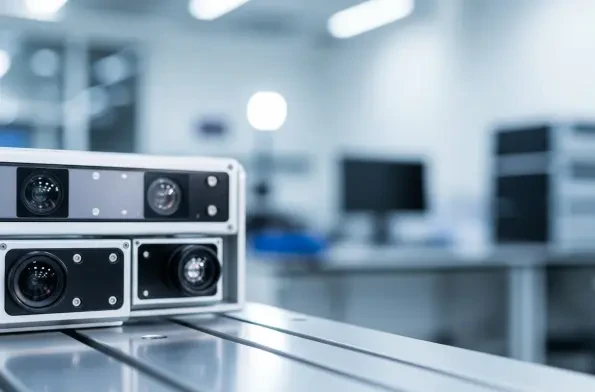
The transformative core of the cy-trust framework is the strategic repurposing of an agent’s existing sensory apparatus to serve as a high-fidelity validation layer. Most modern autonomous systems are already equipped with a sophisticated suite of tools, including lidar, radar, and high-resolution cameras, which are typically used only for local navigation and obstacle avoidance. The Harvard researchers have developed a method to use these sensors to cross-reference every digital claim with a physical observation in real-time. For example, if an autonomous truck receives a wireless message from a “neighboring vehicle” claiming to be fifty feet behind it in the left lane, the receiving truck can immediately query its rear-facing lidar to confirm the presence of a physical mass at that exact coordinate. If no object is detected, the digital message is flagged as fraudulent and discarded.
This approach effectively turns the physical environment into a secondary, unforgeable authentication channel that supplements traditional digital signatures. By checking the physical reality against the digital narrative, robots can maintain operational integrity even when their communication networks are compromised by sophisticated spoofing. This validation layer does not require the installation of new, expensive hardware; instead, it leverages the inherent “embodied” nature of robots to create a more secure ecosystem. As the density of autonomous systems in residential and industrial areas increases through 2027 and 2028, this ability to ground digital data in physical evidence will become a cornerstone of public safety. The framework ensures that a robot’s actions are always tethered to the world it can see and touch, rather than blindly following instructions from a potentially compromised cloud network.
Analyzing Wireless Signal Properties
The cy-trust framework extends its verification capabilities deep into the physics of wireless communication by analyzing the unique properties of radio signals. Every wireless transmission possesses a physical “signature” shaped by the environment and the specific hardware of the transmitter. By employing advanced signal processing techniques, the system can determine the exact physical point of origin for any incoming message. This allows a robot to detect if multiple digital identities are actually emanating from the same physical radio, effectively unmasking Sybil attacks without needing to crack complex encryption. If twenty supposedly different drones are all transmitting from a single point in space, the system recognizes the physical impossibility and identifies the group as a single malicious entity attempting to manipulate the network consensus.
Leveraging the laws of physics provides a security guarantee that is fundamentally more difficult to forge than any digital credential. While a hacker can steal a password or clone a cryptographic key, they cannot easily hide the physical location from which their radio waves are broadcasted. This reliance on the spatial and temporal characteristics of signals adds a layer of “physical proof” to every interaction. By integrating these signal-processing algorithms directly into the robot’s communication stack, the researchers have created a defense mechanism that is both passive and highly effective. This innovation ensures that even if an adversary manages to perfectly mimic the digital behavior of a fleet, their physical presence—or lack thereof—will betray their intentions. This level of scrutiny is essential for maintaining the stability of critical infrastructure such as intelligent power grids and automated freight corridors.
Operationalizing and Testing Trust Scores
Quantifying Reliability Through Data Fusion
To make these complex physical and digital evaluations actionable, the cy-trust framework operationalizes reliability by generating a continuous “trust score” for every incoming data stream. Unlike traditional security models that offer a simple “allow” or “deny” response, this score is a dynamic value between zero and one that reflects the current confidence level in a specific source. The score is continuously updated through a process of sensor fusion, where data from lidar, radar, and signal analysis are weighted against historical behavior patterns and contextual cues. For instance, if a vehicle has consistently provided accurate location data over a long period, its trust score remains high; however, a single physical discrepancy can cause that score to plummet instantly, triggering a defensive posture in the receiving machine.
This quantitative approach allows for a “calibrated risk acceptance” mechanism that mimics human intuition but is governed by rigorous mathematical formulas. When a robot’s decision-making algorithm receives information, it multiplies the importance of that data by the associated trust score. If a high-priority collision warning is received from a source with a low trust score of 0.1, the algorithm will discount the warning, preventing the robot from performing a dangerous swerve based on false information. This flexibility is vital for maintaining efficiency in noisy or crowded environments where sensors might occasionally fail or signals might be blocked. By moving away from binary logic, the cy-trust framework enables autonomous fleets to remain functional and safe even when they are operating in the presence of uncertainty or active deception.
Experimental Evidence from Robot Consensuses
The practical effectiveness of the cy-trust framework was rigorously tested in controlled laboratory environments using “blue-team” cooperative robots and “red-team” adversarial units. In these experimental scenarios, the blue-team robots were tasked with reaching a specific consensus, such as maintaining a precise geometric formation while moving across a room. The red-team robots were programmed to sabotage this coordination by launching Sybil attacks, broadcasting dozens of fake identities that reported incorrect positions to mislead the group. Without the framework, the cooperative robots would quickly become confused by the overwhelming number of fake “peers,” leading to a complete breakdown of the formation and causing multiple simulated collisions. This demonstrated how easily current consensus-based systems can be manipulated by a single malicious actor.
However, when the cy-trust signal processing and sensor fusion techniques were integrated, the outcome changed dramatically. The blue-team robots were able to analyze the incoming radio signals and realize that the dozens of “ghost” messages were actually coming from only two physical locations belonging to the red-team. By assigning near-zero trust scores to these specific physical origins, the cooperative group was able to isolate the malicious inputs and ignore them entirely. The robots successfully maintained their objective and formation despite the intense, active disruption campaign. These results provide concrete evidence that anchoring digital trust in physical reality is not just a theoretical concept but a viable solution for protecting real-world robotic networks against the increasingly sophisticated threats expected from 2026 and beyond.
Moving Toward Holistic System Design
The successful development of the cy-trust framework highlights a significant shift toward holistic system design, where security is treated as a fundamental physical property rather than an afterthought. This interdisciplinary approach, combining computer science, wireless communication, and mechanical engineering, suggests that the future of robotics will rely on machines that are inherently self-verifying. As we move forward from 2026, manufacturers and software developers should prioritize the integration of these “physicality-based” trust mechanisms into their baseline architectures. Instead of relying solely on external firewalls, robots must be equipped with the internal intelligence to validate their own reality. This proactive design philosophy will be essential for building public confidence in autonomous ride-sharing, automated delivery services, and smart city infrastructure.
For stakeholders in the technology sector, the actionable takeaway is the need to transition from “perimeter-based” security to “integrity-based” trust models. Engineers should begin implementing cross-modal verification, where every digital input is checked against at least one physical sensor output. Furthermore, regulatory bodies should consider incorporating these trust-scoring standards into safety certifications for autonomous systems. The ability to mathematically quantify and physically verify the truth will likely become the primary metric for evaluating the reliability of AI-driven machines. By embedding these principles into the very foundation of robotic control loops, society can ensure that the move toward full automation remains secure, predictable, and resilient against both mechanical failure and intentional sabotage. The physical world was once a source of unpredictability; now, it is the ultimate arbiter of digital truth.