Malik Haidar stands at the intersection of business strategy and high-stakes technical defense, bringing years of experience in securing multinational corporations against sophisticated global threats. As a specialist in analytics and intelligence, he has witnessed firsthand how the convergence of telecommunications and cybersecurity dictates the stability of modern economies. With the Global Coalition on Telecoms (GCOT) laying the groundwork for the 6G era, Malik offers a unique perspective on how international policy and native artificial intelligence will redefine our digital borders.
This conversation explores the shift toward early cross-border collaboration between seven nations and major tech giants to secure a network that won’t see commercial use until 2030. We delve into the complexities of AI-native architectures, the shift toward Open RAN systems, and the critical need for alternative timing solutions to protect national infrastructure from catastrophic outages.
Seven nations and major tech companies are collaborating on 6G security frameworks years before commercial rollout. How does this early cross-border cooperation shift the development process, and what specific challenges arise when aligning diverse national regulations with global industry standards?
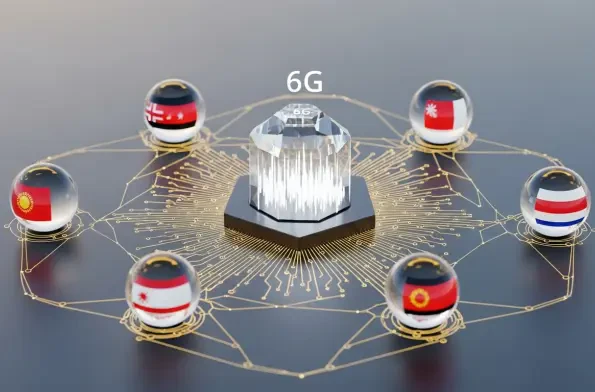
This early cooperation is a radical departure from the reactive security measures we saw with 4G and 5G, moving us toward a “secure by design” philosophy nearly five years before the 2029-2030 rollout target. By bringing together the Global Coalition on Telecoms—including the US, UK, Australia, Canada, Japan, and now Finland and Sweden—we are creating a unified front that forces manufacturers like Nokia and Samsung to build to a single high standard rather than a patchwork of local rules. The primary challenge lies in the “Regulatory Compliance” principle, where global industry standards must somehow satisfy the specific national security laws of seven different jurisdictions. It is a delicate balancing act to ensure that a standardized interface in one country doesn’t become a legal or technical liability in another.
6G is expected to be AI-native with heavily virtualized network functions. What are the specific security risks of embedding AI so deeply into the core architecture, and what steps should engineers take now to ensure these automated systems remain contained and tamper-proof?
When AI moves from being an add-on to being a native component of the 6G stack, the attack surface shifts from human error to algorithmic manipulation. We face the risk of “adversarial AI,” where malicious actors could inject data to trick the network’s self-optimizing functions into creating outages or routing traffic through unsecure nodes. To mitigate this, engineers must prioritize the “Containment” principle, ensuring that if an AI-driven function is compromised, the breach cannot propagate across the virtualized network. This involves building software-defined “firebreaks” and using platforms like NVIDIA’s AI-RAN to monitor for anomalous behavior in real-time, effectively using AI to police other AI.
Critical infrastructure often relies on GNSS, but future networks are looking toward alternative positioning and timing solutions to prevent outages. What are the most viable alternatives to satellite-based timing, and how would these backup systems function during a large-scale signal interference event?
The heavy reliance on GNSS is a massive single point of failure; if those satellite signals are jammed or spoofed, the entire network’s synchronization collapses. GCOT is rightly advocating for alternative Positioning, Navigation, and Timing (PNT) solutions, which include terrestrial-based timing beacons and highly stable atomic clocks embedded directly within local data centers. In a large-scale interference event, these alternative systems would act as an autonomous “heartbeat,” allowing 6G cells to maintain the nanosecond-level precision required for data integrity without needing a skyward connection. This ensures that even if the satellites go dark, emergency services and first-responder voice networks remain fully operational and resilient.
The move toward Open RAN and disaggregated architectures aims for better visibility and multi-vendor integration. What are the practical trade-offs regarding security when moving away from traditional proprietary systems, and how can providers ensure data integrity across these complex, multi-vendor interfaces?
The shift to Open RAN breaks the “black box” model of traditional vendors like Ericsson or Huawei, offering better visibility into the network’s inner workings, which is a significant win for transparency. However, the trade-off is the “multi-vendor complexity” risk, where a vulnerability in one niche supplier’s software could jeopardize the integrity of the entire chain. To manage this, the industry is focusing on standardized interfaces that allow for constant, automated verification of data as it travels between different components. By ensuring that any changes to data are “perceptible”—a core GCOT integrity goal—we can detect tampering at the interface level before it affects the end-user.
Maintaining data confidentiality and preventing the spread of malicious software are core goals for next-generation networks. Can you walk through a scenario where a breach is successfully contained at the edge, and what metrics determine if a network is truly resilient under pressure?
Imagine a scenario where a malicious software strain targets a localized 6G node at a smart factory; in a resilient network, the system’s native AI detects the unauthorized “eavesdropping” attempt and instantly isolates that specific virtualized slice. Because 6G utilizes disaggregated architecture, the “Containment” principle kicks in, preventing the malware from jumping to the wider national infrastructure while keeping the factory’s critical safety sensors online. We measure true resilience by “Service Availability” metrics—specifically, the network’s ability to maintain 99.999% uptime for first responders even while under an active cyber-physical attack. If the user experiences no drop in their encrypted connection despite a breach at the edge, the system has succeeded.
What is your forecast for 6G?
I forecast that 6G will transition from being a simple communication pipe into a distributed “global sensor” that merges our physical and digital realities through native AI. We will see a shift where the network is no longer just about speed, but about “trust as a service,” where the infrastructure itself guarantees the confidentiality of data even over untrusted physical channels. However, the success of this vision depends entirely on whether the GCOT nations can maintain their coalition against the pressure of geopolitical competition. If we stay the course on these shared resilience principles, 6G will become the most secure and reliable foundation for society we have ever built.