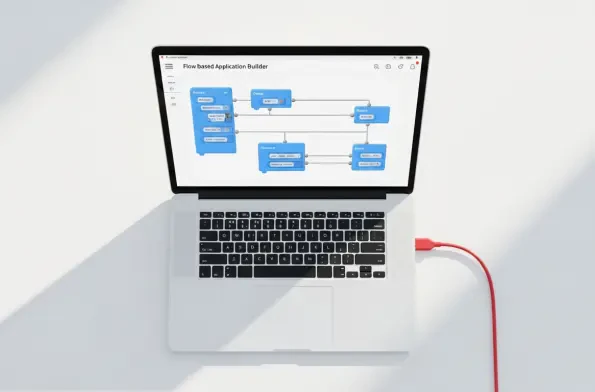
The seamless integration of artificial intelligence into the modern enterprise environment has unintentionally opened a digital back door for sophisticated cyberattacks targeting the very orchestration layers that govern these automated workflows. As organizations transition toward autonomous agents, the convenience of low-code builders often masks the inherent dangers of granting high-level system permissions to unverified third-party tools. This shift in architecture places the orchestration layer at the center of the security conversation, where a single oversight in tool configuration can lead to total network exposure.
The complexity of these systems necessitates a deeper look at the trust models being established within corporate firewalls. When the tools designed to connect large language models to sensitive internal data are compromised, the entire organizational infrastructure becomes vulnerable to unauthorized manipulation. Security teams must now navigate a landscape where the ease of “one-click” automation directly correlates with the potential for devastating system breaches.
The High Cost of Unrestricted Command Execution in AI Tooling
The rapid adoption of low-code AI builders has introduced a new paradox where the very tools designed to simplify complex workflows are now becoming the most direct path into protected corporate networks. When Flowise recently addressed a critical vulnerability with a near-perfect severity score of 9.9, it highlighted an uncomfortable reality for developers. This flaw suggests that the orchestration layer is no longer just a productivity booster but a high-value target that requires the same level of scrutiny as core database systems.
The “one-click” compromise is no longer a relic of the past, but a modern threat to the AI orchestration layer. Because these platforms act as the brain of an AI application, any weakness allows an attacker to hijack the decision-making process of the entire system. This incident underscores the importance of baking security into the design of AI tooling rather than treating it as a secondary feature added after deployment.
Understanding the Security Implications of the Model Context Protocol
As organizations rush to integrate Large Language Models into their internal systems, protocols like Anthropic’s Model Context Protocol (MCP) have emerged to provide necessary flexibility and interoperability. However, the reliance on standard transport layers such as “stdio” creates a significant security boundary that is often overlooked during initial setup. In self-hosted environments where these platforms are granted extensive permissions to interact with local files, a single unverified command can bypass traditional perimeter defenses.
The use of standard input and output streams for communication between the AI and the host system assumes a level of trust that is rarely present in modern threat environments. When these streams are not strictly isolated, they provide a direct pipeline for malicious actors to feed commands into the host operating system. This vulnerability exposes the inherent risks of prioritizing interoperability over strict execution boundaries in AI-driven environments.
How Malicious Tool Configurations Weaponize the Stdio Transport Layer
The core of CVE-2026-40933 lies in how the MCP adapter handles “stdio” commands without adequate sanitization or restriction in legacy versions. An attacker can exploit this by crafting a malicious chatflow in JSON format that includes a “Custom MCP Tool” configured with a lethal operating system command. This method weaponizes the legitimate configuration files that developers use to share and deploy AI agents across different teams.
Because the Flowise backend automatically attempts to enumerate tool actions to populate the user interface, the embedded code executes the moment a victim imports the file. This automated process requires no further interaction from the user to achieve a full system compromise, turning a simple file upload into an active attack. The lack of validation during the tool discovery phase allowed arbitrary code to run under the context of the application server.
Expert Consensus on the Security Implications for Docker and Containerized Environments
Cybersecurity analysts from firms like Obsidian and OX Security have characterized the blast radius of this flaw as immense. Because the exploit grants the attacker the same privileges as the Flowise process, which frequently defaults to root access in standard Docker-based deployments, the impact extends far beyond the application. This configuration error means that a successful exploit does not just compromise the app, but effectively hands over the keys to the entire container environment.
Successful exploitation provides a gateway to every stored credential on the platform, potentially exposing connected cloud accounts, private APIs, and sensitive internal databases. This level of access allows malicious actors to move laterally through the internal network with ease, exploiting the trust relationship between the container and the broader cloud infrastructure. The industry consensus points toward a desperate need for more robust container hardening and the abandonment of root-level execution by default.
Immediate Remediation Framework for Protecting Self-Hosted Deployments
To mitigate the risk of remote code execution, administrators of self-hosted Flowise instances immediately updated their installations to version 3.1.0 or later. This new iteration introduced stricter controls over MCP configurations to prevent unauthorized command execution through transport layers. Security teams also implemented network segmentation to isolate these tools from sensitive internal databases and critical infrastructure, significantly reducing the potential for lateral movement.
Beyond simple patching, organizations adopted the principle of least privilege by ensuring that Flowise processes no longer ran with root permissions. They transitioned toward identity-based access controls and began validating the integrity of imported configuration files through automated sandbox environments. This shift toward a more rigorous auditing process ensured that execution parameters were verified before any third-party JSON configurations entered the production pipeline, securing the orchestration layer against future exploits.