The traditional image of a security guard standing motionless at a gate is rapidly fading into the background as data-driven intelligence becomes the primary engine of modern safety protocols. Today, the global security landscape is undergoing a profound transformation, moving away from static methodologies toward a dynamic model that prioritizes actionable insights over mere physical presence. This shift is a necessary response to the intersection of workforce instability, expanding organizational mandates, and the increasing complexity of operational environments in 2026. By utilizing benchmark data from hundreds of professionals across North America and Europe, the industry is recalibrating its core strategies to emphasize the strategic empowerment of personnel on the front lines. Success is no longer measured by the number of hours a post is occupied, but by the quality of the information gathered and the speed at which it is translated into a decisive response. This evolution marks a transition from reactive guarding to proactive resilience.
Addressing the Crisis of Workforce Stability
Security remains a fundamentally people-centric profession, yet it currently faces a significant crisis regarding workforce stability and retention across nearly every major market. With turnover rates exceeding forty percent for many service providers, the industry is forced to look beyond simple recruitment to maintain operational integrity. High churn rates do more than create staffing gaps; they actively erode the institutional memory of a security team, which diminishes the consistency of service and weakens the bond of trust between providers and corporate stakeholders. Modern industry leaders are realizing that while financial compensation is a necessary baseline for employment, it is insufficient for ensuring long-term stability in a high-stress environment. Consequently, the focus has shifted toward holistic retention strategies that provide a clear path for advancement. By investing in the professionalization of the workforce, organizations ensure that their personnel are viewed as critical assets rather than interchangeable units.
The trend is moving toward career development, skill progression, and formal recognition programs that validate the specialized knowledge required for modern protection. When security officers are treated as valued experts with critical situational judgment, their engagement levels rise, and the likelihood of them seeking employment elsewhere decreases significantly. This shift requires a cultural change within organizations, moving away from a transactional view of labor toward a partnership model. Leaders are now implementing mentorship programs and advanced training modules that cover everything from de-escalation techniques to the use of sophisticated digital monitoring tools. By fostering a sense of ownership and professional pride, companies are better equipped to handle the demands of a complex risk landscape. This approach not only stabilizes the workforce but also ensures that the accumulated knowledge of the site remains within the team, providing a more robust and reliable security posture for the long term.
Redefining Performance through Adaptive Intelligence
The traditional benchmark for security effectiveness has long been centered on physical occupancy at a specific post, but modern pressures are rendering this model obsolete. There is a clear transition toward adaptive coverage, where mobility, communication, and situational awareness take precedence over static positioning. In this new framework, effectiveness is measured by information flow and responsiveness—ensuring the right person receives the right data at the right time to mitigate a potential threat. By prioritizing the intelligent application of resources over the simple saturation of a physical space, security programs can maintain high standards even when faced with significant workforce constraints. This evolution allows teams to be more flexible, deploying resources based on real-time risk assessments rather than rigid, outdated schedules. The goal is to create a seamless web of protection that moves with the organization’s needs.
Beyond traditional perimeter patrols, the mandate of the security team has expanded to include health and safety coordination, emergency planning, and high-level policy development. This broader responsibility has elevated security leaders within the corporate hierarchy, transforming the department into a strategic partner for organizational resilience and risk management. Security is no longer an isolated silo; it functions as a central nervous system for the entire organization, providing critical data that influences broader business decisions. The challenge now lies in synthesizing vast amounts of data—from incident patterns to employee feedback—to inform high-level decision-making and maintain operational continuity. This expansion of duties requires security professionals to possess a diverse skill set, blending physical tactical knowledge with administrative and analytical capabilities to support the overarching goals of the modern enterprise.
Overcoming Operational Friction and Siloed Data
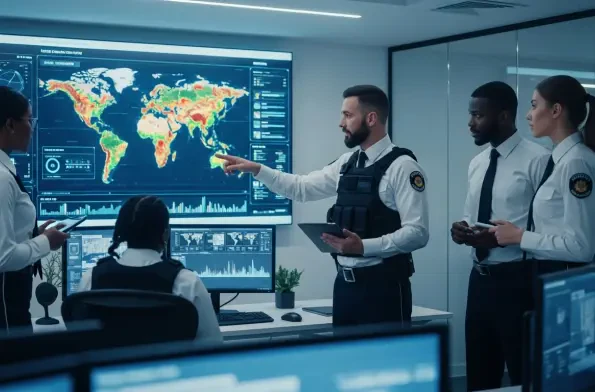
Despite the availability of advanced digital tools, fragmentation remains a significant obstacle to effective security response, often resulting in a persistent visibility gap. This gap occurs when disjointed communication channels and manual reporting processes prevent a unified understanding of a situation as it unfolds in real time. Many teams still find themselves spending an inordinate amount of time reconstructing events after they have occurred rather than managing them actively through integrated platforms. To combat this, organizations are focusing on reducing operational friction by streamlining how information flows during active incidents. By moving away from paper-based logs and siloed radio traffic toward unified digital dashboards, security personnel can share critical updates instantly across the entire chain of command. This transition allows for a move from a reactive posture to one of proactive situational awareness, where potential issues are identified before they escalate.
Compliance and reporting are often viewed as administrative burdens that exist apart from actual security work, leading to inaccuracies and reactive documentation. The current industry trend seeks to solve this by integrating recordkeeping directly into the daily workflow of security personnel through mobile technology and automated logging. When documentation becomes a seamless part of operations, it becomes more reliable and less of a chore for the staff on the ground. This integration allows teams to focus their energy on preparedness and prevention rather than the manual reconciliation of data for audits or legal reviews. Effectively aligning regulatory requirements with operational excellence ensures that the data collected is not just a checkbox for compliance, but a valuable asset for analyzing trends and improving future performance. By removing the friction of manual reporting, security officers are free to focus on their primary mission of maintaining a safe and secure environment.
Harmonizing Physical Protection and Digital Systems
While there is significant curiosity regarding Artificial Intelligence, the industry’s adoption of these technologies remains measured and focused on a human-centric approach. The prevailing viewpoint in 2026 is that AI should enhance, not replace, human decision-making by organizing vast data sets and identifying unusual patterns that might escape the naked eye. The industry is largely avoiding technology for its own sake, opting instead for practical tools that solve specific operational frictions, such as automated license plate recognition or anomaly detection in video feeds. By keeping the human expert at the center of the decision-making loop, organizations ensure that technology serves as a support system rather than a substitute for professional intuition. This balanced approach allows security teams to leverage the speed of machine processing while maintaining the nuanced judgment that only a trained professional can provide during a high-stakes emergency.
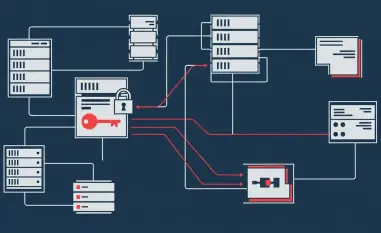
The modern security environment became increasingly hybridized as physical infrastructure was inextricably linked to digital systems via cloud-based controls and connected surveillance. This convergence required a new level of coordination between security, IT, and operations departments to address the full scope of modern risks. Organizations that recognized this overlap developed shared response procedures that covered both physical and digital dimensions of any given incident. This collaborative framework was essential for navigating a landscape where a breach in one realm often led to a vulnerability in the other, necessitating a unified strategy for total protection. Moving forward, leaders prioritized the integration of cross-functional teams and invested in platforms that unified physical and cyber alerts. By breaking down the barriers between these departments, the industry established a more resilient foundation that empowered human expertise with the precision of data-driven insights.