While national conversations about supply chain security often center on tangible disruptions like manufacturing bottlenecks, geopolitical tensions, and natural disasters, an equally potent and far more insidious threat now operates in the digital shadows. Malicious actors, ranging from nation-state operatives to financially motivated cybercriminals, are increasingly targeting the complex technological web that underpins America’s healthcare supply chain. These targeted cyberattacks represent a rapidly escalating danger capable of paralyzing every link in the chain, from the production of essential pharmaceuticals and medical devices to their final delivery at a patient’s bedside. The viability of the nation’s healthcare system is no longer just a matter of physical logistics; it is now fundamentally dependent on a robust and resilient digital infrastructure, a reality that current strategies have yet to fully embrace, leaving the health of millions hanging in the balance.
The Pervasive Vulnerability of Critical Nodes
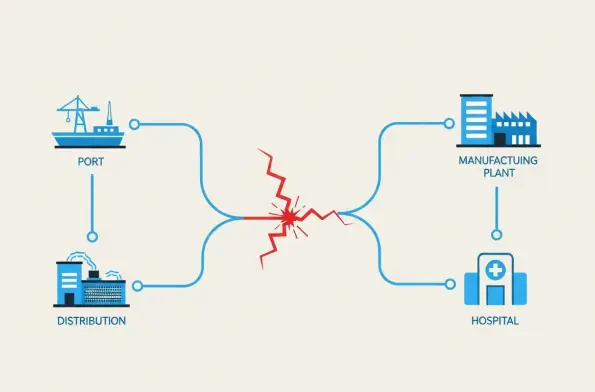
The digital Achilles’ heel of the healthcare supply chain is starkly evident in the nation’s maritime and port infrastructure, which has become a primary target for sophisticated cyberattacks. With a staggering 900% increase in attacks on maritime operational technology recorded between 2017 and 2020, these vital economic gateways are under constant siege. The stakes are immense, as East and Gulf Coast ports handle an estimated 91% of all containerized pharmaceutical imports, a market valued at over $203 billion in 2023 alone. High-profile incidents, such as the 2021 nation-state targeting of the Port of Houston and the 2023 breach of maritime software firm DNV that impacted over 1,000 vessels, are not theoretical risks. They are real-world demonstrations of how a single digital intrusion can cause cascading port backlogs, directly leading to critical shortages of life-saving medical supplies and exposing the fragility of a system that millions of Americans depend on daily for their well-being.
The digital threat landscape does not recede once goods clear the ports; it extends deep into the heart of domestic infrastructure, where manufacturing plants, distribution hubs, and even blood banks are equally vulnerable. Recent events have provided alarming proof of this internal fragility, with cyberattacks forcing critical distribution centers and blood banks to operate at severely reduced capacity, creating ripple effects that impacted hundreds of hospitals. In other instances, a medical device manufacturer essential for cardiac surgeries was disrupted, and a company producing vital patient monitoring devices was forced to halt production. These breaches are not mere inconveniences or financial setbacks; they represent immediate and life-threatening events that sever the last mile of the healthcare supply chain. They underscore a dangerous reality where the digital systems controlling production and inventory are now as critical to patient outcomes as the medical products themselves.
A Strategic Shift Toward Proactive Defense
The prevailing “bolt-on” approach to cybersecurity, where security measures are added as an afterthought to existing systems, has proven dangerously inadequate for the modern threat landscape. When patient lives are at stake, the nation can no longer afford to let its healthcare supply chain remain an easy target for adversaries. A fundamental paradigm shift is necessary, moving from a reactive posture to one of proactive, integrated resilience. This requires a comprehensive national strategy, ideally coordinated by the Office of the National Cyber Director, focused on reimagining cybersecurity as a foundational component of supply chain policy. Central to this new approach must be the identification and incentivization of “trusted technology stacks.” This involves actively promoting the use of hardware and software from thoroughly vetted, secure sources to build dependable and inherently defensible systems, thereby reducing the systemic risk posed by reliance on potentially compromised foreign technology and creating a secure-by-design infrastructure.
Implementing such a transformative strategy requires the strategic use of federal investments and decisive congressional action. The trillions of dollars being allocated through infrastructure grants and “Made in America” industrial investments present a powerful lever for change. By embedding mandatory criteria for strong cyber hygiene and the use of trusted technologies into the requirements for this funding, the government can create a powerful market incentive for private companies to prioritize cyber resilience. This not only channels capital toward necessary security upgrades but also enhances both national security and economic competitiveness. Furthermore, Congress must play a crucial role by expanding successful funding models, such as the CISA’s State and Local Cybersecurity Grant Program. Creating similar funding partnerships specifically for private critical infrastructure operators—including ports, manufacturers, and hospitals—would direct vital resources to entities that are often chronically underinvested in cybersecurity yet represent core vulnerabilities in the nation’s health and economic well-being.
Rebuilding a Secure Foundation for Patient Care
The ambitious vision of a secure and resilient domestic healthcare supply chain was ultimately understood to be unattainable without a deeply integrated and parallel commitment to cybersecurity. Efforts to reshore the manufacturing of essential medicines and fortify physical infrastructure, while commendable, were recognized as incomplete solutions so long as the digital pathways controlling their production and distribution remained insecure. It became clear that investing in physical assets alone was not enough; the nation had to re-secure the foundational hardware and software that underpinned the entire system. A truly resilient supply chain demanded redundancies, fail-safes, and robust cyber defenses that enabled it to withstand and pivot during emergencies. By embedding cyber resilience into national policy and industrial strategy, the United States successfully seized an unprecedented opportunity to design the next generation of infrastructure to be secure from the ground up, a strategic investment that protected the nation from adversaries and guaranteed that American patients would reliably receive the life-saving care they needed.