The vulnerability of current digital encryption methods is no longer a theoretical concern but an immediate operational risk for governments and global financial institutions alike as quantum computing power matures. As classical cryptographic systems based on prime factorization face an inevitable expiration date, the focus of global security has shifted toward the laws of physics. Quantum Key Distribution (QKD) stands as the definitive response to these threats, offering a method of securing data that is theoretically impossible to intercept without detection.
This shift toward physics-based security represents more than just a technical upgrade; it is a foundational pillar for future digital sovereignty. By utilizing the properties of entangled photons, organizations can ensure data integrity that does not rely on the perceived difficulty of a mathematical problem. In this high-stakes environment, the University of Science and Technology of China (USTC) has emerged as a primary strategic actor, successfully bridging the gap between delicate laboratory theories and robust metropolitan applications.
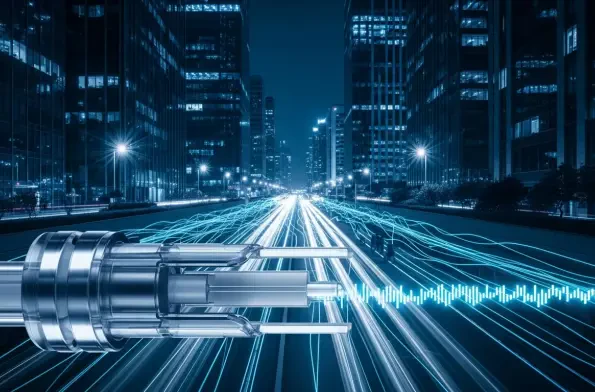
Current fiber-optic infrastructure, which serves as the backbone of the global internet, is now being reimagined to accommodate these emerging quantum hardware standards. The integration of quantum protocols into existing glass fiber networks is essential for a seamless transition. This requires a sophisticated alignment of traditional telecommunications equipment with novel quantum emitters and detectors, ensuring that the transition to a quantum-secure future is both scalable and economically viable for commercial stakeholders.
Breakthrough Trends and Market Projections for Quantum Cryptography
Technological Drivers and the Rise of Device-Independent Protocols
The industry is currently witnessing an aggressive transition from standard QKD to the device-independent (DI-QKD) gold standard. While traditional quantum networking requires users to trust that their hardware is free from manufacturer backdoors or subtle calibration flaws, DI-QKD removes this requirement entirely. This trustless environment is achieved by verifying the security of the communication through the violation of Bell’s inequalities, ensuring that the link is secure even if the devices themselves are compromised or poorly characterized.
This breakthrough significantly mitigates side-channel attacks, which have historically been the Achilles’ heel of quantum hardware commercialization. By shifting the security burden from the hardware’s physical integrity to the verifiable laws of quantum mechanics, manufacturers can offer a higher level of assurance to their clients. Consequently, there is a burgeoning demand from government agencies and defense contractors for these trustless environments, where the hardware itself no longer represents a potential point of failure in the security chain.
Growth Indicators and the Road to a Quantum Internet
Recent statistical analysis highlights a dramatic leap in the practical application of quantum technologies, specifically the jump from short-range laboratory experiments to 11-kilometer metropolitan distances. This expansion demonstrates that the complex requirements for maintaining entanglement can be met outside of controlled, vibration-isolated environments. The ability to maintain high-fidelity links over such distances suggests that city-wide deployment is no longer a distant vision but a near-term reality for high-security hubs.
Market forecasting for quantum-resistant infrastructure predicts a surge in investment across the banking and critical data sectors between now and 2028. These institutions are prioritizing the early adoption of quantum-secure links to protect long-term data that must remain confidential for decades. As key generation rates improve and the cost of specialized hardware begins to stabilize, the feasibility of interconnecting data centers within a single city via DI-QKD is becoming a central component of modern cybersecurity strategies.
Overcoming Technical Barriers in Long-Distance Entanglement
The primary obstacle to expanding quantum networks is the distance barrier, caused by the natural attenuation of signals in standard telecommunications fiber. Photons carrying quantum information are easily absorbed or scattered as they travel through miles of glass, leading to significant optical loss. To combat this, researchers at USTC implemented high-numerical-aperture lenses and sophisticated frequency conversion techniques, allowing quantum signals to travel through the same fiber-optic cables that carry standard internet traffic without losing their fragile quantum states.
Environmental noise poses another significant threat to the integrity of entangled states over 11-kilometer spans. Factors such as temperature fluctuations and mechanical vibrations can easily disrupt the delicate alignment of quantum nodes. Engineering solutions, including the use of Rydberg states in trapped atoms, have proven effective in maintaining high-fidelity entanglement by creating photons that are more resilient to background interference. These advancements allow the system to maintain a stable connection even in the noisy environment of a busy metropolitan area.
Managing the rising error rates associated with increased distance is a critical task for network engineers. While the error rate remains a manageable 3% at 11 kilometers, it climbs toward 7% as distances approach 100 kilometers. These figures illustrate the technical threshold where traditional transmission methods begin to falter. By refining the single-photon-based entangling schemes, scientists are working to suppress these errors, ensuring that the secret keys generated remain pure and usable for high-level encryption tasks in practical networking environments.
The Regulatory Landscape and Security Standards
As the technology matures, there is an urgent need for international standards for quantum-safe communication and DI-QKD protocols. Establishing these benchmarks is necessary to ensure interoperability between different hardware providers and to provide a clear framework for compliance. Global regulatory bodies are currently evaluating how to certify these systems, moving away from a reliance on black-box hardware trust toward a model based on verifiable physical laws that any third party can validate.
Government policy plays a decisive role in the deployment of these networks, often providing the necessary funding for large-scale fiber infrastructure projects. Strategic regulation ensures that quantum-secure networks are deployed in a way that protects national security while also fostering innovation in the private sector. This balance is essential for the growth of a robust quantum ecosystem, where both public and private entities can rely on a shared, certified infrastructure for their most sensitive data transfers.
The implications for global data privacy laws are profound, as the ability to verify security at the physical layer changes how cross-border data transfer is handled. With the implementation of DI-QKD, the physical location and the manufacturer of the networking hardware become less relevant to the overall security posture. This shift allows for more flexible international data agreements, as the integrity of the information is guaranteed by the properties of the light itself rather than the political or physical security of the transit nodes.
Future Horizons: Quantum Repeaters and Multi-Node Networks
The evolution from point-to-point links toward scalable multi-node networks is the next logical step in the development of a global quantum web. Moving beyond two-party communication requires the use of tweezer arrays and multi-atom quantum nodes that can manage multiple entangled links simultaneously. This architectural shift will allow for the creation of complex network topologies, enabling secure communication between numerous users within a decentralized metropolitan framework.
Forecasting the development of quantum repeaters is essential for bridging the 1,000-kilometer gap between distant cities. These devices will function by capturing, storing, and re-transmitting quantum states, effectively overcoming the limitations imposed by optical fiber loss. The integration of these repeaters into existing infrastructure will be a major market disruptor, as it will enable the creation of inter-city quantum backbones that mimic the reach and reliability of the current classical internet.
Future-proofing this infrastructure also involves the integration of satellite-to-ground quantum links with terrestrial fiber loops. This hybrid approach allows for global coverage, using satellites to bridge vast oceanic distances while fiber networks handle high-density metropolitan traffic. The 11-kilometer milestone achieved in China served as the essential proof of concept for the terrestrial component of this vision, demonstrating that city-scale nodes are ready to be integrated into a larger, interconnected global quantum network.
Summary of Milestones and the Outlook for Physical Security
The successful demonstration of 11-kilometer DI-QKD provided a definitive answer to skeptics regarding the practical application of device-independent security. This milestone proved that the sensitivity of quantum entanglement was no longer an insurmountable barrier to real-world deployment. By achieving this distance in a practical environment, the project established a new technical readiness level for metropolitan quantum networks, moving the technology out of specialized laboratories and into the realm of actionable infrastructure.
The research team effectively addressed the most pressing engineering challenges, from signal attenuation to hardware trust. The results indicated that while higher error rates at greater distances remained a hurdle, the current 11-kilometer threshold was more than sufficient for securing critical city-center communications. Stakeholders looked toward these findings as a clear signal to begin the transition toward quantum-resistant technologies, recognizing that the physical security of data had finally moved beyond mathematical conjecture.
Looking back at the implementation of these protocols, the industry prioritized the development of standardized hardware and the integration of quantum repeaters. Strategic recommendations for investors focused on the necessity of building adaptable fiber networks capable of supporting future quantum hardware iterations. By focusing on verifiable physical laws, the global community successfully laid the groundwork for a secure digital future where data integrity was no longer dependent on the secrecy of an algorithm or the honesty of a manufacturer.