The manipulation of communication signals between cockpit displays and management computers exposes a critical gap in the physical security of legacy aviation protocols. This finding stems from research conducted by teams at the University of California, San Diego and Oberlin College, who identified a vulnerability known as the “Bus Driver” attack. By targeting the fundamental ways in which aircraft components exchange data, the study demonstrated that digital integrity relies heavily on physical isolation—a concept that is increasingly difficult to guarantee in modern maintenance environments. This research bridges the gap between theoretical hardware exploits and real-world aviation safety, suggesting that established airframes remain susceptible to interference if an actor gains brief access to internal bays. The discovery necessitates a reevaluation of ground security protocols, as the time required to compromise these systems is much shorter than previously estimated. This shift in perspective is vital for the continued safety of global air travel networks.
Technical Execution: Small Devices and Massive Impacts
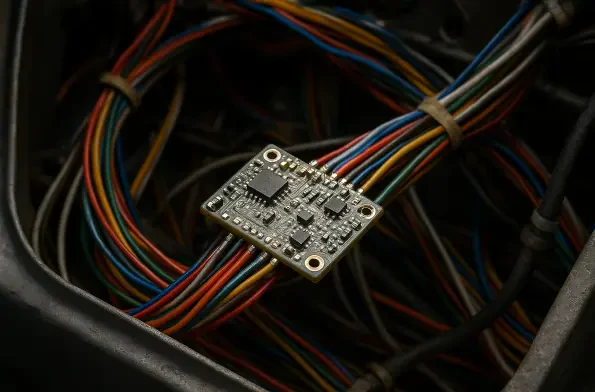
The mechanics of the exploit revolve around the ARINC 429 data bus, which remains a primary standard for data transmission in many commercial aircraft today. In controlled laboratory settings, the researchers utilized a coin-sized hardware implant, manufactured for less than one hundred dollars, to serve as a bridge between critical systems. This device was designed to be installed within the electronics and equipment bay, a secondary compartment often accessible through maintenance hatches during routine ground operations. Once integrated into the wiring, it functions as an “attacker-in-the-middle,” capable of intercepting and rewriting data packets in real-time. Because the ARINC 429 protocol was designed in an era when physical access was the primary security barrier, it lacks the modern encryption or authentication measures found in newer digital networks. This allows the malicious hardware to operate invisibly, masquerading as a legitimate part of the internal network while potentially feeding false flight data directly to the cockpit screens.
The consequences of such a breach are significant, as manipulated data can directly influence the pilot’s situational awareness and automated flight systems. During the demonstration, the research team showed that they could alter flight-plan loading sequences, misrepresent weight-and-balance calculations, and even provide incorrect takeoff parameters to the flight management computer. These data points are essential for safe operation, and any discrepancy could lead to a crew making critical decisions based on fraudulent information. Furthermore, because the implant interacts with the bus at a hardware level, it can influence autopilot directions without triggering immediate cockpit alarms, as the system perceives the incoming data as valid. This creates a scenario where the digital representation of the flight path differs from the actual physical state of the aircraft. While aviation safety relies on redundancy, the injection of false data into the decision-making loop introduces a level of risk that necessitates new defensive measures.
Security Resilience: Addressing the Cost of Discovery
A striking aspect of this discovery is the disparity between the resources required to develop the hack and the minimal cost of its final execution. The academic team spent over a decade conducting rigorous research and invested tens of thousands of dollars to build a high-fidelity testbed using genuine Boeing 737 components. This setup allowed for a precise simulation of the aircraft’s avionics architecture without risking an actual airframe. Such heavy upfront investment in time and capital is typical of advanced cybersecurity research, where years of reverse-engineering and hardware analysis are necessary to uncover a single, repeatable flaw. However, once the vulnerability is understood, the barrier to entry for a malicious actor drops precipitously. The fact that a sub-hundred-dollar device can jeopardize systems that cost millions to develop highlights a persistent challenge in securing legacy infrastructure. It underscores the need for a security model that accounts for the democratization of sophisticated hardware-level exploitation tools.
To address the vulnerabilities identified in the study, the research team proposed several strategic shifts in aircraft design and maintenance protocols. The findings recommended the physical hardening of communication ports, suggesting that manufacturers should seal or remove unnecessary maintenance access points to prevent unauthorized hardware integration. Additionally, the researchers explored the transition to more resilient communication architectures, such as transformer coupling, which provided better isolation between different segments of the data bus. From 2026 to 2028, the aviation industry prioritized these hardware-level updates as part of a broader effort to modernize legacy systems. By implementing these mitigations, airlines and manufacturers moved to better protect critical flight-management systems against the evolving landscape of cyber-physical interference. These proactive steps ensured that the intersection of digital networks and physical components remained a secure foundation for global air travel, effectively closing the gap between legacy hardware and modern security needs.