The sudden realization that a perfectly formatted, authenticated request could be the very tool an attacker uses to drain a database marks the end of the traditional firewall’s dominance in the cybersecurity landscape. For years, security professionals relied on the digital equivalent of a high-security gate, filtering out malformed traffic and known attack signatures while letting everything else pass through. This perimeter-based approach, however, has proven increasingly futile against the rise of API-centric architectures. In these modern environments, the threat is no longer hidden in “broken” code but is woven into the “valid” business logic of the application itself. The shift toward Active API Vulnerability Defense represents a fundamental change in philosophy, moving from a reactive “wait and see” posture to a proactive, stateful interrogation of an application’s internal mechanics.
This evolution from passive to active defense is not merely a technical upgrade; it is a response to the inherent transparency of modern digital services. APIs, by their nature, expose the internal functions of a company to the outside world, providing a roadmap for attackers to exploit logic flaws like Broken Object Level Authorization (BOLA). While traditional Web Application Firewalls (WAFs) excel at catching syntax errors or SQL injections, they are blind to authorization failures where a user requests data they are not permitted to see using a standard, valid request format. To combat this, the industry has turned toward active scanning—a method that simulates real-world attacks to find vulnerabilities before they are discovered by malicious actors. This transition signifies the birth of a “logic-aware” security layer that understands the context of a user session rather than just the structure of a single data packet.
Evolution of API Security: From Passive to Active Defense
The journey of API security has progressed through several distinct phases, starting with basic rate limiting and moving into the era of signature-based detection. In the early stages, the goal was simply to ensure that an API was not overwhelmed by traffic or hit by known malicious patterns. This worked well for a time, but as applications became more interconnected, the attack surface expanded beyond what static rules could cover. The emergence of active defense components marks the latest phase, where the security system functions as a continuous, automated penetration tester. Instead of just guarding the door, the system now explores the hallways of the application, checking every lock and testing every handle to ensure that permission levels are strictly enforced across all possible user paths.
This paradigm shift is particularly relevant because of the increasing complexity of the technological landscape. Modern software is no longer a monolithic block; it is a sprawling ecosystem of microservices that communicate through a web of APIs. In such an environment, the perimeter is essentially everywhere. By shifting from syntax-based defense to logic-aware active scanning, organizations can identify “shadow” APIs and undocumented endpoints that passive systems might overlook. This proactive stance allows security teams to find vulnerabilities in the development or staging phases, preventing flawed logic from ever reaching the production environment. It effectively closes the gap between the speed of software deployment and the thoroughness of security audits.
Core Technical Components of Active Scanning
Stateful Dynamic Application Security Testing (DAST)
The most critical innovation within active defense is the implementation of stateful Dynamic Application Security Testing (DAST). Traditional DAST tools were often “stateless,” meaning they treated every request as an independent event without any memory of what happened before. In contrast, a stateful system understands the “narrative” of a user session. To accurately test for a BOLA vulnerability, the scanner must first act as a legitimate user to create a resource, such as a shipping order or a profile. It then attempts to access or modify that same resource using a different set of credentials. This multi-step process mirrors the exact behavior of a sophisticated attacker, allowing the system to pinpoint where the application’s authorization logic fails to distinguish between the resource owner and a third party.
Performance in this area is measured by the scanner’s ability to maintain “context” without causing significant latency or resource exhaustion. By automating these multi-step sessions, stateful DAST removes the need for manual script creation, which has historically been a major bottleneck for security teams. The significance of this feature cannot be overstated; it transforms the scanner from a simple probe into a functional auditor that can verify business rules in real-time. This capability is essential for identifying logic flaws that appear only when certain conditions are met across multiple API calls, providing a depth of coverage that was previously only available through expensive, manual human penetration testing.
AI-Driven Call Graph Mapping
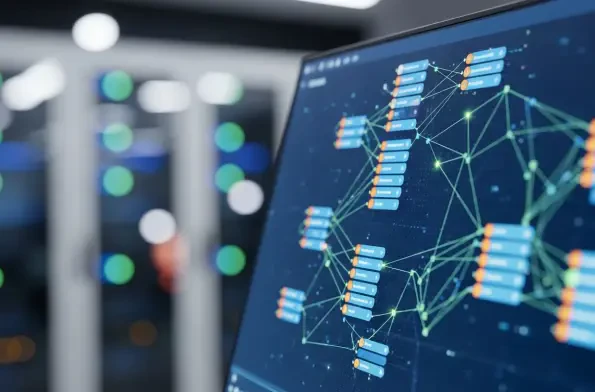
To navigate the complex web of modern APIs, active defense systems now employ Large Language Models (LLMs) to perform AI-driven call graph mapping. One of the greatest challenges in API security is the “mapping problem”—the fact that many APIs are poorly documented or have OpenAPI specifications that do not accurately reflect their current state. AI models can ingest these schemas and infer the relationships between different endpoints, identifying how data flows from a POST request to a subsequent GET or PATCH request. This automation allows the scanner to build a comprehensive map of the API’s “dependencies,” ensuring that the test plans it generates are both logical and thorough.
In complex environments where hundreds of microservices interact, this AI-driven approach is the only way to maintain an up-to-date security posture. The AI can recognize that an “account_id” in one service corresponds to a “user_uuid” in another, even if the naming conventions are inconsistent. This level of intelligence allows for the creation of “smart” test sequences that target the most vulnerable intersections of data and logic. Moreover, this reduces the “barrier to entry” for smaller teams who may not have the resources to manually maintain perfect documentation. The AI acts as a bridge, translating fragmented technical specs into a cohesive strategy for vulnerability discovery.
Secure Credential Orchestration
Active scanning requires the use of valid credentials to simulate user behavior, which introduces a significant security risk: the potential exposure of the very API keys used for testing. Secure credential orchestration addresses this by integrating “encryption-as-a-service” into the scanning workflow. When a user provides credentials for the scanner, the system immediately encrypts them using a high-security vault. The platform only decrypts these secrets at the “last mile”—the precise moment the scanning engine makes a request to the target API. This architecture ensures that sensitive keys are never stored in plain text and are only accessible to the isolated execution environment responsible for the scan.
The performance characteristics of this process are vital for maintaining high-speed execution at the edge. By utilizing localized decryption nodes, the system can perform thousands of authenticated tests per second without the latency typically associated with centralized secret management. This high-speed execution is necessary for modern CI/CD pipelines, where security tests must be completed in minutes rather than hours. Furthermore, by rotating and re-wrapping these secrets regularly, the system minimizes the “blast radius” of any potential breach. This balance between accessibility for the scanner and security for the user is what makes active defense a viable solution for enterprise-grade applications.
Emerging Trends in API Vulnerability Management
The field of API security is currently witnessing a rapid convergence of artificial intelligence and automated remediation. We are seeing the rise of “self-correcting” security auditors—systems that not only identify a vulnerability but also suggest the specific lines of code or configuration changes needed to fix it. This trend is moving the industry toward a “single pane of glass” model, where security insights are integrated directly into the developer’s existing dashboard. Instead of receiving a separate, massive PDF report of vulnerabilities, developers see security alerts alongside their performance metrics, making security a natural part of the maintenance lifecycle rather than an after-the-thought hurdle.
Moreover, there is a visible shift toward “autonomous” security platforms that can adjust their scanning intensity based on the perceived risk level of a specific endpoint. If an API handles sensitive financial data, the system might automatically trigger more rigorous, stateful tests, whereas a public informational API might receive more frequent but less intensive checks. This intelligent allocation of resources ensures that security teams are not buried under a mountain of false positives or low-priority alerts. As these systems become more integrated with the underlying infrastructure, we can expect a future where the network itself can “heal” by temporarily applying virtual patches to discovered vulnerabilities while developers work on a permanent fix.
Real-World Applications and Sector Impact
In sectors like fintech and healthcare, the impact of active API defense is a matter of both financial stability and patient privacy. For instance, a fintech application that uses APIs to facilitate peer-to-peer payments is a prime target for BOLA attacks. An attacker might attempt to intercept a transaction by changing the recipient’s ID in a request. Passive defenses might see this as a standard transaction, but an active scanner would have already tested this specific logic path and alerted the developers to the lack of an ownership check. Similarly, in e-commerce, active defense prevents unauthorized access to customer shipping addresses or payment methods by constantly verifying that the “session owner” is the only one with permission to modify sensitive fields.
Beyond traditional high-stakes industries, active defense is becoming critical for complex logistics and food delivery platforms. These services rely on a “triangle” of users: the customer, the merchant, and the delivery driver. The business logic required to manage permissions across these three distinct roles is incredibly complex and prone to errors. A driver should be able to see a customer’s address during the delivery window but not after the order is completed. Active scanning can simulate these temporal and role-based scenarios to ensure that data access is restricted as soon as the business need expires. This level of granular, logic-based testing is the only way to secure the intricate webs of trust that define the modern gig economy.
Technical Hurdles and Adoption Barriers
Despite its advantages, active API defense faces a significant “barrier to entry” regarding manual configuration and the technical debt of legacy systems. Many organizations still struggle with incomplete or outdated OpenAPI schemas, which are the foundational blueprints for active scanners. If the schema is missing an endpoint or incorrectly defines a parameter, the scanner may miss critical vulnerabilities or generate useless traffic. Furthermore, modern authentication flows—such as those involving multi-factor authentication (MFA) or complex OAuth handshakes—are notoriously difficult for automated tools to navigate. Scanning these flows requires a level of orchestration that can be difficult for smaller organizations to implement and maintain.
Another challenge lies in the sheer volume of traffic required for legacy passive systems to provide meaningful insights. While active scanning mitigates this by generating its own traffic, it must do so carefully to avoid disrupting production services. There is a delicate balance between “aggressive” scanning that finds every hole and “safe” scanning that doesn’t trigger false alarms or cause a self-inflicted denial-of-service (DoS) attack. Ongoing development efforts are focused on making these tools more “infrastructure-aware,” allowing them to throttle their activity based on the current load of the target system. Overcoming these hurdles will require a closer integration between development, operations, and security teams—a transition often referred to as DevSecOps.
Future Outlook and Long-Term Trajectory
The trajectory of active scanning is heading toward full coverage of the OWASP Top 10 vulnerabilities, essentially automating the entire role of a junior penetration tester. We are approaching a point where automated pentesting is not just a luxury for the Fortune 500 but a standard feature of every cloud hosting provider. This democratization of security tools will have a profound long-term impact, making it significantly harder for attackers to find “easy” targets in smaller organizations. As these tools become more sophisticated, they will move beyond just identifying flaws and begin to predict them by analyzing code patterns before the API is even deployed.
Breakthroughs in “cross-environment” scanning are also expected, where a system can learn from an attack attempt on one customer’s API and immediately apply those lessons to protect all other customers on the same platform. This collective intelligence will create a “rising tide” of security, where the entire digital ecosystem becomes more resilient as each individual component is hardened. The long-term impact will be a shift in the “economics of hacking”; as the cost and difficulty of finding logic flaws increase, attackers will be forced to abandon broad, automated exploits in favor of much more expensive, targeted manual attacks, which are easier for high-end defense systems to detect.
Summary of Active API Defense Capabilities
The transition from reactive firewalls to proactive, stateful vulnerability hunting marked a definitive turning point in the protection of global digital infrastructure. By moving away from the simple observation of traffic and toward the active simulation of threats, organizations gained a much clearer view of their true security posture. The integration of AI-driven mapping and secure credential orchestration allowed these systems to handle the complexity of modern microservices while maintaining the speed required by contemporary development cycles. This approach successfully addressed the most elusive API threats, such as BOLA, which had long bypassed traditional defenses by hiding within the “valid” logic of authorized sessions.
The widespread adoption of these active defense technologies significantly reduced the window of opportunity for attackers to exploit newly discovered vulnerabilities. Organizations were encouraged to view security as a continuous process of discovery rather than a one-time audit, leading to a more robust and self-healing internet. As the technology matured, it bridged the gap between complex enterprise security and the needs of smaller developers, ensuring that advanced protection was no longer gated by massive budgets or specialized expertise. Ultimately, the move to active API defense established a new baseline for digital trust, where the integrity of an application’s logic is as heavily guarded as the perimeter of its network.