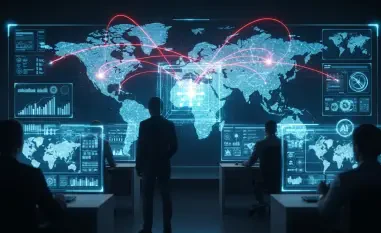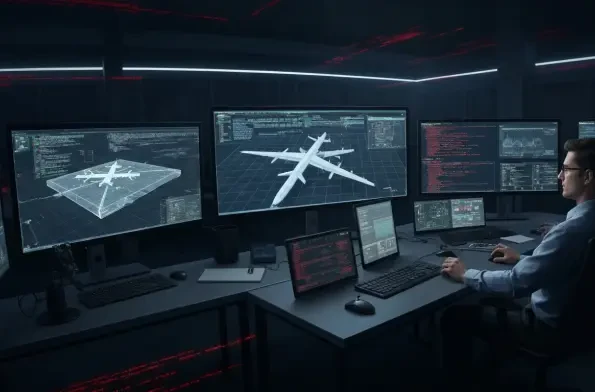
In the intricate and often unseen battlefield of cyber espionage, a formidable adversary known as UNC1549 has emerged, casting a long shadow over the aerospace, aviation, and defense sectors. This suspected Iran-nexus threat group, active since at least late 2023, has honed its focus on industries pivotal to national security and technological advancement, driven by a relentless pursuit of sensitive data for strategic gain. Mandiant’s comprehensive analysis, detailed in a recent report, unpacks the sophisticated tactics, techniques, and procedures (TTPs) that define UNC1549’s operations, building on earlier findings from February 2024. The group’s ability to exploit both human vulnerabilities and systemic weaknesses reveals a calculated approach to espionage that challenges even the most fortified defenses.
What sets UNC1549 apart is not just the precision of their attacks, but the patience with which they execute them. Their strategy often involves lying dormant within compromised networks for months, only to resurface after victims believe the threat has been neutralized. This persistence underscores a deep commitment to maintaining access to high-value targets, where the stakes extend beyond corporate losses to national security implications. As the group continues to evolve, their operations highlight critical vulnerabilities in interconnected business ecosystems, particularly in the relationships between primary targets and less secure third-party partners. The urgency to understand and counter this threat has never been greater, as the data they seek could reshape competitive landscapes or inform geopolitical strategies.
Initial Access and Exploitation Strategies
Spear-Phishing and Social Engineering
UNC1549’s ability to penetrate secure environments often begins with meticulously crafted spear-phishing campaigns, designed to exploit human nature with alarming precision. These attacks frequently masquerade as job opportunities or recruitment offers, themes that resonate deeply with employees in the aerospace and defense sectors. By embedding malicious attachments or links in seemingly legitimate emails, the group tricks users into downloading malware or divulging credentials, granting initial access to otherwise protected networks. The sophistication of these lures lies in their personalization, often tailored to specific roles or industries, making them difficult to distinguish from genuine correspondence. This approach capitalizes on curiosity or ambition, turning a momentary lapse in judgment into a gateway for long-term compromise.
Beyond the technical finesse of their phishing efforts, UNC1549 demonstrates a keen understanding of psychological manipulation to sustain their access. Once inside, the group often deploys follow-up emails or communications to reinforce their foothold, posing as trusted contacts or HR personnel to extract further information. This layered social engineering tactic ensures that even if initial malware is detected, alternative credentials or entry points have already been secured. The reliance on human error as a primary vector underscores the need for robust awareness training within targeted industries, as even the most advanced security tools can be rendered ineffective by a single click. Defenders must prioritize educating staff on recognizing these deceptive tactics, as UNC1549’s success often hinges on exploiting trust rather than technology alone.
Third-Party Relationship Exploitation
Another cornerstone of UNC1549’s initial access strategy lies in exploiting trusted third-party relationships, a tactic that bypasses the hardened defenses of primary targets in the aerospace and defense sectors. By focusing on vendors, suppliers, or contractors with legitimate access to high-value networks, the group capitalizes on security disparities within interconnected ecosystems. These smaller partners, often lacking the resources for comprehensive cybersecurity, become unwitting entry points, allowing UNC1549 to authenticate through legitimate channels like Citrix or Azure Virtual Desktop before breaking out into broader network segments. This method reveals a critical vulnerability in supply chain security, where trust and access privileges are exploited with devastating effect.
The implications of this approach extend far beyond individual breaches, as UNC1549 uses compromised third parties as pivot points to reach multiple entities within the same industry. Once access is gained through a less secure partner, the group can navigate to primary targets, often major defense contractors, whose robust defenses would otherwise pose significant barriers. This cascading effect amplifies the scope of their espionage, turning a single weak link into a conduit for widespread intelligence gathering. Addressing this threat requires organizations to scrutinize the security posture of every partner, no matter how peripheral, and enforce stringent access controls. The reality is stark: in an interconnected business landscape, the weakest link can unravel even the most fortified defenses, making supply chain security an urgent priority.
Custom Tools and Malware Capabilities
Bespoke Backdoors for Persistence
UNC1549’s arsenal includes a suite of custom backdoors, such as TWOSTROKE and DEEPROOT, meticulously engineered to ensure long-term persistence within compromised networks. These tools, often deployed through techniques like DLL search order hijacking, exploit legitimate software dependencies in applications from FortiGate to Microsoft executables. TWOSTROKE, for instance, uses SSL-encrypted communication over TCP/443 to support file manipulation, system information collection, and DLL loading, while generating unique victim identifiers for tracking. Such capabilities allow the group to maintain access even after remediation efforts, often lying dormant for months before reactivation. This stealthy approach reflects a deep understanding of defender responses, prioritizing sustained access over immediate exploitation.
The customization of these backdoors further complicates detection, as each deployment often features unique hashes, even within the same victim environment, making it challenging for standard security measures to identify them. DEEPROOT, a Linux-based backdoor written in Golang, supports shell command execution and file operations while leveraging multiple Azure-hosted domains for redundancy. This ensures operational continuity if a primary server is disrupted. The deliberate design of these tools to evade signature-based defenses highlights UNC1549’s technical sophistication and significant resource investment, likely indicative of state-level support. Organizations must adopt behavior-based detection mechanisms to counter these threats, as traditional antivirus solutions struggle against such tailored malware. The persistence of these backdoors serves as a stark reminder of the group’s long-term espionage agenda.
Specialized Utilities for Escalation and Collection
Beyond persistence, UNC1549 employs specialized utilities like DCSYNCER.SLICK and SIGHTGRAB to escalate privileges and collect sensitive data, critical to their espionage objectives. DCSYNCER.SLICK, a modified version of an open-source tool, mimics Active Directory replication to extract NTLM password hashes, often executed under compromised domain controller accounts. Its use of XOR encryption for credential storage adds a layer of evasion, making it harder for defenders to uncover stolen data. These tools enable the group to impersonate high-privilege accounts, accessing restricted systems with alarming ease. The focus on credential theft underscores the strategic intent to deepen network penetration, targeting the most valuable assets within an organization.
Complementing these efforts are utilities like SIGHTGRAB, which autonomously captures screenshots at regular intervals, saving them to timestamped directories for later exfiltration. Similarly, CRASHPAD decrypts browser credential data, while TRUSTTRAP deceives users into entering credentials via fake login prompts mimicking legitimate applications like Microsoft Outlook. This multifaceted approach to data collection ensures UNC1549 can harvest a wide range of sensitive information, from intellectual property to internal communications. Defenders face a daunting challenge in identifying these tools, as their operations often blend with legitimate activity. Implementing endpoint detection and response systems, alongside strict monitoring of anomalous user behavior, becomes essential to disrupt these post-exploitation activities before irreparable damage is done.
Command and Control Infrastructure
Leveraging Cloud Services for Stealth
UNC1549’s command and control (C2) infrastructure heavily relies on Microsoft Azure, a choice that exemplifies their strategy of blending into legitimate traffic for stealth. By registering domains that mimic industry-specific entities, the group ensures their communications are less likely to raise suspicion among security teams. Azure’s Web Apps and cloud services provide a trusted platform for hosting C2 servers, complicating efforts to distinguish malicious activity from normal operations. Tools like LIGHTRAIL, a custom tunneling utility based on Socks4a proxy, utilize WebSocket connections over Azure infrastructure, further enhancing their ability to exfiltrate data undetected. This exploitation of reputable cloud services represents a broader trend among advanced threat actors, challenging traditional network monitoring approaches.
The strategic use of cloud environments also offers UNC1549 scalability and flexibility, allowing them to adapt quickly to defensive measures. Domains and servers can be spun up or taken down with ease, frustrating attempts to block or trace their activities. This dynamic infrastructure, combined with the group’s focus on operational security, means that even when one command-and-control (C2) channel is identified, others remain operational. For defenders, this necessitates a shift toward cloud-native security solutions that can monitor for anomalous behavior within trusted platforms. Collaboration with cloud providers to identify and shut down malicious accounts is equally critical, as UNC1549’s reliance on these services exposes a potential chokepoint. The challenge lies in balancing the benefits of cloud adoption with the risks of such exploitation.
Redundant Access Methods
To ensure uninterrupted access to compromised environments, UNC1549 employs redundant access methods, including reverse SSH tunnels and alternative tools like ZeroTier and Ngrok. Reverse SSH tunnels minimize forensic evidence on host systems, routing communications through intermediary servers to obscure the attacker’s origin. This technique complicates investigations, as endpoint detection systems struggle to capture tangible artifacts of the group’s presence. The use of such tunneling methods reflects a high degree of operational sophistication, designed to maintain control even under intense scrutiny from defenders. Redundancy is not just a fallback—it’s a core component of their resilience strategy, ensuring continuity of operations when primary channels are disrupted.
In addition to tunneling, UNC1549 leverages commercial and open-source tools like ZeroTier and Ngrok to establish backup access pathways, ensuring they can maintain control over compromised systems. These tools, often used legitimately for remote access or networking, provide additional layers of persistence, allowing the group to reconnect to networks even after remediation efforts. This multi-pronged approach means that even if one method is blocked, others remain viable, creating a persistent threat that tests the endurance of security teams. Organizations must prioritize comprehensive network monitoring and anomaly detection to identify unusual traffic patterns associated with these tools. Furthermore, restricting unnecessary remote access applications and enforcing strict egress filtering can help mitigate the risk of such redundant pathways being exploited. The battle against UNC1549 requires vigilance across all potential entry and exit points.
Espionage Objectives and Impact
Targeting Sensitive Data
At the heart of UNC1549’s operations lies a clear espionage agenda, focused on acquiring sensitive data from the aerospace and defense industries. The group targets intellectual property, internal emails, and IT documentation—information that holds immense value for state sponsors seeking strategic or competitive advantages. Such data can influence national security dynamics, offering insights into cutting-edge technologies or military capabilities. The meticulous selection of targets within these sectors underscores a geopolitical motivation, where stolen information could reshape power balances or inform state-level decision-making. The consequences of these breaches extend far beyond individual organizations, impacting entire industries and nations.
The methods employed to exfiltrate this data are as calculated as the targets themselves, showcasing a meticulous strategy by UNC1549 to prioritize stealth in their operations. They often compress and encrypt stolen information before transmission to avoid detection. Tools designed for data collection operate with precision, focusing on high-value assets while minimizing exposure. This deliberate approach ensures that even if a breach is detected, the full extent of compromised data may remain unclear for months. For organizations in these critical sectors, the loss of proprietary information can undermine years of research and development, eroding market positions and national security. Strengthening data loss prevention measures and encrypting sensitive information at rest and in transit are vital steps to counteract such targeted espionage efforts.
Supply Chain Pivoting
UNC1549’s ability to pivot across supply chain entities transforms isolated breaches into expansive intelligence-gathering campaigns, amplifying their impact on the aerospace and defense ecosystem. By exploiting access gained through a single compromised vendor or contractor, the group navigates to related organizations, leveraging the inherent trust and interconnectivity of business partnerships. This cascading effect allows them to gather intelligence from multiple points within an industry, creating a comprehensive picture of operations, technologies, and communications. The strategy not only maximizes the value of each breach but also complicates containment efforts, as defenders must address multiple compromised entities simultaneously.
This supply chain focus highlights a systemic vulnerability that demands a collaborative response from all stakeholders in the industry, emphasizing the need for comprehensive security measures. Organizations must map their extended networks, identifying every partner with access to sensitive systems, and enforce rigorous security standards across the board. The reality is that a breach in one small supplier can jeopardize the integrity of major defense contractors, with ripple effects that threaten national interests. Beyond technical defenses, fostering transparency and information sharing among supply chain partners can help identify and mitigate threats early. UNC1549’s exploitation of these relationships serves as a stark reminder that cybersecurity is only as strong as the weakest link, urging a unified approach to safeguard critical sectors from such pervasive espionage.
Strategic Implications and Defense Challenges
Geopolitical Motivations and Broader Trends
The targeting of aerospace and defense by UNC1549 carries profound geopolitical implications, reflecting a broader trend of state-sponsored cyber espionage aimed at strategic industries. The data sought—ranging from proprietary designs to sensitive communications—could provide significant advantages in military or economic arenas, potentially altering competitive landscapes on a global scale. Given the suspected ties to Iranian state actors, these operations likely align with national interests, seeking to bolster capabilities or influence regional dynamics. This intersection of cyber threats and geopolitics blurs the line between corporate security and national defense, elevating the stakes for targeted organizations and their governments.
This pattern of targeting critical sectors is not unique to UNC1549 but mirrors a growing focus among advanced persistent threats worldwide. As nations increasingly rely on technological superiority for power projection, cyber espionage becomes a tool for leveling disparities or gaining leverage without traditional conflict. Defenders must recognize that attacks like these are not merely financial crimes but acts of strategic importance, requiring alignment between private sector security efforts and governmental policies. International cooperation, intelligence sharing, and policy frameworks that address state-sponsored threats are essential to counter such actors. The challenge lies in anticipating these motivations and adapting defenses to protect not just data, but the broader interests tied to it.
Evolving Defense Evasion Tactics
UNC1549’s commitment to defense evasion poses significant hurdles for cybersecurity teams, as the group employs tactics designed to thwart even the most diligent responses. By deleting tools and forensic artifacts after use, clearing RDP connection histories, and utilizing reverse SSH tunnels, they minimize evidence of their presence on compromised systems. Additionally, the use of code-signing certificates to bypass application allowlists and legitimate tools like AD Explorer for reconnaissance allows their activities to blend with normal administrative workflows. This high level of operational security demonstrates an acute awareness of defender tactics, ensuring that traditional detection methods often fall short.
Countering these evasion strategies requires a shift toward proactive and behavior-based defenses that focus on anomalies rather than known signatures. Endpoint detection and response systems must be tuned to identify subtle indicators of compromise, such as unusual privilege escalations or unexpected network connections, even when they appear legitimate. Regular audits of third-party access and stringent monitoring of cloud-based traffic are also critical, given UNC1549’s reliance on trusted services for stealth. The group’s ability to anticipate and adapt to remediation efforts means that defenders must continuously evolve their approaches, integrating threat intelligence to stay ahead. Ultimately, building resilience against such sophisticated evasion demands a mindset of constant vigilance and innovation in security practices.
Looking Ahead: Strengthening Resilience
Reflecting on the extensive campaign waged by UNC1549, it becomes evident that their sophisticated tactics and persistent focus on aerospace and defense industries posed a significant challenge to cybersecurity frameworks. Their strategic exploitation of human vulnerabilities through spear-phishing, alongside systemic weaknesses in third-party relationships, exposed critical gaps that adversaries capitalized on with devastating precision. The deployment of custom malware and redundant access methods ensured that even robust remediation efforts were often outmaneuvered, leaving lasting impacts on targeted sectors. The scale of data exfiltration and supply chain pivoting that occurred under their operations underscored the urgent need for a paradigm shift in how security is approached.
Moving forward, organizations must prioritize a multi-layered defense strategy that addresses both technical and human elements of cybersecurity to ensure robust protection against emerging threats. Implementing advanced threat detection systems capable of identifying behavioral anomalies, rather than relying solely on signature-based tools, is a crucial step. Equally important is the fortification of supply chain security through rigorous vetting of partners and enforcing uniform security standards across all connected entities. Enhanced training programs to combat social engineering, coupled with international collaboration for threat intelligence sharing, can further bolster resilience. By adopting these proactive measures and fostering a culture of continuous improvement, industries can better safeguard sensitive data and national interests against evolving threats like those once presented by UNC1549, ensuring a more secure future.