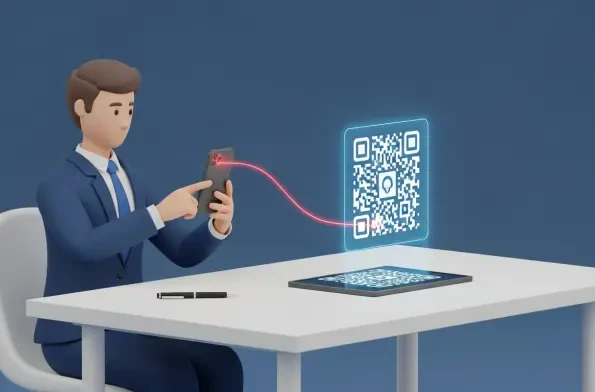
The simple act of pointing a smartphone camera at a pixelated square to access information has become so commonplace that its potential as a sophisticated tool for cyber espionage is often dangerously overlooked. This ubiquitous convenience, found on everything from restaurant menus to payment terminals, has been cleverly weaponized by cybercriminals, creating a stealthy and effective attack vector. This trend, known as QR code phishing or “quishing,” represents a rapidly growing threat that circumvents traditional security measures by design. It demands a new level of awareness and updated defense strategies for both individuals and organizations to combat its rising tide. This analysis will explore the recent surge in quishing, dissect real-world campaigns from state-sponsored actors, deconstruct the mechanics of these attacks, project future threats, and outline critical mitigation strategies.
The Surge and Sophistication of Quishing Attacks
Tracking the Growth of a Mobile-First Threat
Recent cybersecurity reports indicate a sharp and sustained increase in quishing incidents, transforming it from a niche tactic into a mainstream attack vector. The primary driver behind this trend is the widespread adoption of QR codes, which accelerated dramatically in the post-pandemic era for contactless interactions. Users have been conditioned to trust these codes, viewing them as harmless shortcuts rather than potential gateways for malicious activity. This inherent trust is precisely what attackers exploit.
This mobile-first threat thrives because it shifts the attack surface away from heavily monitored corporate networks and onto personal devices. As organizations have fortified their email gateways and desktop endpoints, adversaries have pivoted to this path of least resistance. The issuance of high-priority alerts from agencies like the FBI underscores the severity and rapid evolution of quishing, signaling that it is no longer an emerging threat but a clear and present danger actively used in sophisticated campaigns.
State-Sponsored Campaigns in the Wild
The theoretical danger of quishing has become a stark reality, with nation-state actors actively deploying it for espionage and credential theft. A recent FBI Flash alert detailed ongoing phishing campaigns orchestrated by North Korea’s Kimsuky APT group, which specifically targets think tanks, academic institutions, and government entities. These attacks demonstrate a high degree of social engineering and technical savvy, tailored to deceive even cautious targets.
The FBI report provided several concrete examples of these tactics in action. In May 2025, an email was sent to a think tank leader, spoofing a foreign advisor and using a QR code that promised access to a “questionnaire” on Korean peninsula developments. That same month, a senior fellow at another think tank received an email masquerading as a message from an embassy employee, with a QR code claiming to link to a secure drive for human rights input. By June 2025, the campaign had evolved further, targeting a strategic advisory firm with an email containing a QR code for a non-existent conference, which redirected victims to a fake Google login page to harvest their credentials.
Deconstructing the Quishing Attack Vector
How Quishing Bypasses Traditional Defenses
The fundamental genius of a quishing attack lies in its ability to completely bypass the defenses protecting corporate environments. By embedding a malicious QR code within an email, attackers move the point of compromise from the monitored desktop to the user’s personal, often unprotected, mobile device. The QR code itself is just an image, containing a URL that security tools cannot easily inspect.
This method effectively evades standard email security protocols like URL inspection, link rewriting, and sandboxing, which are designed to analyze text-based links. Because the scan and subsequent web navigation occur on a mobile device, the activity is invisible to corporate endpoint detection and response (EDR) and network monitoring solutions. The FBI’s alert validates this concern, noting that quishing is now considered a “high-confidence, MFA-resilient identity intrusion vector,” highlighting its effectiveness in breaching even well-defended networks.
The Anatomy of a Compromise
A typical quishing attack follows a clear and efficient chain of events. It begins when a user scans the malicious QR code, initiating the compromise. The user is then redirected through attacker-controlled infrastructure, which silently collects device and identity information such as the operating system, IP address, and location. This data allows the attacker to present a highly convincing, mobile-optimized credential harvesting page.
The final stage involves tricking the victim into entering their credentials on a fake login portal designed to mimic legitimate services like Microsoft 365 or Okta. However, the objective often extends beyond simple credential theft. Sophisticated attackers aim to steal session tokens, which allows them to bypass multi-factor authentication (MFA) and hijack active user sessions. This grants them persistent access to the compromised network, from which they can launch secondary attacks or move laterally to access sensitive data.
The Future Landscape Evolving Threats and Countermeasures
Projecting the Evolution of QR Code Threats
The threat landscape for quishing is expected to become more complex and dangerous. Future attacks will likely incorporate AI to dynamically customize phishing landing pages in real time, making them even more convincing to the target. We may also see quishing integrated with other social engineering tactics, such as vishing (voice phishing), to create multi-stage attacks that are harder to detect and defend against.
The broader implications for industries heavily reliant on QR codes—including payments, logistics, and healthcare—are significant. A successful compromise in these sectors could lead to financial theft, supply chain disruption, or the exposure of sensitive patient data. Furthermore, the dual threat posed by state-sponsored actors like those in North Korea, who use these tactics for both cyber-espionage and financial gain through crypto theft, adds another layer of risk for organizations globally.
Building a Multi-Layered Defense Strategy
Defending against quishing requires a multi-layered strategy that addresses technology, policy, and human behavior. Drawing on recommendations from the FBI and industry experts, organizations must move beyond traditional defenses and adopt a more holistic approach. The most critical layer is the human one; this involves implementing updated employee education that specifically trains staff to verify the source of any QR code before scanning, especially if it requests login credentials or file downloads.
On the technical front, deploying Mobile Device Management (MDM) and endpoint security solutions capable of scanning QR codes before allowing access to linked resources is crucial. Enforcing phishing-resistant multi-factor authentication for all remote access and sensitive systems can also mitigate the impact of a successful credential theft. Finally, organizations must establish clear policies for reporting suspicious QR codes, actively monitor network activity following scans, and enforce the principle of least privilege to limit an attacker’s access in the event of a breach.
Conclusion Adapting to the New Age of Phishing
The evidence presented made it clear that quishing is not a fleeting trend but a potent and established threat. Its ability to bypass legacy security controls, combined with its active use by sophisticated threat actors, confirms its status as a significant risk to organizations of all sizes. The attack vector capitalizes on the convergence of personal and corporate devices, exploiting a blind spot in many security architectures.
Ultimately, mitigating this threat requires a proactive and adaptive security posture. It is no longer sufficient to focus solely on the corporate network; protection must extend to the mobile devices that employees use daily. Organizations and individuals must cultivate a healthy skepticism toward QR codes, treating them with the same caution as unsolicited email links. By implementing the recommended combination of user education, modern technical controls, and vigilant monitoring, it is possible to defend against this clear and present danger and adapt to the new age of phishing.