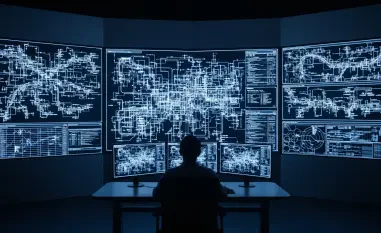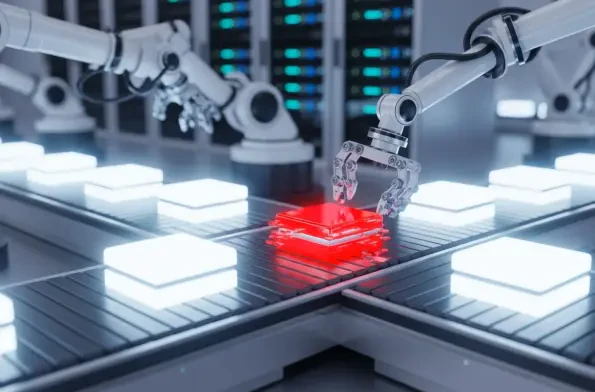
Behind the headlines of spectacular data breaches operates a quiet, methodical engine of cybercrime, running with the predictable efficiency of a factory floor rather than the chaotic improvisation of a lone cinematic hacker. This industrialization of cyberattacks represents a fundamental paradigm shift in the global threat landscape, transforming bespoke, monolithic operations into a decentralized, service-based economy. The result is a new era where sophisticated attacks are more scalable, broadly accessible, and profoundly difficult to detect. This analysis will dissect the business models driving this new cybercrime economy, analyze how attackers weaponize the very tools organizations trust, explore the future trajectories of this trend, and provide a concluding perspective on adapting to this evolution.
The New Cybercrime Economy: From Craft to Assembly Line
The modern cybercrime ecosystem has moved decisively from a model of individual craftsmanship to one of mass production. Much like the industrial revolution, this transformation is built on specialization, shared resources, and scalable service delivery. Threat actors no longer need to be masters of every discipline; instead, they can purchase or subscribe to the tools, infrastructure, and expertise they need, creating a dynamic and resilient marketplace for malicious services.
The Rise of Cybercrime as a Service
The shift toward a service-oriented model is now the dominant force in the threat landscape. Instead of self-contained attack groups, the ecosystem is composed of specialized providers offering everything from initial access to ransomware deployment. This modular approach is evident in the rapid growth of shared criminal infrastructure and affiliate-driven platforms, which lower the technical barrier to entry and amplify the potential for widespread damage. Ransomware-as-a-Service (RaaS) has become a multi-billion-dollar industry, but the “as-a-service” model extends to nearly every facet of an attack.
This specialization creates hyper-efficient, segmented operations. For instance, “traffer teams,” which focus solely on generating malicious traffic and directing victims to fraudulent sites, have become incredibly profitable, with some generating over million in revenue since early 2025. These teams provide a turnkey service for other criminals who handle the final monetization. Similarly, ideologically motivated groups have adopted this model, building massive, volunteer-based attack networks with tens of thousands of members who can be mobilized on command, demonstrating that the service economy thrives on financial and political motivations alike.
Case Studies in Operational Scale
Concrete examples of this industrialization reveal a level of organization and sophistication that rivals legitimate business enterprises. These operations function not as singular threats but as interconnected platforms that empower a vast network of criminal clients and partners, achieving a scale that would be impossible for any single group to manage.
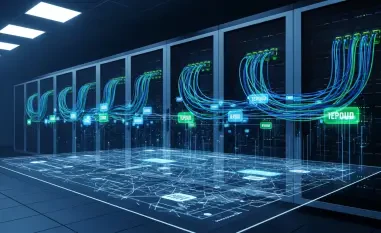
A clear illustration is the ShadowSyndicate cluster, which functions as an infrastructure-as-a-service provider for the cybercrime elite. This entity manages a sprawling network of servers, rotating SSH keys and shifting resources between clusters with the agility of a legitimate cloud provider. By offering this foundational layer to top-tier ransomware syndicates like Cl0p and BlackCat, ShadowSyndicate enables these groups to focus on their core competencies—extortion and negotiation—while outsourcing the complexities of infrastructure management.
The affiliate model is perfected by groups like the Rublevka Team, which operates a highly automated platform for large-scale cryptocurrency theft. This team supplies its network of thousands of non-technical affiliates with everything they need: landing page generators, management bots, and pre-written social engineering scripts. This approach effectively crowdsources the labor-intensive part of the attack, allowing the core team to focus on platform development and profit-sharing. In a different but equally effective model, the pro-Russian hacktivist group NoName057(16) has built its DDoSia Project into a global crowdsourced attack network. Through a potent mix of propaganda, gamification, and cryptocurrency rewards, it mobilizes a dedicated force of volunteers to launch disruptive denial-of-service attacks, transforming ideological fervor into a reliable and powerful cyber weapon.
The Weaponization of Trust: Hiding in Plain Sight
One of the most defining characteristics of industrialized cybercrime is its strategic shift toward co-opting legitimate technologies and trusted pathways. Attackers are increasingly “Living-off-the-Land” (LotL), using the native tools and systems already present in a target’s environment to carry out their objectives. This approach provides a powerful form of camouflage, making malicious activity nearly indistinguishable from benign administrative tasks.
Abusing Legitimate Software and Systems
Security reports consistently show a rise in attacks that leverage trusted software, signed drivers, and legitimate cloud services as their primary vectors. By weaponizing the tools that system administrators and end-users rely on daily, threat actors effectively bypass traditional security controls that are designed to detect overtly malicious files and signatures. This tactic dramatically complicates the job of defenders.
When an attacker uses a legitimate remote management tool for persistence, it becomes a challenge of discerning intent rather than identifying malware. This blurring of lines allows adversaries to increase their dwell time within a network, moving laterally and escalating privileges under the guise of normal operations. Traditional antivirus and endpoint detection systems struggle to flag these activities without generating an overwhelming number of false positives, giving attackers a critical window to achieve their goals undetected.
Real-World Examples of Co-opted Technology
The practical application of this trend is visible across numerous recent campaigns. Threat actors have demonstrated remarkable ingenuity in turning everyday technologies against their users. These attacks are not only effective but also highly scalable, as they exploit tools and features that are ubiquitous in modern IT environments.
For example, attackers are now routinely using fake notifications to trick victims into installing legitimate Remote Monitoring and Management (RMM) software like Remotely or SimpleHelp. Once installed, these tools grant the attacker the same level of persistent remote control as a custom-built backdoor but without triggering alarms. Another advanced technique, “Bring Your Own Vulnerable Driver” (BYOVD), involves using old but still validly signed kernel drivers to operate with the highest level of system privileges. In one case, attackers used a revoked driver from the digital forensics tool EnCase to systematically terminate dozens of security products before deploying ransomware, effectively blinding the target’s defenses from the core of the operating system.
Even cloud-based development environments are being targeted. Attackers are poisoning configuration files within GitHub Codespaces, a popular cloud IDE. By embedding malicious commands in files that the environment automatically processes, they can achieve remote code execution, steal developer secrets, and pivot into corporate cloud infrastructure. This tactic exploits the inherent trust developers place in their tools and project configurations.
Expert Perspectives on the Industrialized Threat
Synthesized findings from security analysts and threat researchers paint a stark picture of the modern adversary. The consensus reinforces the significance of industrialization, highlighting a strategic focus on speed, efficiency, and the exploitation of trust.
One of the most alarming observations is the dramatic compression of attack timelines. As one expert insight notes, “The modern adversary operates with a focus on operational velocity and efficiency. We’re seeing attack timelines shrink dramatically, with one cloud environment compromise escalating to full administrative rights in just eight minutes, likely aided by AI-driven automation.” This speed leaves defenders with almost no time to react and underscores the inadequacy of manual incident response processes.
Furthermore, the core challenge for security teams has fundamentally shifted. “The primary challenge for defenders is no longer just the unknown threat; it’s the malicious use of the known,” reflects another expert perspective. “Attackers are weaponizing the very tools and trust-based systems we rely on daily, from RMM software to cloud development platforms.” This means security must evolve beyond blocking bad software to detecting bad behavior within good software.
Finally, there is clear evidence of tactical convergence, even at the nation-state level. “There is a clear convergence in nation-state tradecraft. Advanced groups are sharing and standardizing tactics like exploiting edge devices, using LotL techniques, and building anonymized relay networks, indicating a strategic effort to scale global intelligence campaigns.” This standardization suggests that even the most sophisticated actors are adopting an industrial mindset to maximize the impact and efficiency of their operations.
The Future of Industrialized Cyber Warfare
The trajectory of this trend points toward an even more automated and integrated future for cyberattacks. The increasing use of Artificial Intelligence and Large Language Models (LLMs) is poised to accelerate this industrialization further. Adversaries are already experimenting with AI to automate entire attack chains, from reconnaissance and social engineering to lateral movement and data exfiltration, a practice dubbed “LLMjacking.” This could lead to hyper-personalized, fully autonomous campaigns that can adapt to a target’s defenses in real time.
The central challenge for defenders will be protecting against attacks that leverage legitimate, deeply integrated systems. When malicious activity is carried out through trusted APIs, standard administrative protocols, and authorized cloud services, it becomes nearly indistinguishable from normal business operations. This stealth-by-design approach will require a fundamental rethinking of security monitoring and threat detection, moving away from signatures and toward sophisticated behavioral analytics.
The broader implications of this trend are significant. The proliferation of flawed ransomware strains like Nitrogen, which permanently destroy data due to coding errors, highlights the collateral damage of a scaled, service-based criminal economy where quality control is not a priority. Consequently, the need for organizations to proactively patch vulnerabilities known to be exploited by these groups, as flagged by agencies like CISA, has never been more critical. The future of defense is not just about building higher walls but about developing the intelligence to see an enemy who is already inside and looks just like a trusted colleague.
Adapting to the New Threat Paradigm
The evolution of cybercrime into a highly efficient, service-based industry that thrives by weaponizing legitimate tools and processes has permanently altered the security landscape. This industrialization lowered the barrier to entry, making sophisticated, large-scale cyberattacks more accessible and scalable than ever before. The craft of hacking gave way to a global assembly line, and the quiet hum of its operation now poses a greater threat than the noise of any single, isolated breach.
To counter adversaries who are already operating inside the perimeter, organizations must now pivot their defensive posture. The focus must shift from a singular obsession with preventing malware to a more nuanced strategy centered on the rapid detection of anomalous behavior within trusted systems. This requires continuous risk assessment, proactive threat hunting, and the assumption that a compromise is not a matter of if, but when. Adapting to this new paradigm is no longer an option; it is an urgent necessity for survival in an era where the greatest threats hide in plain sight.