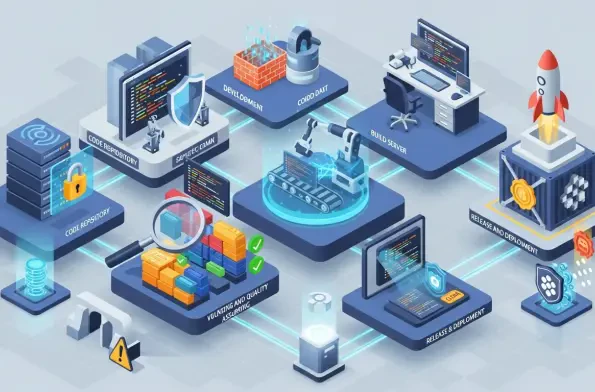
The digital architecture of the modern enterprise is currently undergoing a radical transformation that has effectively rendered the traditional concept of a protected perimeter obsolete. Instead of a single fortified gate, organizations now operate within a massive, interconnected web of third-party dependencies, cloud-based services, and automated build pipelines that often operate outside the direct oversight of security teams. This shift has not gone unnoticed by global threat actors, who have realized that targeting a single high-value software package can provide a skeleton key to thousands of victim environments simultaneously. As we look toward the complexities of the upcoming months, understanding how these supply chain vectors are being weaponized has become the most urgent priority for technical leadership and infrastructure architects alike.
The Shift from Perimeter Defense to Ecosystem Vulnerability
For decades, the primary goal of cybersecurity was to build a wall around the corporate network, but the migration to cloud-native development has moved the target from the server to the source code itself. Security analysts observe that attackers are increasingly moving upstream, focusing their efforts on the “wells” of the software ecosystem where developers draw their resources. When a foundational component is poisoned, the infection spreads naturally through legitimate update mechanisms, turning a company’s own internal processes into a delivery vehicle for malware. This represents a fundamental change in the threat model, where the most significant risks are no longer found in unauthorized external access but in the “trusted” code that developers intentionally pull into their environments every day.
The complexity of modern applications, which often rely on thousands of nested dependencies, makes it nearly impossible for a manual review process to catch every malicious injection. Consequently, the industry is witnessing a transition where the integrity of the ecosystem is just as vital as the security of the individual application. This vulnerability is not merely a theoretical concern; it is a systemic reality that requires a new way of thinking about how trust is established and maintained across the entire software lifecycle. By targeting the tools and libraries that form the backbone of the internet, hackers have found a way to bypass traditional defenses entirely, making the supply chain the most critical front line in the current conflict for digital sovereignty.
Why Modern Development Cycles Are High-Value Targets
Development cycles have become faster and more automated than ever before, creating a perfect storm for exploitation where speed often takes precedence over rigorous verification. CI/CD pipelines are designed to move code from a developer’s laptop to a production environment in minutes, often with little to no human intervention in the middle. This automation is the engine of modern business, yet it also provides a high-speed highway for any attacker who manages to compromise a maintainer’s account or a build server. The high value of these targets lies in their reach; a single compromise at the development stage can lead to a widespread breach that is incredibly difficult to detect, as the malicious code appears to be part of a legitimate, signed update.
Furthermore, the culture of “move fast and break things” has fostered a heavy reliance on open-source repositories where the vetting process for new contributors or package updates is often inconsistent. Threat actors recognize that a small, seemingly innocuous change to a popular utility library can remain hidden for months while it is quietly integrated into enterprise banking systems, healthcare platforms, and government infrastructure. The return on investment for such an attack is astronomical compared to traditional phishing campaigns. Instead of targeting individuals one by one, a single successful supply chain infiltration grants access to a vast array of high-value targets, making the development pipeline the ultimate prize for state-sponsored groups and sophisticated criminal syndicates.
A Roadmap for Navigating the 2026 Threat Landscape
Navigating the current threat landscape requires a proactive strategy that moves beyond reactive patching and toward a philosophy of continuous verification. Security researchers emphasize that organizations must start treating their development environments with the same level of scrutiny as their production servers, implementing strict controls over which packages are allowed and how they are vetted. This roadmap involves the implementation of Software Bill of Materials (SBOM) to track every component, along with automated scanning that looks for behavioral anomalies rather than just known signatures. As we progress through the next few years, the ability to rapidly identify and isolate a compromised dependency will be the deciding factor in whether an organization survives a supply chain attack or becomes its next headline.
Strategic resilience also necessitates a shift in how teams handle identity and access within the build process. Relying on simple passwords or static API keys is no longer sufficient when attackers are actively hunting for developer credentials to gain a foothold in the ecosystem. The roadmap for the near future involves adopting zero-trust principles within the development lifecycle itself, ensuring that every action—from a code commit to a deployment—is authenticated and authorized based on real-time risk assessments. By building a defense that is as modular and dynamic as the software it protects, organizations can begin to close the window of opportunity for hackers and secure their position in an increasingly volatile digital world.
The Axios Incident: A Case Study in Poisoning the Well
The recent compromise of the Axios npm package serves as a chilling reminder of how vulnerable the global software foundation truly is. As a library with nearly 100 million weekly downloads, Axios is a staple of modern web development, and its infiltration by the North Korean threat group UNC1069 demonstrated a terrifying level of precision. By gaining control over a lead maintainer’s account, the attackers were able to distribute a malicious version of the package that felt entirely legitimate to the automated systems that downloaded it. This was not a broad, untargeted strike; it was a surgical operation designed to plant a foothold in the environments of thousands of organizations that rely on this specific tool for their daily operations.
This incident highlights the “poisoning the well” strategy, where the goal is to contaminate a resource that is considered safe and essential. Because the malicious code was delivered through the official registry, it bypassed many of the standard security checks that might have flagged a suspicious download from an unknown source. The breach was only discovered after it had already been integrated into numerous pipelines, illustrating the massive delay between a supply chain infection and its eventual detection. This case study underscores the fact that popularity is not a proxy for security; in fact, the more popular a package is, the more attractive it becomes as a target for those looking to maximize the impact of their efforts.
Analyzing the WAVESHAPER.V2 Malware and Its Anti-Forensic Stealth
The technical sophistication of the WAVESHAPER.V2 malware found within the Axios package reveals a significant evolution in how supply chain payloads are designed. Unlike noisier malware that immediately begins exfiltrating data or encrypting files, WAVESHAPER.V2 was built for longevity and stealth, utilizing advanced anti-forensic techniques to evade detection. One of its most notable features was its self-deletion capability, which allowed it to remove its own traces after executing specific tasks. This design suggests that the attackers were not interested in a quick payday, but rather in establishing a long-term, quiet presence within the networks of their targets to conduct high-level espionage or prepare for future disruptions.
Analyzing the code of WAVESHAPER.V2 shows that it was optimized for cross-platform execution, meaning it could target Windows, macOS, and Linux systems with equal efficiency. This versatility is a hallmark of modern state-sponsored malware, as it ensures that no matter what infrastructure a developer or server is using, the payload remains functional. The use of custom encryption for its command-and-control communication further complicated the efforts of security teams to understand its full capabilities. The existence of such stealthy tools within the software supply chain suggests that there may be other, as-yet-undiscovered payloads currently sitting in production environments, waiting for the right moment to activate.
The Global Reach of State-Sponsored Supply Chain Infiltration
Supply chain attacks are no longer the exclusive domain of lone-wolf hackers; they have become a central pillar of national military and intelligence strategies. Groups operating out of North Korea, China, and Russia have repeatedly demonstrated that they can leverage the interconnectedness of the global tech industry to achieve geopolitical goals. By infiltrating the software that powers critical infrastructure or financial systems, these actors can exert influence far beyond their physical borders. This global reach means that a developer in a small startup can inadvertently become a pawn in a larger international conflict, simply by using a library that has been compromised by a foreign intelligence service.
The implications of state-sponsored infiltration are particularly grave because these actors possess the resources and patience to conduct multi-year operations. They do not just look for vulnerabilities; they create them by contributing to open-source projects over long periods, building trust within the community before eventually introducing a backdoor. This long-game approach makes it incredibly difficult to distinguish between a helpful contributor and a malicious agent. As the digital and physical worlds continue to merge, the ability of a state to disrupt the software supply chain of an adversary becomes a potent form of asymmetric warfare, capable of causing economic damage and social unrest without a single shot being fired.
Inherited Trust: The Hidden Risks of Automated CI/CD Pipelines
The modern CI/CD pipeline is built on a foundation of inherited trust, where every tool and dependency in the chain is assumed to be secure simply because it comes from a known source. However, this trust is often blind, as most organizations do not have the resources to audit the millions of lines of code that flow through their automated systems every day. When an update is pushed to a repository, the pipeline automatically pulls it, builds it, and deploys it, often without a single human reviewing the changes. This “fire and forget” mentality has created a massive blind spot that attackers are now exploiting with increasing frequency, turning the efficiency of automation into a liability.
The risk of inherited trust extends beyond just malicious code; it also includes the misconfiguration of the pipeline itself. If the permissions for a build server are too broad, a compromise of that server can lead to the exposure of sensitive secrets, such as API keys and signing certificates. Many organizations are finding that their automated processes are actually making them less secure by providing a direct path from an external repository to their most sensitive internal data. To combat this, a fundamental re-evaluation of how trust is granted within the pipeline is necessary, moving away from implicit acceptance toward a model where every component must prove its integrity before it is allowed to proceed to the next stage.
Beyond Malicious Packages: The Accidental Exposure of Proprietary Source Code
While malicious packages dominate the headlines, the supply chain is also plagued by the accidental exposure of proprietary information through human error and misconfigured tools. A recent incident involving a major AI firm revealed that over 500,000 lines of source code were leaked due to a simple mistake in how an internal tool was published to a public registry. This type of leak can be just as damaging as a malware infection, as it provides competitors and attackers with a detailed map of an organization’s intellectual property and internal security measures. Once source code is public, it can never be fully retracted, leading to long-term risks that persist even after the initial error is corrected.
These leaks often occur because the boundaries between internal and external development environments have become blurred. Developers frequently use the same tools and commands for both private and public projects, making it easy to accidentally upload sensitive data to a public repository. Furthermore, the use of AI-driven coding assistants can sometimes lead to the inadvertent sharing of snippets of proprietary code with the AI’s training model. This “incidental” supply chain risk requires a robust set of data loss prevention (DLP) policies that are specifically tailored for development workflows, ensuring that proprietary assets remain within the organization’s controlled environment at all times.
Why Reputation Is No Longer a Guarantee of Software Integrity
In the past, security professionals often relied on the reputation of a software vendor or the popularity of an open-source project as a proxy for its safety. However, the current threat environment has proven that reputation is no longer a reliable metric for integrity. High-profile compromises of major vendors have shown that even the most well-funded and security-conscious companies can be infiltrated. In fact, attackers often target reputable brands specifically because their software is widely trusted and rarely scrutinized by the end user. This “reputation trap” can lead to a false sense of security, where organizations skip essential verification steps because they assume a well-known product is inherently safe.
The rise of account takeovers and social engineering against software maintainers has further eroded the value of reputation. An attacker does not need to compromise the vendor’s entire infrastructure; they only need to compromise the account of a single person with publish access. Once they have that access, they can leverage the existing trust the community has in that individual to distribute malicious code. This shift means that security teams must move toward a “trust but verify” model, where the source of the software is just one factor in a larger risk assessment. Every update, regardless of where it comes from, must be treated as potentially suspect until its integrity can be independently confirmed through technical means.
Zero-Day Acceleration: The Shrinking Window Between Discovery and Exploit
The timeline from the discovery of a zero-day vulnerability to its active exploitation by hackers has shrunk to an alarming degree. In years past, organizations might have had weeks or even months to test and deploy patches, but today, exploits are often appearing in the wild within hours of a flaw being disclosed—or sometimes even before. This zero-day acceleration is driven by sophisticated scanning tools that allow attackers to identify vulnerable systems across the entire internet in a matter of minutes. As a result, the “exploit gap” has become so narrow that manual patching processes are no longer capable of keeping pace with the speed of the modern threat.
This trend is particularly evident in critical infrastructure and common software components that serve as high-value entry points. When a vulnerability is found in a widespread library or a popular networking tool, the race between defenders and attackers becomes a high-stakes sprint. The rapid weaponization of these flaws is often facilitated by the public release of proof-of-concept code, which, while intended for research, is quickly adopted by criminal groups. To survive in this environment, organizations must adopt automated patching and real-time threat intelligence feeds that can trigger defensive measures as soon as a new threat is identified, reducing the time they remain exposed to the absolute minimum.
High-Value Entry Points in Modern Browsers and Communication Tools
Modern web browsers and communication platforms have become the most targeted entry points for hackers because they serve as the primary interface for both personal and professional life. A single vulnerability in a browser’s graphics engine or a video conferencing app’s update mechanism can provide an attacker with a direct path into an employee’s workstation, bypassing traditional network firewalls entirely. These tools are inherently complex and constantly evolving, which creates a large attack surface that is difficult to secure. Because these applications are always running and often have deep integrations with the operating system, they represent the ultimate “front door” for those looking to gain a foothold in a corporate network.
The value of these entry points is further increased by the fact that they are often used to handle sensitive data, from login credentials to private conversations and financial transactions. Attackers have moved toward exploiting browser-based standards, such as WebGPU, to execute malicious code in a way that is difficult for standard endpoint protection to catch. Similarly, vulnerabilities in the update processes of communication tools have been used to distribute “malicious updates” to specific targets, such as government agencies. These attacks are particularly effective because they leverage the user’s existing habits and trust in the software they use every day, making the browser and the chat app the most dangerous tools in the modern office.
The Risk of Integrity Failures in “Trusted” On-Premise Updates
While the shift to the cloud is ongoing, many organizations still rely on on-premise software that requires regular manual or semi-automated updates. These systems are often seen as more secure because they are “behind the firewall,” but they are actually highly vulnerable to integrity failures during the update process. If an attacker can compromise the server that hosts the updates or the communication channel used to deliver them, they can push malicious code directly into the heart of a network. This was seen in a recent campaign where Chinese hackers targeted government entities by exploiting a lack of integrity checks in a video conferencing tool’s update mechanism, illustrating that “local” does not mean “safe.”
Integrity failures in trusted updates are particularly dangerous because they often occur at a high level of privilege. An update usually needs administrative rights to install itself, meaning that any malware delivered through this channel will immediately have full control over the host system. Many on-premise solutions lack the sophisticated code-signing and verification checks found in modern cloud platforms, making it easier for an attacker to swap a legitimate file for a malicious one. To mitigate this risk, organizations must implement their own independent verification processes for any software update, regardless of its source, and treat every on-premise server as a potential vector for a supply-chain-style attack.
Identity Under Siege: The Rise of Device Code Phishing and OAuth Abuse
The battle for the software supply chain is not just about code; it is also about the identities of the people who write and manage it. Attackers are increasingly moving away from stealing passwords and toward abusing modern authentication flows, such as OAuth and device code grants. Device code phishing is a particularly clever technique that exploits the way we link devices—like a smart TV—to our accounts. By tricking a user into entering a code on a fake but legitimate-looking website, an attacker can obtain a long-lived access token that bypasses traditional multi-factor authentication (MFA). This allows them to masquerade as a legitimate developer or administrator, gaining access to private repositories and build pipelines without ever needing a password.
The rise of this technique marks a significant shift in social engineering, as it targets the mechanisms of trust that were designed to make our digital lives easier. OAuth abuse allows an attacker to “piggyback” on an existing session, making their activity look like a routine API call rather than a suspicious login. Because these tokens often have broad permissions and do not expire quickly, a single successful phishing attempt can lead to months of undetected access. This “identity under siege” necessitates a move toward more granular session management and the use of hardware-based security keys that are resistant to the latest phishing toolkits, ensuring that a user’s identity cannot be easily hijacked.
Communitizing Cybercrime Through Phishing-as-a-Service Toolkits
The barrier to entry for sophisticated cyberattacks has dropped precipitously due to the rise of Phishing-as-a-Service (PaaS) toolkits. These ready-made kits, such as EvilTokens, provide even low-skilled criminals with the ability to launch complex device code phishing and MFA-bypass campaigns for a small monthly fee. By communitizing the tools of the trade, the underground economy has created a massive surge in the volume of attacks, as thousands of “affiliates” can now run high-level operations that were previously the domain of only the most advanced state actors. This democratization of cybercrime means that every organization, regardless of its size or industry, is now a target for professional-grade exploitation.
These toolkits are often equipped with features like “anti-bot” protection to hide their phishing pages from security scanners and automated dashboards to track the success of their campaigns. The developers of these kits operate like legitimate software companies, offering regular updates, customer support, and even tutorials on how to maximize the impact of their malware. This professionalization of the criminal ecosystem has led to a cycle where new defensive measures are met with even more creative bypasses in a matter of days. As these toolkits continue to evolve, the distinction between a state-sponsored attack and a motivated criminal operation is becoming increasingly blurred, requiring a unified defensive posture that assumes any incoming traffic could be malicious.
Psychological Triggers and the ClickFix Evolution of Social Engineering
Social engineering has moved beyond the simple “urgent email” toward a more sophisticated use of psychological triggers that exploit our trust in the tools we use. The “ClickFix” technique is a prime example of this evolution, where users are presented with a fake browser error message that looks identical to a legitimate system alert. The message provides a “fix” that requires the user to copy and paste a command into their terminal—a command that actually downloads and executes a malicious payload. This approach is highly effective because it targets the user at a moment of frustration, offering a quick solution to a technical problem that seems routine.
By mimicking the visual language of the operating system or browser, ClickFix attacks bypass the skepticism that many people have developed toward traditional phishing emails. The commands provided often use legitimate system utilities, making the activity look normal to many endpoint detection and response (EDR) tools. This focus on the “human element” of the software supply chain recognizes that the most secure code in the world can still be compromised if a user is tricked into opening the door. Combatting these psychological tactics requires not just technical controls, but a continuous program of security awareness that teaches employees to recognize the subtle signs of manipulation, even when they appear in a familiar and trusted context.
Transitioning to a Model of Granular Vigilance
The era of trusting software based on its origin or its popularity must come to an end, replaced by a model of granular vigilance that scrutinizes every action within the digital environment. This approach assumes that any component, user, or device could be compromised at any time, requiring constant verification of every interaction. Granular vigilance is not about being paranoid; it is about having the visibility and control necessary to detect and respond to threats in real-time. It means moving away from broad security policies and toward micro-segmentation, where the blast radius of any single breach is contained to the smallest possible area.
Implementing this model requires a deep understanding of the normal behavioral patterns within an organization’s network and development pipelines. By establishing a baseline of what “good” looks like, security teams can more easily identify the subtle deviations that often signal a supply chain attack or a hijacked identity. This transition also involves a shift in responsibility, where developers and end users are empowered with the tools and knowledge they need to be the first line of defense. In a world where the perimeter has dissolved, the only way to maintain security is through a pervasive and continuous culture of verification that leaves no stone unturned and no process unmonitored.
Essential Open-Source Tools for Auditing Developer Environments
As the development environment becomes a primary target, the security community has responded by releasing a new generation of open-source tools designed to audit and secure these high-value spaces. One such tool is Dev Machine Guard, a script specifically built to scan developer workstations for over-privileged IDE extensions, rogue AI agents, and insecure configurations that could be exploited by an attacker. These tools are essential because they provide a level of visibility that traditional enterprise security suites often miss, focusing on the unique risks associated with modern coding workflows. By regularly auditing the machines where code is written, organizations can identify vulnerabilities before they are ever checked into a repository.
Another critical category of open-source tools focuses on mapping a company’s external attack surface from the perspective of an adversary. Tools like Pius allow security teams to see exactly what an attacker sees, identifying forgotten subdomains, exposed APIs, and misconfigured cloud buckets that could serve as an entry point. Using these tools as part of a regular security cadence helps organizations stay ahead of the curve, closing gaps before they can be weaponized. The collaborative nature of the open-source community ensures that these tools are constantly being updated to address the latest threats, providing a cost-effective and powerful way for teams of all sizes to bolster their defenses against the evolving supply chain landscape.
Moving Beyond IP Reputation to Advanced Behavioral Fingerprinting
The traditional reliance on IP reputation as a primary security filter has been effectively neutralized by the widespread use of residential proxies. Attackers now route their traffic through millions of legitimate home internet connections, allowing them to blend in with normal user activity and bypass geographic blocks or blacklists. Because these IP addresses rotate frequently and are associated with real people, they are almost impossible to flag using static lists. To counter this, security teams must move toward advanced behavioral fingerprinting, which focuses on “what” a visitor is doing rather than “where” they are coming from.
Behavioral fingerprinting involves analyzing a vast array of data points, from mouse movements and typing speed to the specific way a browser handles certain requests. These unique signatures are much harder for an attacker to spoof than an IP address, providing a more reliable way to distinguish between a legitimate user and an automated bot or a malicious actor. By implementing these advanced techniques at the edge of the network, organizations can detect suspicious activity in real-time, even when it originates from a seemingly “clean” residential connection. This shift from location-based security to behavior-based identity is a crucial step in defending against the sophisticated anonymity tools used by modern cybercriminals.
Redefining Security for a Post-Perimeter Digital World
As we move further into an era where the traditional boundaries of the network have entirely evaporated, the definition of cybersecurity must be fundamentally rewritten. Security can no longer be seen as an external layer that is applied to an application or a network; it must be an inherent property of every component, every identity, and every line of code. This post-perimeter world demands a holistic approach that integrates security into the very fabric of how we build and interact with technology. It is a shift from defending a fixed territory to securing a dynamic and constantly shifting ecosystem of services and data.
The transition to this new reality is as much a cultural shift as it is a technical one. It requires a move away from the “siloed” mentality where security is someone else’s problem, toward a shared responsibility model where everyone involved in the software lifecycle plays a role in its defense. This redefinition also places a premium on resilience—the ability not just to prevent an attack, but to operate through one and recover quickly. In a world where breaches are increasingly seen as inevitable, the true measure of a security program is how well it limits the impact of an incident and how effectively it learns from it to prevent the next one.
The Ongoing Paradox of Interconnectivity versus Protection
The fundamental paradox of the modern digital world is that the very interconnectivity that drives innovation and efficiency is also the greatest source of vulnerability. Every new integration, every third-party API, and every open-source library adds value to a project, but it also adds another link in the supply chain that could potentially be broken. We are caught in a cycle where the demand for faster development and more features constantly outpaces our ability to secure the resulting complexity. This paradox means that total security is an unattainable goal; instead, the focus must be on managing and mitigating the risks that come with a highly connected ecosystem.
The solution to this paradox is not to pull back from interconnectivity, as that would stifle the progress that defines our era. Rather, it is to build more robust and transparent systems of trust that can operate at the scale of the global internet. We need better ways to verify the provenance of code, more transparent disclosures of software components, and a more collaborative approach to identifying and fixing vulnerabilities across organizational boundaries. The ongoing challenge for the tech industry is to find the balance between being open enough to innovate and secure enough to protect the users who depend on that innovation every single day.
A Strategic Call to Action for Sustainable Cyber Resilience
Building a sustainable model for cyber resilience in the face of these threats requires a strategic commitment to long-term security over short-term convenience. Organizations must move beyond the “compliance checklist” mentality and instead foster a deep-seated culture of security that influences every decision, from the choice of a new library to the architecture of a global cloud deployment. This involves investing in the continuous education of teams, the adoption of cutting-edge defensive technologies, and the active participation in the global security community to share threat intelligence and best practices.
The ultimate goal is to create a digital environment that is not just harder to attack, but easier to defend. This means building systems that are observable, modular, and capable of self-healing when a component is compromised. By taking these actions now, we can ensure that the software supply chain—once a hidden vulnerability—becomes a robust and trusted foundation for the future of the global economy. The responsibility for this transformation lies with all of us, from the individual developer to the executive suite, as we work together to secure the digital landscape for generations to come.
In the preceding months, the cybersecurity community has grappled with an unprecedented surge in supply-chain-focused attacks that have challenged existing defensive paradigms. The compromise of foundational tools and the rise of sophisticated identity-based phishing campaigns served as a catalyst for a global re-evaluation of how digital trust is established. Organizations that embraced automated verification and behavioral analysis found themselves better positioned to weather these storms than those that remained reliant on traditional perimeter-based security. Ultimately, the lessons learned from these high-profile incidents demonstrated that the future of security lies in a model of granular vigilance and continuous auditing. Looking forward, the focus must remain on strengthening the integrity of the build pipeline and fostering a culture of shared responsibility to ensure that the interconnected systems we depend on remain resilient against an ever-evolving threat landscape. Implementing these strategies is the next logical step for any enterprise committed to maintaining a secure and reliable digital presence in an increasingly complex world.