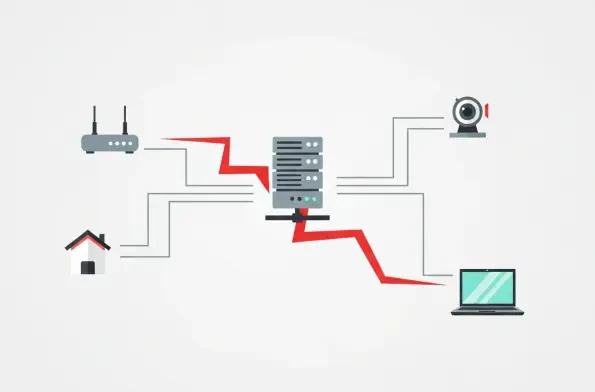
The smart camera monitoring your home or the small business website you manage could be an unwitting soldier in a cybercriminal’s army, as a sophisticated threat group is actively hijacking thousands of internet-connected devices to build the powerful RondoDox botnet. This sprawling network of compromised machines, controlled remotely by malicious actors, is being assembled by exploiting a freshly discovered and highly critical vulnerability. The attackers are leveraging this flaw to seize control of a wide array of systems, from complex web servers to simple household gadgets, turning them into tools for launching further cyberattacks, mining cryptocurrency, and expanding their digital empire. The sheer scale and speed of this operation highlight a persistent and growing threat in our increasingly connected world, where everyday technology can be weaponized without the owner’s knowledge, underscoring the urgent need for robust security practices across both personal and enterprise environments.
1. The Anatomy of a Widespread Exploit
A report has detailed how these attackers are capitalizing on a critical flaw designated as React2Shell (CVE-2025-55182), which affects Next.js, a widely used framework for building modern websites and applications. The severity of this vulnerability cannot be overstated, as it permits remote code execution, allowing a threat actor to take complete control over a server or device without requiring any form of authentication, such as a username or password. This effectively leaves a digital door wide open for intruders. Immediately following the public disclosure of this flaw in December of last year, the RondoDox group began a systematic campaign to identify and compromise vulnerable systems. The ease of exploitation, combined with the popularity of Next.js, created a perfect storm for a rapid and widespread attack, demonstrating how quickly newly discovered vulnerabilities can be weaponized by organized cybercrime groups who are constantly scanning the internet for such opportunities to expand their malicious infrastructure.
The global impact of this vulnerability became alarmingly clear in a very short period. Data gathered by the Shadowserver Foundation, an organization that tracks malicious internet activity, revealed that by the end of last year, over 90,300 systems remained unpatched and exposed to the React2Shell exploit. While the United States accounted for the largest portion of these at-risk devices, with over 68,000 identified, the threat is distinctly international in scope. Thousands of additional vulnerable systems were located in other major technology hubs, including Germany, France, and India, illustrating that no region is immune to this type of pervasive cyber threat. This geographical distribution underscores the interconnected nature of the internet and how a single vulnerability in a popular software framework can have cascading consequences across the globe, affecting businesses, government agencies, and individual users alike who rely on the compromised technology for their daily operations and personal lives.
2. A Methodical Campaign of Infection
Further investigation into the RondoDox campaign revealed a calculated and phased approach to its growth, indicating a patient and strategic adversary. The group’s activities began in early 2025 with initial reconnaissance, where they tested for common and well-understood website weaknesses, such as SQL injection, to manipulate back-end databases and gain an initial foothold. As their operation matured by the summer, the attackers escalated their efforts by conducting mass scans of the internet. This second phase involved searching for widely used content management systems like WordPress and Drupal, which power a significant percentage of the web, as well as targeting consumer-grade hardware, including popular Wavlink home routers. This gradual escalation from targeted probing to large-scale automated scanning demonstrates a clear and deliberate strategy to build a diverse and powerful botnet by exploiting a variety of vulnerabilities across different platforms, from enterprise software to household electronics, maximizing their potential pool of victims.
By the end of last year, the RondoDox operation had evolved into a fully automated attack infrastructure, showcasing the group’s significant technical capabilities. Researchers identified at least six distinct command-and-control centers responsible for distributing ten different variants of the botnet malware. This diversified approach allowed the attackers to target a vast range of machine architectures, ensuring their malware could successfully infect everything from high-performance cloud servers powering major online services to the low-powered processors found in basic home equipment like smart cameras and digital video recorders. This level of operational sophistication, characterized by a resilient control structure and adaptable malware, enables the RondoDox botnet to not only grow rapidly but also to be highly resilient against takedown efforts, posing a persistent and formidable threat to the broader internet ecosystem. The ability to compromise such a wide array of devices makes this botnet a versatile weapon for its operators.
3. The Hacker’s Arsenal and Targeted Victims
Once a device is successfully compromised, the RondoDox operators deploy a specialized toolkit of malicious programs designed to fulfill specific functions and solidify their control. Among these tools are hidden programs with deceptive names. For example, a component named “/nuts/poop” is installed to perform cryptojacking, a process that secretly harnesses the infected device’s processing power to mine digital currencies for the financial benefit of the attackers. Another key component, “/nuts/x86,” is a customized version of the infamous Mirai malware. This variant is engineered to help the botnet propagate by relentlessly scanning the internet for other vulnerable devices to infect, effectively turning each victim into an attacker and enabling the botnet’s exponential growth. The inclusion of a Mirai-based module is particularly concerning, as Mirai was responsible for some of the largest distributed denial-of-service (DDoS) attacks ever recorded, highlighting the destructive potential of the RondoDox network.
Perhaps the most cunning and aggressive tool in the RondoDox arsenal is a program identified as “/nuts/bolts.” This component acts as a persistent “health checker,” running a scan on the compromised device every 45 seconds with a singular, ruthless objective: to identify and terminate any processes belonging to rival malware or security software. This mechanism ensures that RondoDox maintains exclusive ownership of the infected system, preventing other cybercrime groups from hijacking the same device and maximizing its value to the botnet’s operators. Furthermore, this tool actively wipes digital footprints and logs that could be used by security researchers to analyze the infection, making detection and removal significantly more challenging. This combination of resource theft, self-propagation, and aggressive territorial defense makes the RondoDox toolkit a highly effective and resilient instrument for maintaining and expanding a powerful botnet, putting a wide range of internet-connected technology at risk.
Fortifying Defenses Against Evolving Threats
In retrospect, the most effective mitigation strategies against this campaign were rooted in proactive and diligent cybersecurity hygiene. System administrators who promptly applied the latest security fixes for Next.js as soon as they were released successfully closed the critical entry point used by the attackers. For home users, the practice of network segmentation proved invaluable; those who connected their IoT gadgets, such as smart cameras and routers, to a separate, isolated Wi-Fi network effectively contained the threat, ensuring that even if one device was compromised, the infection could not spread to more sensitive devices like personal computers or smartphones. Furthermore, users who regularly checked their router’s administrative settings and immediately installed available firmware updates were able to protect their networks from being absorbed into the botnet. These actions demonstrated that consistent vigilance and the timely implementation of fundamental security measures were key to defending against such automated and widespread threats.