The silent, digital battle for Taiwan’s stability escalated dramatically last year, with new evidence pointing to a calculated shift in Beijing’s cyber warfare strategy toward crippling the island’s most essential services. A comprehensive analysis from Taiwan’s National Security Bureau (NSB) for 2025 paints a sobering picture of a nation under constant digital siege, where the line between espionage and outright sabotage is becoming increasingly blurred. The findings suggest that China’s cyber operations have evolved from information gathering to a more aggressive posture aimed at disrupting the foundational pillars of Taiwanese society.
Taiwan’s Digital Frontline: The State of Critical Infrastructure Security
Taiwan’s critical infrastructure represents the nervous system of the island nation, encompassing a network of essential services that includes the energy grid, healthcare systems, and financial markets. The uninterrupted operation of these sectors is not just a matter of economic stability but of national security and public confidence. Any disruption, whether to power generation, hospital records, or banking transactions, carries the potential to sow widespread chaos and undermine the government’s ability to function, making these systems a prime target in any hybrid warfare scenario.
This digital frontline is defined by a persistent and asymmetrical conflict. On one side are Taiwan’s infrastructure operators, tasked with defending sprawling, often legacy, systems against a constant barrage of threats. On the other are highly sophisticated and well-funded Chinese state-sponsored hacking groups. This is not a battle against disparate hacktivists but a coordinated, long-term campaign orchestrated by a state actor with clear strategic objectives. The context is one of a high-volume, relentless cyber offensive designed to test defenses, map vulnerabilities, and establish a persistent presence within the island’s most vital networks.
The Escalating Cyber Siege: A Data-Driven Look at China’s Aggression
A Troubling Trajectory: Analyzing the Surge in Cyber-Attacks
The data from 2025 reveals an alarming acceleration in the tempo of Chinese cyber operations. According to the NSB report, Taiwan’s critical infrastructure organizations withstood over 960.6 million documented intrusion attempts, a figure that underscores the industrial scale of the campaign. This volume breaks down to an average of 2.63 million daily attempts targeting each designated critical entity, turning cybersecurity into a constant state of defense against an overwhelming force.
This surge is not an anomaly but part of a clear and troubling trend. The 2025 figures represent a 6% increase from the previous year and a staggering 112.5% rise since 2023. Such exponential growth indicates a deliberate and sustained escalation of hostilities in the cyber domain. The daily attack volume has become a key performance indicator of the threat level, demonstrating that Beijing is dedicating ever-increasing resources to its efforts to penetrate and compromise Taiwan’s digital defenses.
A Strategic Pivot: Unpacking the Shift Toward the Energy Sector
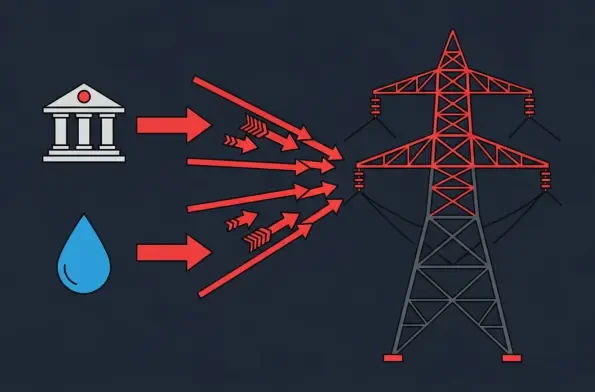
Perhaps the most significant finding in the NSB’s analysis is the dramatic reorientation of attack priorities. The report highlights a tenfold increase in cyber-attacks directed at Taiwan’s energy sector, a move that signals a strategic pivot from espionage-focused intrusions to those with the potential for tangible, physical disruption. This heightened focus on energy infrastructure, along with a 54% rise in attacks on emergency services and hospitals, suggests an intent to target services whose failure would have an immediate and profound impact on the civilian population.
In contrast, sectors that were previously high on the target list saw a notable decrease in activity. Attacks targeting water resources and the financial sector fell by 50% and 48.2%, respectively. This was not a random fluctuation but a clear reallocation of offensive cyber resources. This strategic shift away from data-rich targets like banks and toward operationally critical sectors like the power grid reveals China’s evolving objectives, prioritizing psychological impact and coercive capability over simple intelligence gathering.
The Anatomy of an Attack: How China Breaches Taiwan’s Defenses
The NSB report attributes the bulk of these campaigns to a handful of prolific Chinese state-sponsored groups, including the notorious BlackTech, Flax Typhoon, and APT41, among others. These threat actors operate with a high degree of sophistication and persistence, employing a diverse and evolving toolkit to breach their targets’ defenses. Their operations are methodical, often beginning with extensive reconnaissance to identify the path of least resistance into a network.
The primary attack vector remains the exploitation of hardware and software vulnerabilities, which accounted for over half of all successful intrusions. However, these technical exploits are often supplemented by other methods. Distributed denial-of-service (DDoS) attacks are used to overwhelm systems and create diversions, while social engineering tactics trick employees into granting access. Furthermore, supply chain intrusions, where attackers compromise third-party vendors, provide a stealthy and effective backdoor into otherwise secure networks. These varied tactics demonstrate a multi-pronged approach designed to circumvent defenses at every level.
The Geopolitical Battlefield: Cyber Warfare as a Political Tool
The report draws a direct and undeniable correlation between the frequency of cyber-attacks and the tempo of real-world geopolitical events. The digital offensive does not exist in a vacuum; rather, it functions as a synchronized component of China’s broader pressure campaign against Taiwan. This linkage transforms hacking from a purely technical issue into a potent instrument of statecraft and political signaling.
This pattern is consistently observable. The NSB noted that cyber intrusions regularly spiked in concert with the People’s Liberation Army’s military patrols and exercises around the island. Similarly, significant political milestones in Taiwan, such as President Lai Ching-te’s inauguration anniversary in May 2025, were met with a demonstrable intensification of hacking activities. These timed escalations serve as a clear message, using the threat of digital disruption as a tool for political intimidation and coercion in response to events Beijing views unfavorably.
Beyond the Grid: Predicting the Next Phase of Cyber Coercion
The strategic pivot toward the energy sector provides a clear indicator of future trends. This focus on physically disruptive targets suggests that the next phase of China’s cyber coercion will likely involve operations designed to impact the daily lives of Taiwanese citizens directly. Future campaigns may aim to demonstrate the capability to disrupt power, communications, or transportation, creating a powerful psychological tool to erode public morale and sow societal discord.
The landscape of threats is also set to evolve with technological advancements. The weaponization of newly discovered zero-day vulnerabilities and the integration of advanced, AI-driven attack methods could make these operations faster, more difficult to attribute, and far more effective. Such tools could allow for automated reconnaissance and exploitation at a scale that would overwhelm conventional human-led defense teams. As in the past, future political events will almost certainly act as catalysts, influencing both the timing and the choice of targets for China’s next wave of cyber operations.
Fortifying the Future: Taiwan’s Imperative in a Hostile Digital Age
The findings from the National Security Bureau’s 2025 analysis presented an unambiguous conclusion: China’s cyber campaign against Taiwan had not only grown in volume but had also matured in strategic intent. The sheer number of intrusion attempts, combined with the clear correlation to geopolitical events, confirmed that these were not random acts but a coordinated element of state policy.
Ultimately, the calculated shift toward targeting the energy sector represented a significant and dangerous escalation in Beijing’s pressure campaign. This move signaled a willingness to cross the line from cyber espionage to cyber sabotage, threatening the very foundation of Taiwan’s societal stability. In response, the critical imperative for Taiwan was to enhance its defensive posture by focusing intently on securing industrial control systems and investing in the development of resilient infrastructure capable of withstanding a persistent, politically motivated, and increasingly sophisticated digital threat.