I’m thrilled to sit down with Malik Haidar, a renowned cybersecurity expert whose decades of experience have made him a trusted voice in the battle against digital threats. With a career spanning analytics, intelligence, and security, Malik has worked with multinational corporations to safeguard critical systems and outsmart sophisticated hackers. Today, we’re diving into the shadowy world of spyware, focusing on the controversial operations of a surveillance consortium that continues to thrive despite global sanctions. Our conversation explores the evolving tactics of digital espionage, the exploitation of vulnerabilities in everyday technology, and the far-reaching implications for privacy and security worldwide.
How do you think certain spyware vendors manage to flourish despite facing heavy sanctions and penalties from authorities around the world?
Well, Stephen, the ability of these vendors to keep operating under pressure comes down to a mix of cunning business strategies and technical adaptability. They often fragment their operations across multiple legal entities in different countries, making it incredibly difficult for any single government to shut them down completely. For instance, with sanctions like those imposed by the US Treasury in 2024, these groups pivot by leveraging obscure jurisdictions or shell companies to mask their activities. I’ve seen cases where a sanctioned entity rebrands under a new name or shifts its base to a less-regulated region overnight. It’s like playing whack-a-mole—you hit one head, and another pops up elsewhere. What’s more, their revenue streams are often tied to high-paying clients who value secrecy over ethics, ensuring a steady cash flow despite fines or public backlash.
Can you shed light on how emerging zero-click infection methods, like those exploiting mobile advertising ecosystems, are changing the spyware game?
Absolutely, these zero-click attacks are a game-changer because they eliminate the need for user interaction, which was a significant barrier in older methods. With systems like the one dubbed ‘Aladdin,’ the attack exploits something as mundane as mobile ads. Imagine you’re scrolling through a trusted news site on your phone, and an ad pops up—nothing unusual, right? But behind the scenes, that ad is rigged to inject malicious code the moment it loads, no click required. It’s chilling to think about because it turns a routine digital experience into a silent battlefield. I recall a case where a similar tactic targeted executives; one minute they’re checking headlines, the next their device is compromised without a single warning. The technical complexity lies in crafting these ads to target specific IP addresses or devices, but the concept preys on how much we’ve normalized ads in our daily lives.
What’s the significance of zero-day vulnerabilities in the spyware landscape, especially when a single vendor is linked to a substantial share of them?
Zero-day vulnerabilities are the crown jewels of cyber espionage because they’re flaws in software that even the developers don’t know exist, giving attackers a free pass until a patch is created. When a vendor is tied to, say, 15 out of 70 documented zero-days since 2021, it signals they’ve got unparalleled resources and expertise to uncover and weaponize these flaws before anyone else. The discovery process often involves deep reverse-engineering of popular software like mobile browsers, hunting for tiny gaps that can be exploited. Then, turning that flaw into a weapon requires custom code that can slip through undetected. I remember a notable incident a few years back where a zero-day in a widely used app allowed attackers to access entire contact lists and location data—it was like handing over the keys to someone’s digital life. The significance is that each zero-day is a ticking time bomb; the longer it’s undisclosed, the more damage it can do.
How do global networks and partnerships across various countries help these spyware operations evade restrictions and expand their influence?
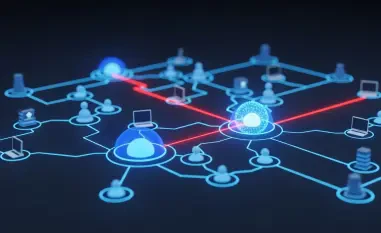
These global networks are essentially the lifeblood of such operations, providing both logistical cover and market access. By setting up entities in places like the Czech Republic or the Philippines, these groups can dodge sanctions by routing funds or tech through less-scrutinized regions. It’s not just about hiding; these connections also open doors to new clients who might otherwise be out of reach due to political or legal barriers. I once tracked a case where a spyware vendor used a seemingly unrelated overseas partner to funnel payments, completely bypassing financial sanctions—it was a stark reminder of how borders mean little in this game. The network also allows for shared infrastructure, like servers or domain hosts, which can be swapped out quickly if one node gets flagged. It’s a spiderweb of influence, and pulling one thread rarely unravels the whole thing.
What might drive the targeting of specific regions like Greece or Egypt with spyware, and what patterns have you observed in such attacks?
The motivations often boil down to political control, economic espionage, or silencing dissent, depending on the region. In places like Greece or Egypt, where recent leaks have pointed to potential victims, you’ve got a mix of geopolitical tensions and domestic power struggles that make surveillance a tempting tool for those in charge. I’ve noticed patterns where targets are often journalists, activists, or political opponents—people whose voices could disrupt the status quo. I remember speaking with a colleague who worked on a case in a similar region; the targeted individual described the eerie feeling of knowing their every call and message was likely being watched, their life laid bare without consent. These attacks aren’t random; they’re strategic, aiming to suppress or manipulate narratives at critical moments, like during elections or uprisings.
With operations spanning over a dozen countries, how do you think these spyware vendors coordinate such a vast global footprint?
Coordinating across borders requires a blend of tech savvy and old-school business acumen. They likely rely on encrypted communication channels and decentralized teams to manage operations in places as diverse as Angola, Indonesia, or Saudi Arabia. Infrastructure-wise, they use cloud servers and proxy networks to obscure where commands are coming from, making it look like activity originates locally rather than from a central hub. I’ve come across reports indicating operator activity in over a dozen countries, which suggests they’ve got dedicated regional managers or partners who understand local tech landscapes and client needs. It reminds me of a time I consulted for a firm tracking a similar network; we found that even a small glitch in one country’s server could ripple across their entire operation, exposing just how tightly woven yet fragile these setups can be.
What are the privacy and security risks when spyware vendors maintain direct access to their customers’ live surveillance systems?
The risks are staggering because it means the vendor isn’t just selling a tool—they’re an active participant in the surveillance. With direct access, they can monitor, tweak, or even escalate attacks on targets in real time, which obliterates any pretense of privacy for the victim. Imagine a scenario where a journalist’s phone is compromised; not only is the client spying, but the vendor could potentially extract data or alter the system to deepen the intrusion. From a security standpoint, it also means that if the vendor’s systems are breached, every connected target is at risk—a cascading failure. I once worked on a project where a similar setup led to leaked data being sold on the dark web, turning victims into pawns in a much larger game. It’s a betrayal of trust at every level, and the emotional toll on those targeted is indescribable.
How do deception tactics, like imitation websites, play into infection strategies, and what makes them so effective against unsuspecting targets?
Imitation domains, like fake news websites, are a brilliant yet sinister tactic because they exploit trust in familiar digital spaces. The strategy often involves creating a site that mimics a legitimate source—down to the logo and layout—then luring targets to visit through phishing emails or social engineering. Once there, the site can deploy malware silently or prompt a download that looks harmless. What makes it effective is the psychological hook; people don’t expect a news site to be a trap, especially if it’s tied to their culture or language, like those mimicking Kazakhstani outlets. I recall an incident where a target clicked on what they thought was a breaking news link, only to realize weeks later their device had been spilling data ever since—it’s a gut punch when the mundane becomes malicious. These traps work because they blend into our daily digital habits so seamlessly.
What is your forecast for the future of spyware and digital surveillance technology in light of these evolving tactics?
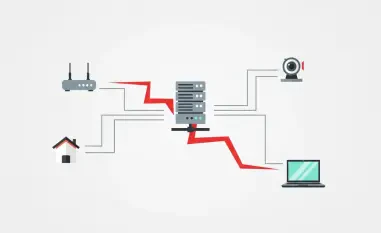
Looking ahead, I believe spyware will only become more insidious as attackers integrate artificial intelligence to personalize and automate attacks at scale. We’re likely to see even deeper exploitation of everyday systems—think smart home devices or wearables—as entry points for surveillance, beyond just phones or ads. The cat-and-mouse game with regulators will intensify, with vendors finding ever-more creative ways to slip through legal cracks, possibly by embedding their tech in seemingly benign industries. I’m particularly concerned about the emotional and societal impact; the constant fear of being watched could chill free expression more than we realize. My hope is that public awareness and international cooperation can counter this, but it’s going to be a steep uphill battle as long as profit motives outweigh ethical concerns. What we do in the next few years—both technologically and policy-wise—will shape whether privacy remains a right or becomes a relic.