The year 2025 will be remembered in cybersecurity circles not just for the record-breaking volume of new vulnerabilities disclosed but for the strategic precision with which threat actors exploited them to undermine the global software supply chain. An unprecedented surge in Common Vulnerabilities and Exposures (CVEs) established a new high-water mark, with the total number of reported flaws exceeding 45,777 by late in the year. This deluge, averaging over 130 new vulnerabilities each day, represented a significant 19% increase from 2024 and placed immense pressure on security teams already struggling to keep pace. Interestingly, this quantitative explosion was met with a qualitative shift; researchers noted a surprising decrease in the reporting of both critical and high-severity CVEs, a trend potentially linked to the broader adoption of the Common Vulnerability Scoring System version 4.0. However, this statistical anomaly offered little comfort, as the high-impact flaws that did emerge were systematically weaponized by sophisticated adversaries. Throughout the year, nation-state groups and organized cybercrime syndicates orchestrated a series of devastating campaigns, transforming foundational software components into conduits for widespread espionage and financial extortion.
Defining Trends of a Volatile Year
An analysis of the year’s most impactful incidents reveals several overarching themes that characterized the modern threat landscape. Foremost among them was an intense and strategic focus on the software supply chain as the primary vector for achieving widespread compromise. Attackers consistently shifted their attention from individual enterprise perimeters to the foundational technologies that underpin them, targeting ubiquitous open-source JavaScript libraries, critical package managers, and core network appliances. This approach amplified their efforts, allowing a single successful exploit to cascade through countless dependent systems, creating a ripple effect of compromise across industries. Another defining trend was the breathtaking speed at which newly disclosed vulnerabilities were weaponized. The window between a public announcement and active exploitation shrank from weeks or days to mere hours, leaving defenders with a dangerously compressed timeline to apply patches and implement mitigations. This rapid operationalization of exploits underscored the advanced capabilities of threat actors who had automated reconnaissance and attack frameworks prepared to launch campaigns almost instantaneously. Finally, the incidents of 2025 highlighted the prominent and often overlapping roles of nation-state actors and financially motivated cybercrime syndicates. Groups aligned with China and North Korea demonstrated exceptional sophistication in executing large-scale espionage and disruption campaigns, while ransomware gangs proved equally adept at adapting the very same exploits for data theft and extortion, blurring the lines between geopolitical motives and criminal enterprise.
Foundational Technologies Under Siege
In late November, the global web development community was sent reeling by the disclosure of React2Shell (CVE-2025-55182), a critical vulnerability in React.js, one of the world’s most popular JavaScript libraries for building user interfaces. The flaw, a pre-authentication remote code execution (RCE) vulnerability, affected React Server Components, a newer technology designed to enhance web application performance. This allowed an unauthenticated attacker to execute arbitrary code and potentially seize complete control of an affected server, opening the door to catastrophic data breaches. The immense popularity of React and its associated framework, Next.js, meant the potential attack surface was enormous. Meta and Vercel, the respective maintainers, issued urgent security advisories and patches on December 3, but exploitation attempts had already begun. Amazon Web Services confirmed that Chinese state-affiliated threat groups, namely Earth Lamia and Jackpot Panda, were actively weaponizing React2Shell for espionage. At the same time, scans identified over 77,000 publicly exposed and vulnerable IPs, which quickly attracted opportunistic attackers who deployed cryptocurrency miners and credential harvesters. The situation grew more complex when researchers discovered a novel implant named EtherRAT being delivered through a compromised Next.js application, linking the tooling to a North Korean campaign and suggesting sophisticated tool-sharing among adversaries. In response to the widespread, active exploitation, the U.S. Cybersecurity and Infrastructure Security Agency (CISA) added the vulnerability to its Known Exploited Vulnerabilities (KEV) catalog on December 17.
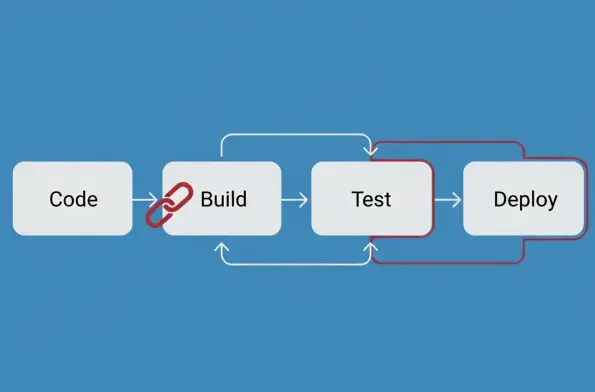
The month of November also witnessed the emergence of the Shai Hulud 2.0 campaign, which represented a significant and dangerous evolution in software supply chain attacks targeting the open-source package ecosystem. This worm-like attack involved the systematic compromise of maintainer accounts on the npm package registry. Between November 21 and 23, attackers leveraged stolen credentials to publish trojanized versions of hundreds of popular npm packages, including those from major organizations like Zapier, ENS Domains, and Postman. The attack’s sophistication was evident in its two-phase execution. Initially, malicious payloads were embedded within abusive preinstall lifecycle scripts, which are designed to run automatically the moment a developer installs a package. This timing allowed the malware to execute before standard security checks, such as software composition analysis, could detect a threat. Once active, the payload harvested a wide range of credentials from the victim’s environment, including configuration files and cloud service metadata, exfiltrating the stolen data to attacker-controlled repositories. In its second, more innovative phase, the attack used stolen GitHub personal access tokens to hijack victims’ Continuous Integration/Continuous Deployment (CI/CD) infrastructure. The attackers targeted GitHub Actions and self-hosted runners, deploying backdoored workflows capable of exfiltrating an organization’s entire secret store. This effectively turned the automated CI/CD pipeline into a persistent backdoor for remote command execution and long-term access. The scale of the campaign was massive, ultimately implicating an estimated 700 npm packages and leading to the compromise of over 25,000 repositories.
The Enterprise Application Battlefield
In early October, the notorious Russian-speaking ransomware-as-a-service gang, Clop, was discovered exploiting a critical zero-day vulnerability in Oracle’s E-Business Suite (EBS), a widely used set of enterprise resource planning applications. The flaw, tracked as CVE-2025-61882, was a severe remote code execution vulnerability with a CVSS score of 9.8 out of 10. The campaign was first identified after executives at several large, multinational corporations began receiving extortion emails. In these messages, Clop claimed to have breached their corporate networks and stolen sensitive data directly from their EBS instances. The attackers exploited the zero-day flaw in conjunction with other previously patched Oracle vulnerabilities to gain initial access and exfiltrate information. The list of believed victims underscored the campaign’s global reach and its impact on critical sectors, with targets including a UK National Health Service trust, photography giant Canon, software company GlobalLogic, auto-parts manufacturer LKQ, Logitech, and Mazda. The active exploitation of a zero-day in such a critical enterprise system prompted a swift response. Oracle released an emergency out-of-band patch on October 5, and the following day, CISA added the vulnerability to its KEV catalog, instructing U.S. federal agencies to patch their systems by October 27.
The focus on enterprise infrastructure continued throughout the year, as demonstrated by campaigns targeting on-premises collaboration and network gateway technologies. In late July, Microsoft issued a warning about active exploitation of on-premises SharePoint servers, with a particular impact on government and healthcare organizations. The attackers were chaining two separate vulnerabilities, CVE-2025-53770 and CVE-2025-53771, in an attack sequence dubbed ‘ToolShell.’ This technique of chaining exploits, where multiple flaws are leveraged in succession, allowed attackers to bypass security measures and achieve a higher level of privilege. The campaign was attributed to several highly sophisticated advanced persistent threat (APT) groups aligned with Chinese state interests, including Linen Typhoon (APT27) and Violet Typhoon (APT31). The pervasiveness of this attack vector was later highlighted in a report which stated that nearly 40% of its recent incident response engagements involved compromises of SharePoint servers via these vulnerabilities. The threat was deemed so urgent that CISA gave federal agencies an exceptionally tight one-day deadline to apply patches. Rounding out the year’s major incidents, a critical flaw emerged in late June affecting Citrix NetScaler Application Delivery Controller (ADC) and Gateway devices. Dubbed CitrixBleed 2 (CVE-2025-5777), it allowed attackers to bypass authentication controls, including multi-factor authentication, and hijack active user sessions. By targeting session tokens instead of cookies, it introduced a new attack vector that challenged existing defensive measures. By June 26, the vulnerability was already being actively exploited in the wild, prompting CISA to mandate that federal agencies apply the patch within 24 hours of its addition to the KEV list.
A New Paradigm for Defensive Strategy
The relentless and sophisticated software supply chain attacks of 2025 conclusively demonstrated that traditional, reactive security postures were no longer tenable. The incidents of the year served as a powerful catalyst, forcing a fundamental strategic shift across the industry toward proactive and deeply integrated defensive models. The speed at which vulnerabilities like React2Shell and CitrixBleed 2 were weaponized rendered conventional patch management cycles obsolete, proving that vulnerability management had to evolve from a periodic, compliance-driven task into a continuous, intelligence-led operation. Furthermore, campaigns like Shai Hulud 2.0, which turned trusted development pipelines into attack vectors, exposed the inherent risks in modern software development and highlighted the urgent need for greater transparency. This reality drove the accelerated adoption of Software Bills of Materials (SBOMs), which provided organizations with critical visibility into their software dependencies. The year’s events solidified the principle that securing the software supply chain was not merely an IT or security problem but a core business imperative, essential for organizational survival in an increasingly hostile and interconnected digital landscape.