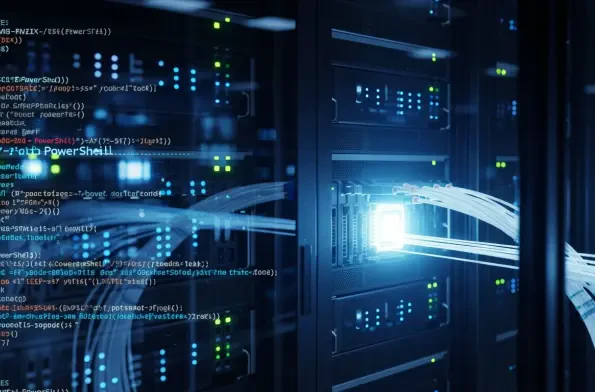
The emergence of AI-driven malware development signifies a pivotal moment where the speed of coding now matches the urgency of financial extortion cycles in the digital underground. Researchers have recently observed the Hive0163 threat group integrating AI-assisted PowerShell scripts into their established attack chains to streamline the creation of malicious payloads. This integration allows for a faster transition from initial compromise to the deployment of complex backdoors, fundamentally changing how financial cybercrime entities operate in a competitive landscape.
Investigation into the technical markers of these scripts reveals a distinct signature often associated with large language models, including highly descriptive variable names and redundant commenting styles. The functional role of the Slopoly backdoor is specifically geared toward maintaining long-term access, acting as a quiet observer within a compromised network. This shift from manual malware development to rapid, LLM-supported generation indicates that attackers are prioritizing operational volume over handcrafted uniqueness.
Analyzing the Rise of AI-Generated Backdoors in Financial Cybercrime
The Hive0163 threat group has successfully merged traditional exploitation techniques with modern automated generation to enhance their persistence capabilities. By utilizing PowerShell scripts that show clear signs of AI assistance, they have managed to bypass some of the time-consuming aspects of payload refinement. This method ensures that their attack chain remains fluid, allowing the group to focus on the strategic aspects of data exfiltration rather than the minutiae of script debugging.
Technical analysis of the Slopoly backdoor highlights a fascinating blend of rudimentary logic and robust structure. The code contains extensive error-handling blocks that are rarely seen in manually written criminal code, suggesting a reliance on the safety-first logic often baked into public AI models. These markers serve as a fingerprint for defenders, pointing toward a future where identifying AI-generated code becomes a critical component of threat hunting.
Moreover, the transition toward LLM-supported payloads represents a democratization of advanced malware features. Even moderately skilled actors can now deploy functional backdoors that utilize sophisticated communication cycles and task scheduling. This lowers the barrier to entry for effective e-crime, enabling smaller sub-groups to execute high-impact campaigns that were previously the sole domain of well-resourced organizations.
The Evolution of Hive0163 and the Strategic Value of Persistence
As a financially motivated e-crime entity, Hive0163 specializes in ransomware and aggressive data extortion. Their evolution into a more agile organization is driven by the need to maximize the profitability of every breach. By securing persistent access through tools like Slopoly, they ensure that remediation efforts by the victim do not completely sever their connection, allowing for secondary extortion phases if the initial ransom is not paid.
Persistence is the linchpin of modern cyberattacks because it provides a safety net for the attacker. If a primary remote access trojan is discovered and quarantined, a secondary, stealthier backdoor can remain dormant until the security team believes the threat has been neutralized. Hive0163 understands this strategic value, using Slopoly as a “failsafe” to maintain their foothold throughout the long tail of an incident response cycle.
Studying AI-assisted malware like Slopoly is essential for understanding the evolving tactics of ransomware groups. The speed at which these actors can now iterate on their tools means that the window of opportunity for defenders to block a known sample is shrinking. As the barrier to entry continues to drop, the volume of unique, AI-generated variants will likely increase, forcing a shift in how organizations prioritize their defensive resources.
Research Methodology, Findings, and Implications
Methodology: Uncovering the Slopoly Framework
The research involved a multi-layered approach starting with behavioral analysis of PowerShell scripts to map out command-and-control communication patterns. By monitoring how the scripts interacted with the operating system, researchers identified the creation of specific scheduled tasks designed to trigger the malware at regular intervals. Static code analysis further pinpointed AI-specific indicators, such as naming conventions that prioritized readability over obfuscation, which is a common trait of LLM outputs.
Furthermore, investigators correlated the deployment of Slopoly with the presence of other known Hive0163 tools, such as the NodeSnake loader and the Interlock remote access trojan. This correlation provided a holistic view of the attack lifecycle, showing exactly where the AI-generated backdoor fits within the group’s broader objectives. Finally, reverse engineering the builder used to create Slopoly revealed how the attackers generate unique iterations to evade simple signature-based detection.
Findings: Functional Traits of AI-Enhanced Persistence
The primary discovery of the investigation is that Slopoly functions as a persistent backdoor by hijacking a “Runtime Broker” scheduled task to survive system reboots. This task ensures that the script remains active in the background, continuously seeking instructions from the attacker’s infrastructure. While the attackers market the malware as “polymorphic,” the findings show that this is limited to configuration randomization, such as changing C2 URLs or task names, rather than actual self-modifying code.
Another significant finding is the heavy AI influence evidenced by the script’s internal logic. The variable names are overly descriptive, and the error-handling blocks are exceptionally thorough, matching the output patterns of popular AI coding assistants. This structure enables a 30-second heartbeat and a 50-second command-polling cycle, which the malware uses to exfiltrate system metadata and receive remote instructions for command execution via the system shell.
Implications: The Changing Face of Cyber Defense
The democratization of malware development through AI tools means that threat actors can prototype and deploy new frameworks with unprecedented speed. This efficiency allows for the rapid creation of massive quantities of unique malware samples, which significantly reduces the effectiveness of traditional signature-based security solutions. Defenders must now contend with an environment where the variety of threats is limited only by the prompts provided to an AI.
Consequently, there is a necessary shift in defensive focus toward identifying behavioral anomalies rather than relying on the technical complexity of the code. Organizations need to monitor for unusual PowerShell activity and unauthorized scheduled task creation, as these remain the core mechanics of persistence regardless of how the code was written. This approach prioritizes the “how” of an attack over the “what,” providing a more resilient defense against AI-generated threats.
Reflection and Future Directions
Reflection: Distinguishing Human from Machine
Distinguishing between novice human-written code and AI-generated outputs has become one of the most significant challenges for modern security analysts. While the descriptive variables and error handling of Slopoly provide clues, they are not definitive proof of AI origin. Hive0163 has successfully exploited this ambiguity, blending traditional social engineering techniques like “ClickFix” with these newer, automated payloads to confuse the attribution process.
Additionally, the use of terms like “polymorphic” by threat actors may be more of a marketing tactic within the cybercrime ecosystem than a technical reality. By labeling their tools with sophisticated buzzwords, developers can charge higher prices on dark web forums. This highlights a trend where the perceived sophistication of a tool is bolstered by its association with AI, even if the underlying logic remains relatively straightforward and easy to analyze once detected.
Future Directions: Toward Autonomous Threats
Future research must investigate the potential for AI to move beyond simple code generation and into the realm of real-time, autonomous code obfuscation. If malware can modify its structure during execution to evade behavioral detection, the challenge for defenders will grow exponentially. Furthermore, the role of AI in streamlining C2 server-side logic could allow a single threat actor to manage thousands of infected endpoints with minimal manual effort, increasing the scale of extortion campaigns.
Developing defensive AI models trained specifically to recognize the structural patterns and “hallucinations” of LLM-generated scripts is a critical next step. By fighting fire with fire, security researchers can create automated systems that flag suspicious scripts based on the very traits that make them appear AI-generated. This proactive stance will be necessary to keep pace with attackers who are already leveraging these technologies to shorten their development cycles.
The Growing Impact of AI-Driven Operational Efficiency in Threat Landscapes
The tactical shift by Hive0163 toward AI-assisted development underscored a broader trend of operational agility in the 2026 threat landscape. By automating the production of persistence mechanisms, the group ensured that they could move through the attack lifecycle with minimal friction. This efficiency allowed them to maintain a high volume of active infections while simultaneously developing new ransomware strains to maximize their financial returns.
Organizations were forced to prioritize the rapid detection of persistence mechanisms as the primary defense against these high-velocity attacks. The intersection of AI and traditional ransomware models redefined the speed at which threats evolved, making legacy defense strategies increasingly obsolete. Ultimately, the success of Hive0163 demonstrated that the real danger of AI lay in its ability to amplify the effectiveness of existing criminal strategies, making every breach a long-term struggle for control.