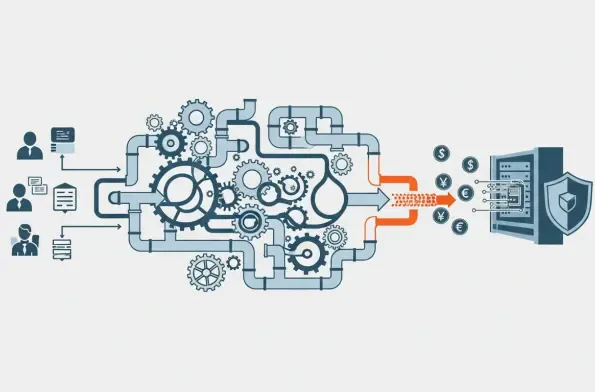
The long-held perception of fraud as an unfortunate but manageable cost of doing business has become a dangerously obsolete viewpoint that fails to recognize the threat’s profound evolution. Modern financial fraud is no longer a collection of isolated crimes perpetrated by disparate individuals; it has metastasized into an industrialized, global security crisis that mirrors the strategic complexity and destructive potential of cyberwarfare. This coordinated, asymmetric assault on economic stability, societal trust, and democratic legitimacy is waged by sophisticated, state-sponsored actors and transnational criminal syndicates. Consequently, it demands a commensurately urgent and unified response that elevates the problem from a customer service issue to a matter of national and international security, requiring the same level of strategic focus and resource allocation dedicated to defending against hostile military aggressors.
The New Face of a Global Threat
The Industrialization of Financial Crime
The fundamental nature of financial crime has undergone a radical and alarming transformation, shifting from a landscape of petty offenses to a highly organized, weaponized instrument of geopolitical and criminal strategy. This new paradigm is characterized by the deliberate fusion of state objectives with advanced technological tactics, effectively turning fraud into a tool for a wide range of malicious actors. For example, hostile nations such as North Korea have systematically leveraged sophisticated, cyber-enabled fraud networks to generate substantial revenue streams, allowing them to circumvent crippling international sanctions. By doing so, they not only fund their regimes but also maintain a strategic advantage, operating with a low risk of direct attribution that keeps their actions below the threshold of a traditional military response. This state-sponsored activity represents a calculated form of aggression that directly undermines global security frameworks through economic means rather than conventional conflict.
This industrialization is not limited to state actors; it is a model that has been enthusiastically adopted and perfected by transnational organized crime syndicates, which now operate with the efficiency and scale of multinational corporations. These groups run extensive timeshare fraud schemes, intricate investment scams, and emotionally devastating romance scams from protected enclaves in Southeast Asian countries like Myanmar and Cambodia. Their operations are frequently enabled by explicit partnerships with corrupt local elites and regional militias, creating a permissive environment where criminal enterprises can flourish with impunity. This convergence of interests purposefully blurs the lines between non-state criminal activity and state-condoned aggression, creating a complex and resilient threat network. The result is a global criminal ecosystem that is not only highly profitable but also deeply embedded within the political and security structures of the regions from which it operates, making traditional law enforcement models catastrophically inadequate.
The Human Cost of Digital Fraud
The devastating impact of this industrialized fraud extends far beyond the trillions of dollars drained from the global economy, reaching deep into the realm of severe human rights abuses. The sprawling, factory-like scam operations that have taken root in parts of Southeast Asia are often powered by a sinister engine of modern-day slavery. These criminal compounds are staffed by individuals who have been lured by false promises of legitimate employment, only to be trafficked across borders and forced into a life of indentured servitude. They are coerced into perpetrating scams against their will, trapped in a cycle of debt and violence from which there is little hope of escape. This direct and undeniable link between large-scale financial crime and human trafficking transforms the issue from a purely economic concern into a profound humanitarian crisis, demanding a response that addresses both the financial and human dimensions of this predatory industry.
Furthermore, the sophisticated criminal infrastructure built to facilitate financial fraud has become a versatile platform for a host of other pernicious activities, creating a dangerous convergence of global threats. The very same payment rails, encrypted communication platforms, and networks of illicit actors that enable a romance scam are simultaneously leveraged for more overtly sinister purposes, including sextortion, the distribution of illegal narcotics, and even the proliferation of weapons. This multi-purpose criminal architecture demonstrates the systemic nature of the threat, where a single illicit ecosystem can fuel a wide range of destabilizing activities. The existence of “guarantee markets,” which process billions in illicit transactions for various criminal enterprises, showcases the maturity and resilience of this shadow economy. It underscores the reality that combating one form of industrialized crime, such as fraud, is intrinsically linked to disrupting the broader networks that endanger global security on multiple fronts.
The Asymmetric Battlefield
An Economic and Societal Shadow War
The ongoing conflict against industrialized fraud is best understood as a form of asymmetric and economic warfare, a shadow war that targets the very foundations of modern society. Unlike conventional warfare, which focuses on destroying physical infrastructure like bridges and power grids, this modern threat is designed to erode the foundational trust that underpins our interconnected world. It systematically attacks public confidence in banks, digital commerce platforms, and governmental institutions, creating an environment of fear and uncertainty. Instead of disrupting trade routes, these malicious actors directly drain wealth from individual households, small businesses, and national economies on a massive and continuous scale. This relentless economic bleed serves not only to enrich criminal and state adversaries but also to weaken the social and economic fabric of their targets, making it a powerful tool of destabilization.
This conflict is inherently asymmetric, granting a profound and persistent advantage to the aggressors. Fraudsters wield a global, industrial-grade arsenal that includes vast bot farms for automated attacks, advanced malware capable of compromising secure systems, and the strategic use of cryptocurrencies to obfuscate financial trails. Increasingly, they are deploying generative AI to create highly convincing deepfakes and synthetic identities, allowing them to scale their attacks with breathtaking speed and minimal cost. In stark contrast, nations, corporations, and individual consumers are left in a perpetually defensive posture, forced to guard an ever-expanding array of vulnerabilities across countless digital platforms and services. This dynamic creates a significant imbalance, where defenders must be successful every time, while an attacker needs only to find a single weakness to exploit, ensuring that the advantage remains firmly in the hands of those waging this economic war.
The Staggering Financial and Collateral Damage
The sheer financial scale of this global shadow war is staggering, representing one of the largest illicit transfers of wealth in human history. According to Nasdaq’s Global Financial Crime Report, an estimated $3.1 trillion in illicit funds traversed the global financial system in 2023 alone. Within that colossal figure, fraud itself accounted for losses estimated to be between $500 billion and over $1 trillion. These are not abstract figures; they represent stolen retirement savings, depleted small business accounts, and diverted public funds. This massive economic drain starves legitimate economies of capital, hinders growth, and imposes significant costs on financial institutions, which are then passed on to consumers. The immense profitability of these criminal enterprises ensures they are well-funded, highly motivated, and continuously innovating, creating a vicious cycle where illicit gains are reinvested to develop even more sophisticated methods of attack.
Beyond the direct monetary losses, the collateral damage is amplified by the sophisticated and mature financial infrastructure that has been built to support this illicit economy. This is not an amateur enterprise; it is a professionalized ecosystem that includes specialized services for every stage of the criminal lifecycle. A prime example is the emergence of “guarantee markets” like Huione, which operate as parallel financial systems, processing billions of dollars in illicit transactions with an efficiency that rivals legitimate payment networks. These platforms provide a critical service to criminals by laundering the proceeds of fraud, human trafficking, and drug sales, effectively integrating them into the global economy. The existence of such sophisticated entities demonstrates that the world is not merely facing a collection of disparate criminal actors but a cohesive, resilient, and highly developed illicit economy that actively undermines the integrity of the international financial system.
Exploiting Systemic Weaknesses
This global criminal ecosystem thrives by expertly exploiting systemic weaknesses embedded within our modern infrastructure, turning the very tools of global connectivity into weapons. Technologically, fraudsters leverage the vast and unregulated reach of social media platforms to identify and target victims, while encrypted messaging applications like Telegram host open bazaars for malware, stolen data, and scam-as-a-service toolkits. At the same time, certain fintech payment rails, designed for speed and convenience, can bypass the stringent regulatory controls and anti-money laundering checks common in traditional banking, providing criminals with fast and anonymous channels to move illicit funds. These platforms, created to foster communication and commerce, have inadvertently become critical components of the criminal supply chain, offering both the means to execute attacks and the anonymity needed to evade detection.
Structurally, these criminal networks are designed to exploit the fundamental gap between a borderless digital world and a legal system based on national sovereignty. Malicious actors launch global attacks from permissive jurisdictions, engaging in a practice known as “jurisdictional arbitrage” to operate with near impunity, knowing that cross-border investigations are slow, complex, and often ineffective. This problem is compounded by severe institutional fragmentation. Within financial institutions, critical functions like cybersecurity, fraud prevention, and anti-money laundering often operate in isolated silos, preventing a holistic view of emerging threats. This internal disconnect is mirrored at a macro level, where a lack of effective coordination and real-time intelligence sharing between the financial, technology, and telecommunications sectors creates dangerous blind spots. It is precisely these seams and gaps in our collective defenses that criminals so skillfully and ruthlessly exploit.
Forging a Coordinated Global Defense
A Blueprint for a Networked Defense
To effectively counter a highly networked and adaptive threat, global defenses must become equally networked, integrated, and proactive. The current piecemeal, reactive approach, where individual institutions and nations act in isolation, has demonstrably failed, leaving society perpetually one step behind the adversary. The necessary strategic shift requires reframing the problem entirely and adopting a blueprint from the cybersecurity industry, which has long recognized that collective defense is the only viable strategy against widespread digital threats. This model is built on three pillars: real-time intelligence sharing, coordinated incident response, and robust public-private partnerships. It is a paradigm that moves beyond mere compliance and toward a posture of active, collaborative defense against a common enemy.
This new defensive framework requires a two-pronged approach. First, financial institutions and technology platforms must move beyond basic security measures and proactively harden their payment and identity systems with next-generation tools. This includes the widespread implementation of scalable verification technologies and advanced analytics capable of detecting and disrupting fraudulent activities in real time. Concurrently, governments must take the lead in dismantling the structural barriers that inhibit effective collaboration. This means establishing real-time international data-sharing agreements and creating cross-border interdiction capabilities that transcend the traditional boundaries of jurisdiction and sector. Only by enabling banks, social media companies, and telecommunications firms to coordinate their responses seamlessly and instantly can the global community begin to close the vulnerabilities that criminals currently exploit with such devastating effect.
A Mandate for Global Action
The escalating nature of this threat demanded an immediate and decisive elevation of fraud to a top-tier strategic priority for global law enforcement, regulators, and multilateral bodies like the United Nations and the Financial Action Task Force. Recognizing this urgency, a groundbreaking public-private initiative, the International Anti-Fraud and Technology Task Force, was launched. This coalition, formed in partnership between the US and UK governments and over 40 founding members from the private sector, represented a critical first step toward building the unified global front necessary to combat this scourge. Its mission was to move beyond rhetoric and establish clear, actionable frameworks and measurable commitments for every jurisdiction and private entity operating along the global “scam supply chain,” from the countries hosting criminal call centers to the technology platforms exploited for attacks.
The ultimate goal of this coordinated effort was a systemic and rapid evolution of our collective defenses, transforming a fractured and reactive posture into a resilient and proactive international alliance. The stark reality had become undeniable: without a fundamental shift in strategy, we had remained perpetually vulnerable and on the losing side of this escalating shadow war. The creation of such task forces and the reframing of industrialized fraud as a direct threat to national security finally marked a pivotal turning point. This new, integrated approach, built on shared intelligence and collective action, established the foundation needed to dismantle the criminal networks at their source and reclaim the digital ecosystem from those who sought to exploit it for profit and power.