Food retailers are facing a new breed of “physical-digital” threats where remote commands can instantly spoil temperature-sensitive pharmaceutical and food products. The cybersecurity landscape has undergone a profound shift as malicious actors move beyond data theft toward the physical manipulation of operational technology. In late 2024, a series of targeted attacks struck European food retailers, focusing specifically on internet-connected refrigeration systems. This “physical-digital” offensive marks a departure from traditional ransomware, as hackers remotely altered hardware settings to cause immediate inventory destruction. By hijacking the Internet of Things (IoT) infrastructure, attackers bypassed standard IT defenses to strike at the heart of supermarket operations, resulting in massive financial losses and a new sense of urgency regarding industrial security across the continent. This evolution proves that digital vulnerabilities are no longer confined to the screen but can manifest in the physical environment with devastating efficiency.
Geographic Impact: The Targeted Disruption of Food Chains
The geographic scale of these incidents reveals a coordinated and systematic effort to disrupt the European food supply chain. A significant wave of attacks on November 2nd impacted retailers across seven nations, including Sweden, Belgium, the Netherlands, and Ireland, following an initial breach in France that disabled hundreds of locations. Rather than simply shutting systems down, the attackers recalibrated freezer units to reach temperatures as high as 50°C (122°F). This intentional thermal spike forced stores to discard vast quantities of perishable goods, demonstrating how digital vulnerabilities can manifest as tangible, high-cost physical damage. Security analysts noted that the synchronization of these strikes suggests a high level of planning and an intimate understanding of industrial cooling schedules. The precision of the thermal manipulation was designed not just to disrupt, but to ensure the total loss of inventory, highlighting a malicious intent that goes far beyond simple operational interference or temporary service outages.
This pattern of regional disruption serves as a stark reminder of the interconnected nature of modern logistics. When a single cooling platform is compromised, the ripple effects extend from the warehouse to the consumer’s plate. The financial burden was not limited to the cost of lost food; it included the logistical nightmare of emergency disposal, deep cleaning of industrial freezers, and the immediate replacement of stock to avoid empty shelves. For many retailers, the reputational damage proved equally significant, as customers faced shortages and raised questions about the safety of the remaining supply. The attacks exploited the trust placed in automated systems that manage the “Cold Chain,” proving that even the most robust physical security measures can be bypassed if the digital gate is left unlatched. As the industry grapples with these losses, the focus has shifted toward understanding the technical entry points that allowed such widespread access to critical operational infrastructure without triggering immediate alarms or defensive responses.
Technical Vulnerabilities: Legacy Systems and Remote Connectivity
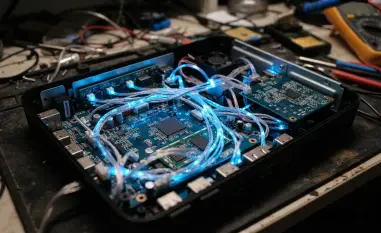
A primary driver of these breaches is the inherent weakness found in aging industrial hardware. Many of the affected cooling systems rely on legacy controllers that were built for long-term durability rather than modern digital security. Because these devices often remain in service for decades, their firmware is frequently outdated and lacks the necessary patches to defend against contemporary exploits. This “set and forget” approach to industrial hardware has left a wide window of opportunity for hackers to exploit known software flaws that have remained unaddressed for years. Manufacturers like Danfoss have identified that many systems in the field are running versions of code that were never intended to face the rigors of an internet-connected world. The longevity that makes these systems cost-effective also makes them liabilities, as the gap between their design specifications and modern threat models continues to widen. Without a standardized protocol for industrial software updates, these controllers remain permanent targets for attackers.
The risk is further compounded by the necessity of remote access for maintenance and monitoring. To ensure operational efficiency, these refrigeration units are connected to the internet via cellular or Wi-Fi networks, often using insecure configurations or default credentials. When these entry points are not sufficiently hardened, they serve as an open gateway for unauthorized users. Experts argue that as soon as a piece of industrial equipment becomes connected, it inherits all the risks of a standard computer, yet it rarely possesses the same level of sophisticated defensive software. Many supermarket chains rely on third-party service providers to monitor their cooling systems, creating a complex web of access points that are difficult to audit. A single weak password or an unencrypted maintenance port can provide the leverage needed to compromise an entire regional network. This vulnerability highlights the critical need for stricter authentication protocols and a more disciplined approach to how industrial assets are exposed to the public internet.
Strategic Resilience: Moving Toward a Zero Trust Framework
Given that many retailers cannot easily update proprietary or aging firmware, cybersecurity experts are advocating for a strategic shift toward network-level protection. Rather than focusing solely on individual device security, the focus is moving toward monitoring the communication environment in which these devices operate. By implementing AI-driven anomaly detection, systems can identify and block suspicious patterns—such as a thermostat communicating with an unknown IP address—before the hardware is compromised. This approach ensures that even if a device has unpatchable flaws, its ability to cause harm is neutralized by the network. Monitoring traffic in real-time allows security teams to spot the “pre-attack” reconnaissance phase, where hackers test the limits of the system’s responsiveness. By focusing on the behavior of the data rather than the code of the device, retailers can build a defensive layer that is both resilient and adaptable to new threats, providing a necessary buffer for equipment that was never designed with cybersecurity in mind.
The vulnerabilities exposed in the food retail sector served as a critical warning for other industries that rely on temperature-sensitive logistics. Enterprises moved to adopt a “Zero Trust” framework for their hardware and shifted toward a model of collaborative responsibility. This transition involved conducting immediate software audits, enforcing multi-factor authentication for remote access, and installing independent, non-connected alarms to serve as a fail-safe. As the boundary between IT and physical assets continued to blur, the integrity of a simple cooling controller became as vital to business continuity as the security of a financial database. Maintaining the balance between operational efficiency and robust asset protection emerged as a fundamental requirement for the modern industrial age. Organizations that prioritized these network-level defenses found themselves better equipped to withstand the evolving tactics of digital saboteurs. Moving forward, the industry learned that physical safety was seen as inextricably linked to digital hygiene, necessitating a permanent change in how industrial IoT infrastructure was managed.