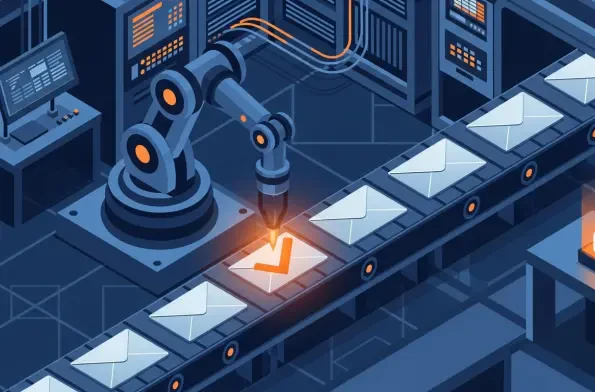
The familiar red flags of phishing emails—the misspelllings, the awkward grammar—are rapidly becoming relics of a bygone era, replaced by flawlessly crafted, AI-generated lures that can deceive even the most cautious users. This fundamental shift marks a critical escalation in the cybersecurity arms race. A new breed of intelligent, automated phishing toolkits is now available as a service, empowering even low-skilled threat actors with the capabilities of a nation-state adversary. These advanced frameworks are not just designed to steal passwords; they are engineered from the ground up to neutralize the very security controls, like multi-factor authentication, that organizations have come to rely on as their last line of defense. The question is no longer if these attacks will succeed, but how organizations can possibly adapt to survive this new reality.
The Rise of Advanced Phishing as a Service Toolkits
A comprehensive investigation into the cybercrime underground has uncovered a new generation of sophisticated, AI-powered phishing kits that are dramatically escalating the threat of large-scale credential theft. These toolkits represent a significant leap forward in malicious technology, combining automation, advanced evasion techniques, and artificial intelligence to launch attacks of unprecedented scale and effectiveness. They are specifically designed to operate with stealth, automating the entire attack lifecycle from campaign creation to credential exfiltration. This research directly addresses a critical question facing security leaders today: are current security postures, built on legacy detection methods and standard identity controls, sufficient to defend against attacks engineered to bypass them by design?
The core challenge presented by these new toolkits is their ability to circumvent modern security controls that have become central to enterprise defense strategies. Multi-factor authentication (MFA), long considered a robust safeguard against credential compromise, is a primary target. Through techniques like Man-in-the-Browser (MitB) attacks, these kits can intercept authentication sessions in real-time, capturing one-time passcodes and session tokens to gain complete account access. This renders many common MFA implementations ineffective. Consequently, the proliferation of these Phishing-as-a-Service (PhaaS) platforms signals a dangerous turning point, forcing a re-evaluation of established security best practices and the technologies that underpin them.
The Shifting Cybercrime Landscape Democratizing Sophisticated Attacks
The evolution of the cybercrime ecosystem has profoundly lowered the barrier to entry for malicious actors. What once required deep technical expertise is now available through user-friendly, potent toolkits sold as a service. This professionalization of phishing has transformed the threat landscape, creating a turnkey solution for cybercrime that mirrors legitimate software-as-a-service business models. These advanced kits are not just tools but complete platforms, offering dashboards, customer support, and regular updates to ensure their continued effectiveness against evolving defenses.
This research is critical because these advanced kits, which focus on evasion, automation, and circumventing trusted security measures, pose a severe and growing threat to both individuals and organizations globally. The “democratization” of these capabilities means that any organization, regardless of size or industry, can become a target of a highly sophisticated attack campaign. The industrial scale at which these attacks can now be launched threatens to overwhelm security operations centers (SOCs) and incident response teams, whose resources are already stretched thin. The accessibility and power of these toolkits have fundamentally altered the risk calculus for businesses everywhere.
Research Methodology Findings and Implications
Methodology
This analysis is founded on a multi-pronged intelligence-gathering approach designed to provide a comprehensive view of this emerging threat. The investigation began with the deep monitoring of clandestine forums and encrypted messaging channels, such as Telegram and Signal, where these toolkits are advertised, sold, and supported. This provided crucial insights into the cybercrime economy, including pricing, development cycles, and the reputation of different threat actors.
To understand the technical capabilities of these tools, researchers conducted reverse engineering of four distinct and prominent phishing kits: BlackForce, GhostFrame, InboxPrime AI, and Spiderman. This process involved carefully deconstructing the malicious code to identify its core functionalities. Furthermore, the detailed observation of their attack chains in controlled sandbox environments allowed for a step-by-step analysis of their evasion techniques, credential harvesting mechanisms, and command-and-control (C2) infrastructure, revealing how they operate from initial compromise to final data exfiltration.
Findings
The research identified four potent frameworks, each specializing in a different aspect of modern phishing. BlackForce stands out for its mastery of MFA bypass through sophisticated Man-in-the-Browser attacks, allowing it to hijack live user sessions. In contrast, GhostFrame prioritizes stealth, employing iframe obfuscation to hide its malicious content from security scanners, which often only analyze the benign outer page. These two kits exemplify the focus on defeating technical security controls.
The other two kits highlight the trend toward industrialization and specialization. InboxPrime AI leverages artificial intelligence to automate and industrialize the creation of convincing phishing campaigns, generating unique, context-aware emails that bypass spam filters with alarming ease. Meanwhile, Spiderman operates as a full-stack framework meticulously targeting European financial institutions, with modules designed to capture not just passwords but also one-time codes, credit card details, and even cryptocurrency wallet seed phrases. Its specialization makes it a formidable threat to the financial sector.
Beyond the capabilities of individual kits, a growing and concerning trend of kit hybridization was also observed. Threat actors are actively combining elements from different toolkits to create more resilient and versatile attack platforms. For instance, the fusion of Salty 2FA and Tycoon 2FA capabilities allows an attack to proceed even if one of its components is detected and blocked. This adaptive strategy further complicates detection and attribution, as security tools relying on signatures for a single known kit will fail to recognize the new, hybrid threat.
Implications
The findings reveal a stark reality: conventional security measures are becoming increasingly ineffective against this new wave of attacks. Signature-based detection tools, which rely on recognizing known malicious files or patterns, are easily bypassed by the polymorphic and evasive nature of these kits. Similarly, standard MFA implementations that rely on user-provided one-time codes are proven to be vulnerable to the real-time interception techniques employed by frameworks like BlackForce.
Moreover, the industrialization of phishing, exemplified by platforms like InboxPrime AI, creates an asymmetric conflict that overwhelms security teams. The ability for attackers to launch thousands of unique, high-quality phishing lures automatically far outpaces the capacity of human analysts to detect and respond to them. This necessitates a fundamental paradigm shift in defensive strategy. Organizations can no longer afford to rely on reactive measures; they must move toward more dynamic, behavior-based, and AI-driven defense systems capable of identifying anomalous activity in real time.
Reflection and Future Directions
Reflection
A key challenge in conducting this research was the clandestine and rapidly evolving nature of these toolkits. Their developers are keenly aware of security researchers and actively implement anti-analysis and evasion features to thwart investigation. These countermeasures include blocklisting IPs associated with security vendors, employing sophisticated code obfuscation, and using anti-debugging scripts to prevent dynamic analysis. This creates a constant cat-and-mouse game where researchers must continuously adapt their methods to stay ahead.
Overcoming these obstacles required a combination of persistent, covert monitoring of underground channels and the use of sophisticated, isolated sandboxing environments. These secure labs were essential for safely executing and analyzing the malicious code and infrastructure without tipping off the attackers or risking wider network contamination. The constant refinement of the toolkits meant that findings could become outdated quickly, demanding an agile and continuous research effort to maintain an accurate picture of the threat landscape.
Future Directions
Looking ahead, future research should prioritize the development of proactive defense mechanisms specifically designed to counter these advanced threats. This includes creating new security models capable of detecting AI-generated phishing content by analyzing subtle linguistic patterns or other artifacts left by generation algorithms. Additionally, there is a pressing need for technologies that can identify anomalous session activities indicative of a Man-in-the-Browser attack, such as unusual latency or unexpected page injections, even when the traffic appears legitimate.
Further exploration is also needed into the broader cybercrime supply chain that supports these PhaaS platforms, from the developers who create the kits to the infrastructure providers who host them. Disrupting this ecosystem could be a more effective long-term strategy than simply blocking individual phishing sites. Finally, a promising avenue of research lies in the potential for using defensive AI to counter these offensive AI tools at scale. Machine learning models could be trained to recognize and neutralize AI-powered phishing campaigns automatically, helping to level the playing field for defenders.
Conclusion Confronting the New Reality of AI Augmented Cyber Threats
The emergence of AI-powered and highly evasive phishing kits marked a significant inflection point in the cybersecurity landscape. The research demonstrated that the threat had evolved beyond simple credential theft into a highly professionalized, automated, and intelligent operation. It was no longer a question of if traditional defenses would fail, but when. The accessibility of toolkits capable of bypassing multi-factor authentication and generating perfectly tailored social engineering lures fundamentally changed the nature of the phishing threat.
The findings made it clear that a reactive security posture was no longer tenable. Organizations were compelled to adapt by embracing advanced, multi-layered security solutions that could anticipate and neutralize these intelligent, automated threats. This required a move toward zero-trust architectures, behavioral analytics, and AI-driven defense platforms that could detect the subtle indicators of compromise left by these sophisticated attacks. Ultimately, confronting this new reality meant acknowledging the obsolescence of legacy tools and investing in a new generation of security capable of fighting AI with AI to avoid compromise.