Listen to the Article
Security and networking are converging into a single control plane. The old split between box-first networks and bolt-on security cannot keep up with modern threats or sprawling hybrid environments. That is the backdrop for Fortinet’s current push: unify the stack, compress operational overhead, and keep performance intact under full inspection. The idea is compelling. Execution will determine who gains resilience and who simply shifts complexity from one silo to another.
Two forces make consolidation urgent. First, threat tempo now moves in minutes, not days. Recent research clocked average adversary breakout time at roughly an hour, which means lateral movement can begin before change control closes a ticket. Second, the cost of a breach keeps climbing, which raises the bar for coverage, telemetry, and response across every edge. The latest global average breach cost was reported at about 4.88 million dollars in 2024.
What Fortinet Is Proposing
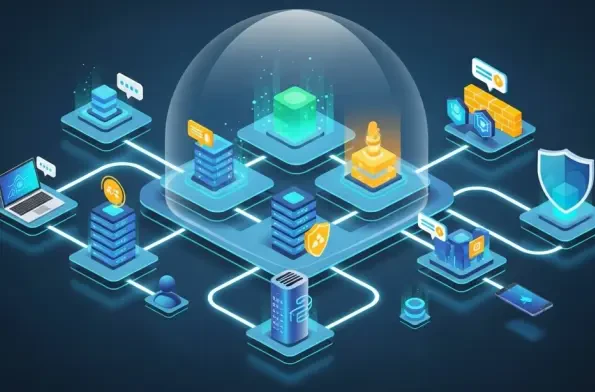
Fortinet positions secure networking as a single, integrated fabric anchored by FortiOS and purpose-built security processors. The pitch is direct. Stop treating routing, switching, and inspection as separate projects. Collapse them into a platform that applies consistent policy across campus, branch, cloud, and edge. Tie that platform to FortiGuard Labs for threat intelligence and AI analytics.
Product Pillars
Next-Generation Firewalls (NGFWs)
Hardware acceleration for deep inspection at speed, including Transport Layer Security (TLS) 1.3 decryption and intrusion prevention, without forcing teams to dial back controls to save performance.
Secure Access Service Edge (SASE)
Secure Access Service Edge (SASE) combines Software-Defined Wide Area Network (SD-WAN), cloud security service edge controls, and Zero Trust Network Access (ZTNA) to support distributed users with consistent policy and inspection.
Zero Trust Everywhere
Zero Trust Network Access (ZTNA) that aligns access with identity and device posture from endpoint to application, with enforcement following the user and the device.
Cloud And Edge Coverage
Controls designed for hybrid and multi-cloud estates, plus Operational Technology (OT) and Internet of Things (IoT) environments where safety and uptime are non-negotiable.
AI-Driven Security Operations
Detection, correlation, and automated response that aim to compress Mean Time to Detect (MTTD) and Mean Time to Respond (MTTR) inside the Security Operations Center (SOC).
Why Convergence Is Back On The Agenda
The drivers are concrete. They show up on budgets, audits, and incident reports.
Multi-Cloud Is The Default. Most enterprises run workloads across more than one public cloud and keep on-premises assets in the mix. A 2024 industry survey reported that a large majority of enterprises use multiple clouds and maintain hybrid models.
Threat Acceleration Punishes Fragmentation. Fast breakout times expose gaps created by slow telemetry and manual policy syncs across point products.
Cost Pressures Are Persistent. Security spending continues to rise into the hundreds of billions globally. Boards are pushing platform consolidation to curb license sprawl and integration labor.
Talent Scarcity Endures. Even mature teams cannot staff every tool. Fewer consoles and standardized policy reduce cognitive load and training overhead.
Where A Unified Stack Can Add Real Value
Done right, convergence is an operations play.
Policy Consistency Without Copy-Paste. One model for branch, campus, and cloud reduces drift and audit findings.
Performance Under Full Inspection. Hardware acceleration for TLS decryption and intrusion prevention can prevent the quiet trade-off where teams disable decryption to keep applications snappy.
Telemetry That Connects. Shared context across NGFW, SD-WAN, ZTNA, and endpoint data enables higher-fidelity detections and faster triage using Extended Detection and Response (XDR).
Access Aligned To Identity And Device State. ZTNA narrows lateral movement by making private application access explicit and conditional.
Edge And OT Visibility. A single inventory and segmentation strategy that spans IT and OT removes blind spots that ransomware groups exploit.
Reality Check: The Questions Buyers Should Ask
Consolidation only works if the platform performs at scale and integrates cleanly with the rest of the stack. Procurement teams should press on the following points.
Throughput Under Real Policies:
What is the inspected throughput with TLS 1.3 decryption, intrusion prevention, and Domain Name System filtering enabled at the same time? Demand lab results that match production cipher suites and typical object sizes.
SD-WAN Under Loss And Jitter:
How do application service-level agreements hold when packet loss spikes and latency swings? Ask for voice, video, and Software as a Service test profiles with brownout conditions.
SASE Latency And Failover:
For SASE, where are service Points of Presence (PoPs) located relative to user hubs? What is session behavior during PoP failover and client handoff?
ZTNA Coverage:
Which protocols and application types receive ZTNA controls beyond browser-based apps? How are thick clients and legacy protocols handled?
SOC Integration:
Can detections and context be exported to the current Security Information and Event Management (SIEM) and Security Orchestration, Automation, and Response (SOAR) platforms with full fidelity? Are MITRE ATT&CK mappings preserved?
Upgrade Blast Radius:
What is the rollback path if a FortiOS upgrade causes an outage? How are out-of-cycle Common Vulnerabilities and Exposures patches handled across hundreds of sites?
Licensing Clarity:
How are features packaged? Are SASE, ZTNA, and advanced inspection in separate tiers? Watch for feature creep that drives surprise renewals.
Integration And Operations Matter More Than Features
Feature matrices do not stop breaches. Cohesive operations do. Teams should test how Fortinet’s fabric changes day-two realities.
Incident Flow. Do alerts surface with the context analysts need, such as identity, device health, policy rules, and packet captures?
Runbooks. Can common tasks, like blocking a domain or quarantining a device, be executed from a single place with proper approvals and logging?
Change Control. Are policy diffs human-readable? Can teams simulate the blast radius of a rule change before it hits production?
Measurement. Are MTTD and MTTR shrinking over 90 days? If not, the platform is not translating into resilience.
The Trade-Offs Buyers Must Weigh
Every consolidation story has a shadow side. A clear-eyed view avoids surprises.
Vendor Lock-In. A platform strategy concentrates risk. If core services degrade or pricing shifts, exit costs can spike.
Coverage Gaps In The Cloud. Claims about any cloud often hide uneven depth across providers. Validate controls for serverless, managed databases, and identity integration in each cloud in use.
Performance Versus Privacy. TLS inspection boosts detection, yet it raises data handling and legal questions. Audit how certificates, keys, and privacy exceptions are managed, then document it.
SKU Sprawl. Platforms can fragment into dozens of add-ons. Insist on a bill of materials that maps features to business outcomes.
OT Realities. In industrial networks, inspections that work in IT can disrupt fragile protocols. Confirm passive discovery and safe enforcement modes before broad rollouts.
How To Evaluate Fortinet In A Hybrid Network
A practical evaluation sequence reduces risk and politics.
Start With A Bounded Pilot. Pick three use cases, for example, SD-WAN at two branches, ZTNA for a finance group, and TLS-inspected traffic at a campus egress point.
Measure Under Load, Not In A Quiet Lab. Drive 70 to 80 percent link utilization, then enable inspection features in steps. Record the latency hit per control and the error budget impact for critical apps.
Test Fail Scenarios. Force link brownouts, certificate errors, and cloud PoP failures. Document user impact and recovery actions.
Validate SOC Workflows. Route detections to the SIEM. Confirm that analysts can pivot across network, endpoint, and identity from a single ticket.
Inspect Policy-As-Code Options. If the team uses Git-backed policy or Infrastructure as Code, check for supported providers, drift detection, and unit testing of rules.
Probe Identity Depth. Tie ZTNA to the identity provider’s device posture and group claims. Verify that access changes propagate within minutes.
Track KPIs Executives Care About. Focus on Mean Time to Detect, Mean Time to Respond, change failure rate, ticket volume per site, and breach simulation outcomes. Avoid vanity metrics like the number of alerts closed.
What This Means For 2026
Platform consolidation will keep accelerating. Boards want fewer vendors, stronger coverage, and a clear path to measurable risk reduction. Spending remains resilient in core security categories despite macro pressure, which gives chief information officers and chief information security officers air cover to modernize network security architectures. At the same time, the multi-cloud variability problem is not going away. A policy that is elegant on a whiteboard can hit edge cases in serverless, managed Kubernetes, or OT plants.
Conclusion
Unifying networking and security is a response to faster threats and hybrid architectures with reduced budgets that break old boundaries. Fortinet’s approach targets the right problem by aiming for a single policy model, shared telemetry, and performance that holds when real-world controls are turned on.
The gap between promise and proof sits in day-two operations. Success will depend on whether the fabric holds under load, integrates into the existing SOC muscle memory, and simplifies change without creating new corners for misconfigurations to hide. Buyers who insist on measured pilots, production-grade testing, and key performance indicator-driven decisions will know quickly if a unified Fortinet stack shortens incident timelines and tightens control. If the numbers move in the right direction, consolidation pays for itself. If they do not, the comfort of a single vendor will not offset the risk of blind spots and slow response.
