The relentless cascade of high-profile security breaches throughout 2025 transformed the global conversation around digital risk, solidifying the year as a watershed moment for cybersecurity. An unprecedented volume of sophisticated intrusions targeted major enterprises and household brands, forcing a painful reckoning with the vulnerabilities embedded in our interconnected world. The selection of the year’s most significant attacks was based on a comprehensive evaluation of data loss, financial costs, real-world operational impact, and their broader geopolitical ramifications. These incidents collectively revealed several defining trends that shaped the threat landscape. Organized ransomware-as-a-service (RaaS) syndicates continued to execute highly disruptive campaigns with brutal efficiency. Concurrently, the digital underground was stirred by nebulous and unpredictable collectives, including groups of teenage hackers who demonstrated a startling ability to circumvent corporate defenses using clever social engineering rather than purely technical exploits. Perhaps most alarmingly, 2025 witnessed a dramatic escalation in software supply chain attacks, a method that allowed adversaries—from opportunistic cybercriminals to well-resourced nation-state groups—to compromise vast networks of victims by targeting a single, trusted component in the global digital infrastructure.
A Year of Unrelenting Attacks
The Early Warnings: Education and Crypto Under Fire
The year’s cybersecurity narrative began with an incident that underscored the growing threat to sensitive personal data held by educational institutions. In January, the North American school software provider PowerSchool came under public scrutiny following a breach that had occurred the previous month. A threat actor, having successfully infiltrated the company’s systems, bypassed initial attempts at containment and escalated the situation by threatening to leak the compromised data of students and teachers. Although the company had initially assured parents that no data was encrypted, the extortion threat proved effective. Four months after the event, PowerSchool publicly admitted it had paid an undisclosed ransom to prevent the public release of the sensitive information, a decision that highlighted the immense pressure organizations face when safeguarding the data of vulnerable populations. The case took a surprising turn in late May, when a 19-year-old college student from Massachusetts pleaded guilty for his involvement in the cyber-attack. This development was a stark reminder that the modern threat actor landscape is not monolithic; it ranges from sophisticated state-sponsored groups to young, technically adept individuals motivated by a variety of factors. The incident served as an early warning that no sector was immune and that the perpetrators of major attacks could emerge from unexpected quarters.
The financial sector was the next to be rocked, as the volatile world of cryptocurrency became the stage for a historic theft. In February, the Dubai-based cryptocurrency exchange Bybit suffered what was described as the largest crypto heist in history, a staggering blow that sent shockwaves through the digital asset community. The perpetrators successfully siphoned an estimated $1.447 billion worth of Ethereum (ETH), executing the attack with a level of precision that pointed toward a highly sophisticated adversary. The Federal Bureau of Investigation (FBI) moved quickly, linking the historic theft to the Lazarus Group, a notorious and highly skilled North Korean state-sponsored hacking collective known for its financially motivated cyber operations aimed at funding the regime. In a desperate attempt to reclaim the stolen assets, Bybit announced a reward equivalent to 10% of any recovered funds, hoping to incentivize the global security community to aid in the hunt. The attack had a significant cascading effect, triggering a wave of secondary scams. By April, security firm BforeAI had detected nearly 600 suspicious domains linked to phishing campaigns designed to capitalize on the news of the Bybit hack and trick other crypto users into surrendering their own assets. The sheer scale of this single event dramatically skewed the year’s cybersecurity statistics. According to CertiK’s “Hack3d: Q1 2025 Report,” the Bybit breach was the primary driver behind a massive surge in crypto theft, with over $1.67 billion in digital assets stolen across 197 incidents in the first quarter alone—a 303% increase from the previous quarter. By the mid-year point, the total value of stolen cryptocurrency had already surpassed $2.47 billion, exceeding the total losses for the entirety of 2024.
The Retail Blitz and a Bold Corporate Standoff
Beginning in April, a massive and coordinated wave of cyber-attacks swept through the retail sector, targeting several of the world’s most recognizable brands. One of the first major victims was the British supermarket chain Marks & Spencer (M&S), which disclosed a cyber incident on April 22 that initially appeared to affect only some of its services. However, by May, the company’s Chief Executive, Stuart Machin, confirmed the situation was far more severe, admitting that customer data had been stolen during the breach. The financial toll was staggering, with the attack estimated to have cost the retailer £300 million (0 million) in recovery costs and lost revenue. Shortly thereafter, another major British supermarket, the Co-op, reported a similar incident, resulting in a revenue loss of £206 million (7 million). These attacks, along with a third targeting the iconic London department store Harrods, were all attributed to the notorious cybercrime group Scattered Spider. The syndicate’s campaign was not limited to the UK; it extended to a host of prominent retail, sportswear, and luxury brands, including Adidas, Alexander McQueen, Gucci, and Louis Vuitton. The high-profile nature of these intrusions prompted a significant law enforcement response. In July, UK authorities arrested four individuals, three of whom were teenagers, in connection with the three primary attacks. Later that month, executives from M&S and the Co-op provided evidence to a Parliamentary committee, where M&S chairman Archie Norman notably declined to confirm whether a ransom payment had been made to the threat actors, leaving the question of corporate capitulation unanswered.
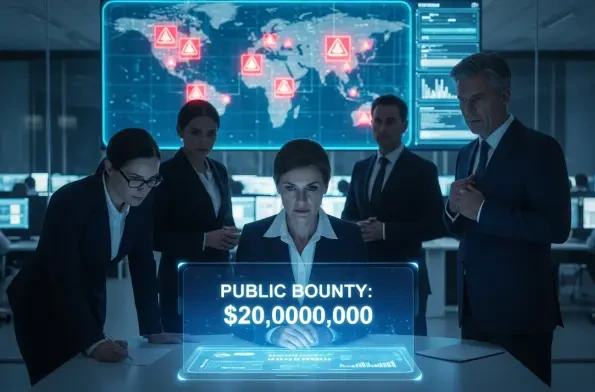
In May, another major player in the cryptocurrency space, Coinbase, faced a sophisticated and insidious attack that blended technical intrusion with human manipulation. The company reported that cybercriminals had successfully bribed and recruited a group of rogue overseas support agents to steal customer data. The attackers’ goal was to use this insider access to impersonate Coinbase and trick customers into transferring their cryptocurrency holdings to wallets controlled by the criminals. After exfiltrating the data, the perpetrators demanded a $20 million ransom from Coinbase to cease their activities and not leak the stolen information. In a bold and unconventional move, Coinbase refused to negotiate or pay. Instead, the company turned the tables on its attackers by launching a public $20 million bounty program, offering the funds as a reward to anyone who could provide information leading to the arrest and conviction of the individuals responsible. This aggressive stance involved close collaboration with law enforcement and security experts to trace the stolen funds and hold the criminals accountable. Despite this proactive response, the damage was significant. Subsequent reports revealed that the hack ultimately affected nearly 70,000 customers and cost Coinbase approximately $400 million. The incident took another legal turn in September when a class-action lawsuit was filed, alleging that the “rogue overseas support agents” were employees of TaskUs, a Texas-based company hired by Coinbase to handle customer support from India. The lawsuit accused TaskUs of significant security failures that enabled its employees to execute the malicious scheme. TaskUs reportedly confirmed the involvement of its staff but minimized the extent of its security lapses, raising critical questions about third-party vendor risk management.
The Escalation: Supply Chains, Critical Infrastructure, and Record-Breaking Losses
Summer of Disruption: Airlines, Software, and Third-Party Risk
The summer months saw the aviation industry come under siege as threat actors turned their attention to critical travel infrastructure. In early July, a series of cyber incidents that began in June were revealed, targeting multiple international airlines, including Australia’s Qantas, Canada’s WestJet Airlines, and Hawaiian Airlines. The attacks were so widespread that the FBI issued a warning on June 30, specifically stating that the threat group Scattered Spider was actively targeting airlines with ransomware and data extortion attacks. At Qantas, the breach was detected on June 30 when an attacker targeted a call center and gained access to a third-party customer servicing platform, a classic example of a supply chain vulnerability. The Australian airline, which was directly contacted by the alleged culprit, later confirmed that the data of as many as 5.7 million customers had been compromised. This wave of attacks highlighted the fragility of the airline industry’s interconnected systems and the devastating potential for disruption to global travel and logistics. The incidents served as a stark warning about the expanding target list of sophisticated cybercrime groups, which were now demonstrating the capability to cripple essential services.
July also brought a critical software supply chain threat to the forefront when Microsoft issued an urgent warning about attackers actively exploiting zero-day vulnerabilities in on-premises SharePoint servers. This campaign, which impacted critical sectors like government and healthcare, involved chaining two distinct vulnerabilities, CVE-2025-53770 and CVE-2025-53771, on internet-facing servers. This chained exploit was quickly dubbed “ToolShell” by the cybersecurity community. Although Microsoft released patches in July, the damage had already been done. Eye Security, the firm that discovered the zero-days, confirmed that at least 396 SharePoint systems had been compromised globally before patches were widely deployed. The initial wave of attacks was attributed to Chinese-aligned advanced persistent threat (APT) groups, specifically Linen Typhoon (APT27) and Violet Typhoon (APT31), as well as a hybrid group known as Storm-2603. Further reporting suggested that another Chinese hacking group, Salt Typhoon, may have also used the ToolShell exploit to target government entities. The exploit’s effectiveness meant it was quickly adopted by numerous other threat actors. By late October, the problem had become so pervasive that nearly 40% of all incident response engagements handled by Cisco Talos were related to the exploitation of public-facing SharePoint servers, demonstrating how a single vulnerability in a widely used enterprise product can become a global security crisis.
A Summer of Unprecedented Supply Chain Breaches
The alarming trend of third-party and supply chain attacks continued into August with a major incident involving the customer relationship management giant, Salesforce. Following initial rumors that were later confirmed by Google, a threat actor believed to be ShinyHunters retrieved largely public business information from Salesforce customers. However, this was merely the prelude to a far more severe breach. Google Threat Intelligence Group (GTIG) confirmed that a separate threat group, identified as UNC6395, had systematically exfiltrated large volumes of sensitive data from numerous Salesforce customer instances between August 8 and August 18. This more sophisticated campaign was executed via compromised OAuth tokens associated with the third-party Salesloft Drift application, which integrates directly with Salesforce. This method allowed the attackers to bypass traditional security measures and gain authenticated access to customer data. The list of high-profile companies that admitted to having customer data stolen as a result was extensive and included major tech and cybersecurity firms like Cloudflare, Google, Palo Alto Networks, Zscaler, and Tanium, as well as fashion giants Chanel and Pandora. The incident underscored the immense and often underestimated risk posed by third-party application integrations in complex corporate ecosystems. In November, this fear was realized again when a similar breach was confirmed, this time involving Gainsight’s SFDC Connector. While Gainsight initially claimed only three customers were affected, it later admitted the number was significantly larger, further eroding trust in the security of interconnected SaaS platforms.
September was marked by what was described as the UK’s costliest-ever cyber-attack, a devastating incident that targeted the iconic carmaker Jaguar Land Rover (JLR). The attack severely disrupted the company’s core sales and production operations, forcing staff at its Halewood production plant to be sent home and grinding manufacturing to a halt. The timing of the attack was particularly damaging, creating a significant ripple effect across the wider automotive economy. Car dealers were unable to register new JLR vehicles on September 1, one of the busiest days of the year for new car sales in the UK, leading to massive financial losses and reputational damage. A group calling itself the Scattered Lapsus$ Hunters—an alleged collaboration between the notorious groups Scattered Spider, ShinyHunters, and Lapsus$—claimed responsibility and stated they were attempting to extort the firm. The financial fallout was immense; JLR’s revenue for the quarter ending September 30 was down a staggering 24% year on year. The UK’s Cyber Monitoring Centre (CMC) classified the incident as a “systemic cyber event,” estimating its total financial impact on the UK at a jaw-dropping £1.9 billion ($2.55 billion) and affecting over 5,000 UK organizations that were part of JLR’s extensive supply chain. This single attack became a case study in how a targeted cyber-attack on one major corporation could trigger a national economic crisis.
A Tumultuous Finale to a Year of Digital Siege
As the year drew to a close, two more major incidents cemented 2025’s reputation as a year of relentless digital assault. At the end of September, the Japanese brewing giant Asahi announced it was suspending operations in Japan following a catastrophic system failure caused by a ransomware attack. The Qilin ransomware group later claimed responsibility for the intrusion, listing Asahi on its data leak site and stating it had stolen 27 GB of sensitive corporate files. The attack exposed the personal data of approximately 1.914 million individuals, including over 1.5 million customers, creating a massive privacy crisis for the company. The operational disruptions were severe and long-lasting, with the company projecting that a full recovery could extend until at least February 2026. The incident forced a major strategic rethink at the highest levels of the company. In response, CEO Atsushi Katsuki announced plans to create a new, dedicated cybersecurity unit, a move that reflected a growing trend among corporations to elevate cybersecurity from an IT issue to a core business imperative in the wake of a devastating breach. The attack on Asahi was a powerful demonstration of how ransomware had evolved from a simple data encryption threat into a multi-faceted weapon capable of causing prolonged operational paralysis and significant reputational harm.
Finally, in early October, Oracle issued an urgent warning to its customers that hackers were actively exploiting a zero-day vulnerability (CVE-2025-61882) in unpatched instances of its widely used E-Business Suite (EBS). This alert followed a report from Google Threat Intelligence Group (GTIG) that an attacker was sending extortion emails to corporate executives, claiming to have stolen data from their EBS instances and threatening to release it unless a ransom was paid. The campaign was attributed to the Clop group, a notorious and highly proficient Russian-speaking ransomware gang with a long history of exploiting zero-day flaws in enterprise software. Oracle rushed to release an emergency patch on October 5, but by that time, Clop was already found to be exploiting the zero-day alongside other previously patched flaws, targeting organizations that had fallen behind on their security updates. A large number of organizations were believed to have been targeted in this campaign, including the US software company GlobalLogic and the London-based Barts Health NHS trust, a critical healthcare provider. This final, high-stakes attack capped off a year defined by costly, disruptive, and wide-ranging cyber-attacks, leaving no doubt that the digital world had entered a new and far more dangerous era.
A New Era of Digital Resilience
The events of 2025 provided a series of painful but critical lessons that reshaped the cybersecurity landscape. The year’s attacks demonstrated that traditional, perimeter-based security models were no longer sufficient in a world where supply chains were complex and threat actors were increasingly sophisticated. It became clear that resilience, not just prevention, was the new imperative. The incidents involving Salesforce, Microsoft SharePoint, and third-party contractors for companies like Coinbase revealed that an organization’s security was only as strong as its weakest partner. This forced a fundamental shift toward more rigorous vendor risk management and a “zero trust” approach to all network connections, internal or external. Furthermore, the rise of hybrid threat groups like the “Scattered Lapsus$ Hunters” and the involvement of teenage hackers in major retail breaches blurred the lines between organized cybercrime and chaotic, unpredictable actors, demanding a more agile and intelligence-driven defense strategy. Organizations learned they could no longer simply react to threats; they had to proactively hunt for them within their own networks. Ultimately, 2025 was the year the theoretical risks of our interconnected digital society became a tangible and costly reality, compelling a global pivot toward building a more robust and adaptive digital infrastructure for the future.