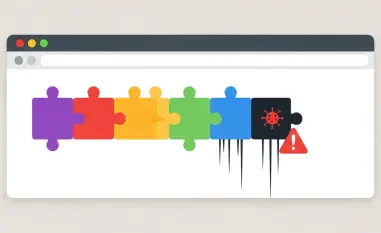
As artificial intelligence systems become deeply embedded in the critical infrastructure of industries ranging from finance to energy, the U.S. National Institute of Standards and Technology (NIST) has addressed the urgent need for a unified security approach with its preliminary draft of the “Cybersecurity Framework Profile for Artificial Intelligence.” This landmark document provides a comprehensive roadmap for organizations navigating the turbulent waters of AI security, establishing structured guidance for managing the distinct risks posed by AI technologies while simultaneously identifying opportunities to harness AI as a powerful ally in strengthening cybersecurity defenses. Built upon the trusted foundation of the widely adopted NIST Cybersecurity Framework (CSF) 2.0, the Profile ensures that organizations can seamlessly integrate these new considerations into their existing risk management programs, offering a flexible and scalable approach suitable for both AI pioneers and newcomers alike. At its core, the framework introduces a clear, three-part plan that simplifies the complex interplay between AI and cybersecurity, enabling organizations to build a more resilient and proactive security posture.
The Three Pillars of AI Security
The first pillar of the NIST framework, known as the Secure Focus Area, concentrates on the defensive measures essential for protecting the integrity of an organization’s own AI systems. This involves a comprehensive approach to safeguarding the fundamental components of AI, including the intricate models, the vast datasets used for training and operation, and the underlying infrastructure on which they run. This area directly confronts the novel vulnerabilities and expanded attack surfaces that AI introduces. For example, it provides guidance for mitigating risks like data poisoning, where malicious actors intentionally corrupt training data to compromise a model’s behavior, and model evasion, where attackers craft inputs designed to deceive an AI system into making incorrect classifications or decisions. By focusing on the inherent security of the AI itself, this pillar helps organizations ensure that the very tools they rely on for innovation do not become their greatest liabilities. In parallel, the Defend Focus Area shifts the perspective, reframing AI not as a liability to be protected but as a powerful asset for bolstering an organization’s cybersecurity capabilities. This pillar encourages the strategic use of AI to augment and automate security operations, leading to more efficient and effective risk management. Key applications include leveraging machine learning for advanced threat detection to identify subtle patterns of malicious activity in massive log files that would be invisible to human analysts, or automating incident response protocols to contain breaches in seconds rather than hours. This proactive stance empowers security teams to move beyond a purely reactive posture, using AI to anticipate threats, strengthen defenses, and manage security at scale.
In contrast to using AI for defense, the third pillar, Thwart, addresses the escalating challenge of malicious actors weaponizing artificial intelligence to execute more sophisticated and devastating attacks. This Focus Area underscores the urgent need for organizations to develop specialized countermeasures and build resilience against this new generation of AI-enabled threats. A prominent example highlighted in the guidance is the evolution of spear-phishing attacks, which are now being supercharged by generative AI and deepfake technologies. These tools allow adversaries to create hyper-realistic and highly personalized fraudulent communications—such as emails from a trusted colleague, voice messages from a CEO, or even video calls—that are far more convincing and difficult to detect than their predecessors. The “Thwart” pillar guides organizations to move beyond traditional security awareness by implementing advanced, automated defenses capable of identifying and neutralizing these deceptive, AI-driven campaigns. This forward-looking approach acknowledges that as organizations adopt AI, so too will their adversaries, making it critical to anticipate and prepare for the next frontier of cyberattacks. By focusing on thwarting adversarial AI, the framework ensures that security strategies evolve in lockstep with the threat landscape, protecting organizations from being outmaneuvered by technologically advanced opponents. This pillar is not just about defense; it is about actively countering the offensive capabilities that AI grants to malicious actors, ensuring long-term security in an AI-driven world.
Integrating AI into the Cybersecurity Framework
NIST’s Profile methodically integrates these three distinct Focus Areas—Secure, Defend, and Thwart—across the six core functions of the established Cybersecurity Framework 2.0: Govern, Identify, Protect, Detect, Respond, and Recover. This integration provides a practical and familiar structure for organizations to follow. Within the Govern function, which establishes an organization’s overall cybersecurity strategy, the Profile introduces AI-specific considerations, such as formally incorporating AI-related risks into risk appetite statements and establishing clear communication channels for dependencies on third-party AI systems. For the Identify function, the guidance emphasizes the need to expand asset management inventories beyond traditional hardware and software to include unique AI components like models, APIs, agents, and their associated data. This function also calls for updating vulnerability management programs to proactively account for AI-specific attack vectors, such as model inversion or membership inference attacks. Furthermore, the Protect function outlines the implementation of specific safeguards, including issuing unique digital identities and credentials to AI systems to manage their access and privileges effectively. It also highlights the importance of developing specialized awareness and training programs that educate all personnel on the nuances of AI-related security risks, ensuring that the human element of the security chain is not left behind.
The framework’s practical guidance extends into the operational functions of cybersecurity, ensuring a comprehensive approach from detection to recovery. The Detect function highlights the dual nature of AI, where it can be leveraged as a powerful tool to flag anomalies and correlate suspicious behaviors far faster than manual methods, while organizations must also be prepared to detect attacks that weaponize AI, such as sophisticated deepfake campaigns targeting key personnel. A critical consideration here is determining the new types of monitoring required to track the actions and decisions of autonomous AI systems. When an incident is detected, the Respond function provides guidance on establishing clear criteria for triaging and validating events involving AI systems and developing new tools to diagnose complex attacks. A key investigative step during a response is to actively search for indicators of compromise that suggest an adversary is using AI in their attack methodology. Finally, the Recover function focuses on restoring operations and underscores how AI can expedite this process. For instance, AI can calculate the optimal sequence for restoring systems to minimize business impact, track the progress of recovery efforts in real-time, and even help draft clear communication updates for stakeholders, transforming a chaotic process into a structured and efficient one.
Shaping the Future of AI Security Guidance
The release of the Cyber AI Profile as a preliminary draft marked a pivotal moment, initiating a crucial dialogue between regulators and the technology community. NIST did not present this document as a final mandate but as a collaborative starting point, actively soliciting feedback from a wide array of stakeholders across the public and private sectors. This public comment period was designed to ensure the final guidance would be practical, effective, and aligned with the real-world challenges organizations face. In its call for input, NIST specifically requested commentary on the Profile’s overall structure and utility, seeking to understand how organizations envisioned applying the framework and what modifications could enhance its practical application. Furthermore, feedback was sought on the clarity and completeness of the descriptions for the Secure, Defend, and Thwart Focus Areas to guarantee that no critical aspects of AI usage were overlooked. This collaborative approach recognized that a successful framework must be shaped by the collective expertise of those on the front lines of AI implementation and cybersecurity. The process reflected a commitment to creating a living document that could evolve alongside the rapidly changing technological landscape, rather than a static standard that might quickly become obsolete.