As the digital frontier rapidly expands toward 2026, technology companies are grappling with a transformative paradox where their greatest innovations also harbor their most significant vulnerabilities. The path forward is no longer defined by simply erecting digital walls but by strategically embedding cybersecurity into the very fabric of business operations, from product development to supply chain management. The convergence of artificial intelligence, a labyrinth of regulatory mandates, and a persistent shortage of skilled security professionals creates a complex and high-stakes environment. For industry leaders, successfully navigating these interconnected challenges is not merely a defensive necessity but a crucial element for securing a lasting competitive advantage and fostering sustainable growth in an increasingly volatile digital world.
The Double-Edged Sword of AI
One of the most pervasive and subtle threats emerging within technology firms is the phenomenon of “shadow AI,” which describes the unsanctioned adoption of artificial intelligence tools by employees aiming to enhance their productivity. While the intent is often to innovate or streamline workflows, this unregulated usage creates substantial blind spots in a company’s security posture. The risks are multifaceted, ranging from the inadvertent leakage of proprietary source code or sensitive customer data into public large language models to severe legal and compliance repercussions when data is used in violation of privacy laws or intellectual property rights. Without a structured governance framework, these powerful tools can operate beyond the visibility of security teams, transforming a promising technological advancement into a significant and unpredictable corporate liability that undermines data integrity and trust.
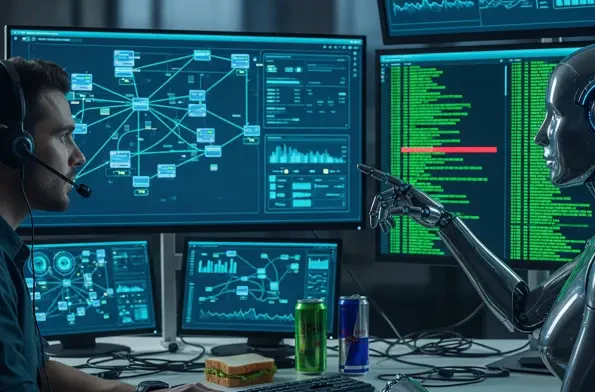
In stark contrast to the risks it presents, artificial intelligence also stands as the most formidable asset in the modern cybersecurity arsenal when strategically deployed. The integration of AI into Security Operations Centers (SOCs) is fundamentally transforming threat detection and incident response. AI-driven systems possess the capability to sift through billions of security events in real time, identifying subtle patterns and anomalous behaviors that would remain invisible to human analysts. This allows for the preemptive identification of novel threats and a more proactive approach to vulnerability management. Moreover, AI can utilize the same advanced techniques as malicious actors to scan for and remediate weaknesses in code during the development lifecycle, effectively allowing defenders to anticipate and neutralize potential attack vectors before they can ever be exploited by adversaries.
Navigating the Complex Web of Compliance and Partnerships
Technology companies in the United States must navigate an exceedingly dense and fragmented regulatory landscape, where robust data governance has transitioned from a best practice to a strict legal obligation. A complex tapestry of federal mandates, including the Gramm-Leach-Bliley Act (GLBA) for fintech, the Health Insurance Portability and Accountability Act (HIPAA) for health tech, and the Cybersecurity Maturity Model Certification (CMMC) for defense contractors, imposes rigorous security protocols. This federal oversight is further complicated by a growing number of states—now exceeding twenty—that have enacted their own specific data privacy laws. This patchwork of regulations demands that companies maintain a constant state of awareness and compliance across every jurisdiction in which they operate, as failure to do so can result in severe financial penalties and irreparable reputational damage.
Beyond mere regulatory adherence, a company’s cybersecurity maturity has evolved into a decisive factor in forming business alliances and securing its position within the supply chain. A strong security posture is no longer an internal concern but a critical competitive differentiator that directly influences the ability to win lucrative contracts and forge strategic partnerships. Government agencies and leading private sector organizations now mandate stringent security prerequisites for their vendors, effectively eliminating companies with inadequate defenses from consideration. To thrive, firms must not only fortify their own internal systems but also actively demonstrate their trustworthiness as a partner. This involves implementing sophisticated vendor risk management programs, engaging in real-time threat intelligence sharing, and conducting joint incident response exercises with key suppliers.
Building the Next-Generation Security Team
To combat the persistent shortage of skilled cybersecurity professionals, technology firms are increasingly adopting innovative workforce development strategies, with shared services models gaining significant traction. This approach involves centralizing specialized security expertise and making it available across multiple organizations, a practice particularly effective in private equity and venture capital portfolios. In this model, a single, highly skilled team can provide advanced threat intelligence, incident response, and strategic guidance to a range of companies that might otherwise lack the resources to build such a comprehensive in-house function. This pooling of resources allows mid-market firms to benefit from top-tier talent and sophisticated security capabilities, fostering a stronger and more resilient collective defense against common threats and industry-specific challenges.
The journey toward a more secure future revealed that augmenting human expertise with intelligent automation was a cornerstone of building a truly resilient and efficient security apparatus. By automating the manual, repetitive, and often monotonous tasks that consume a significant portion of an analyst’s time, companies successfully empowered their skilled professionals to redirect their focus toward higher-value strategic initiatives. This shift allowed them to concentrate on proactive threat hunting, sophisticated security architecture design, and long-term strategic planning. Furthermore, the adoption of integrated security platforms that reduced “context-switching” between disparate systems demonstrably improved focus, minimized errors, and enhanced overall organizational efficiency, proving that the most effective security function was one that harmonized human intellect with machine-level speed.