The very technology designed to secure Europe’s energy future through clean, distributed power is quietly introducing a vulnerability that could bring the entire grid to a standstill. As solar panels blanket rooftops and fields in an unprecedented green transition, they are creating a vast, interconnected digital network—one that has been built with speed and efficiency, but often without the necessary cyber-defenses. This burgeoning digital ecosystem, essential for monitoring and managing millions of energy sources, has become an attractive and dangerously exposed target for malicious actors, threatening the stability of national power infrastructures.
As Europe’s Power Grid Goes Green: Is It Also Becoming The Internet’s Next Big Target?
The rapid acceleration of solar energy adoption across Europe has an overlooked consequence: the creation of an expansive and highly vulnerable digital attack surface. Each new solar installation, from residential rooftops to sprawling utility-scale farms, adds another node to an increasingly complex network. While this decentralization offers resilience against physical disruptions, it introduces a systemic digital fragility. The sheer number of interconnected devices, managed by a diverse array of operators, presents an almost limitless landscape for cyber threats to probe for weaknesses.
This risk is magnified by a critical structural reality within the industry. According to analysis from Wood Mackenzie, half of Europe’s utility-scale solar capacity is generated by smaller plants, each under 25 megawatts. These installations frequently fall into a regulatory and security blind spot, as they are often not classified as critical national infrastructure and thus are not subject to the same stringent cybersecurity mandates as their larger counterparts. This gap leaves a significant portion of the continent’s power generation capacity protected by inconsistent, and often minimal, security measures, creating a distributed weakness that could be exploited at scale.
The Great Decentralization: How The Grid’s Strength Became Its Weakness
The traditional energy model was defined by a handful of large, heavily guarded power plants—centralized fortresses that were physically and digitally isolated. The modern grid, in contrast, is a sprawling web of countless solar installations, each a potential digital entry point. This shift from a centralized to a decentralized structure has fundamentally altered the security paradigm. The strength of the new grid, its distributed nature, has ironically become its greatest weakness by multiplying the number of potential targets for cyberattacks exponentially.
A significant “security gap” has emerged where the pace of technological innovation has far outstripped the development of corresponding cybersecurity protocols. The digital transformation that enables remote monitoring, predictive maintenance, and operational efficiency has also left critical infrastructure exposed. Components that were once analog and isolated are now part of a global network, and the industry is grappling with the security implications of this rapid evolution.
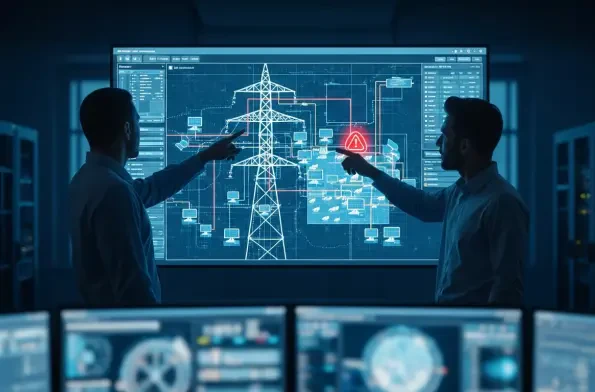
This vulnerability is most evident in the widespread adoption of internet-connected inverters. These devices, which convert DC power from solar panels into grid-usable AC power, are the digital brains of any solar operation. Their connection to the internet allows for essential remote management but also creates a direct, publicly accessible gateway for cyberattacks. A single compromised inverter can become a foothold for an attacker to move laterally across a network, potentially disrupting not just one site but impacting the stability of the regional grid.
Anatomy of The Threat: From Default Passwords to Grid Destabilization
At the heart of the solar industry’s cyber vulnerability is a pervasive lack of basic digital hygiene. Many photovoltaic (PV) inverters and other connected components are installed using factory-default or weak, easily guessable passwords. This simple oversight effectively leaves the digital door unlocked, making it “alarmingly easy” for attackers to gain remote control over critical energy-generating assets. From there, they could manipulate power output, feed false data to grid operators, or shut down generation entirely.
In response to this growing threat, a new wave of regulation is sweeping across Europe. Early legislative efforts, such as the European Radio Equipment Directive (RED) and the UK’s Product Security and Telecommunications Infrastructure (PSTI) Act of 2024, established a foundational baseline by mandating unique passwords and basic data protection for connected devices. While not specific to solar, these rules began the crucial process of raising security standards. Now, more stringent and targeted laws, including the Cyber Resilience Act, are set to impose “security-by-design” requirements directly on manufacturers.
The most significant regulatory shift, however, is the EU’s NIS2 Directive. This legislation represents a game-changer because it assigns direct legal accountability for cyber breaches to asset owners, operators, and corporate management. For the solar industry, this means that executives at development firms, asset management companies, and operations and maintenance (O&M) providers will be held personally responsible for security failures. The directive transforms cybersecurity from a technical issue into a matter of corporate governance and legal liability, with severe penalties for non-compliance.
A Paradigm Shift: Viewing Cybersecurity as a Non Negotiable Investment
A consensus is forming among security experts and industry leaders: the solar sector must fundamentally change its perception of cybersecurity. It can no longer be treated as an optional expense to be minimized or an IT problem to be delegated. Instead, it must be embraced as a core component of operational integrity and risk management, as fundamental as a perimeter fence or a fire suppression system. This shift requires embedding security into every decision, from procurement to operations.
Ignoring cyber risk in the modern energy landscape is akin to the automotive industry of the past arguing against the need for seat belts or airbags. Just as those features evolved from expensive options to non-negotiable safety standards, robust cybersecurity is becoming an essential prerequisite for operating safely and responsibly. It is not a cost center but an investment in resilience, brand reputation, and long-term viability.
This proactive investment in security is essential for more than just compliance. It is a critical strategy for risk reduction and liability management in an era of increasing legal accountability. Companies that prioritize cybersecurity will not only protect their assets and the grid but also gain a competitive advantage. They will be better positioned to win the trust of investors, insurers, and regulators, ensuring their sustainability in an increasingly security-conscious market.
Building a Resilient Grid: An Actionable Blueprint for The Solar Industry
For asset owners and operators, the path forward requires immediate action. Onboarding dedicated cybersecurity expertise is now crucial to navigate complex compliance landscapes and to translate technical risks into business strategy. Furthermore, contracts with technology partners and service providers must be revised to mandate stringent security protocols, shifting accountability down the supply chain. A meticulous and constantly updated inventory of all physical and digital assets is no longer optional but a foundational requirement for any effective defense.
Hardware manufacturers, particularly of inverters, are on the front lines of this battle. The principle of “security-by-design” must be embedded into the entire product lifecycle, not bolted on as an afterthought. Strong, unique passwords and end-to-end encrypted communications should be standard, non-negotiable features. Moreover, the industry must adopt best-in-class authentication methods, such as biometrics, that are common in other tech sectors, ensuring robust security without adding unnecessary complexity for installers and users.
Ultimately, the entire solar industry must adopt a universal mindset of anticipating regulation rather than merely reacting to it. This means managing all utility-scale sites, regardless of their size, as if they are already designated as critical national infrastructure. By moving ahead of legislative deadlines and embracing a culture of proactive security, the industry could not only protect itself from catastrophic breaches but also solidify its role as a reliable and cornerstone of the global energy future. This approach turned a potential crisis into an opportunity to build a truly resilient, secure, and sustainable power grid.